
Categories
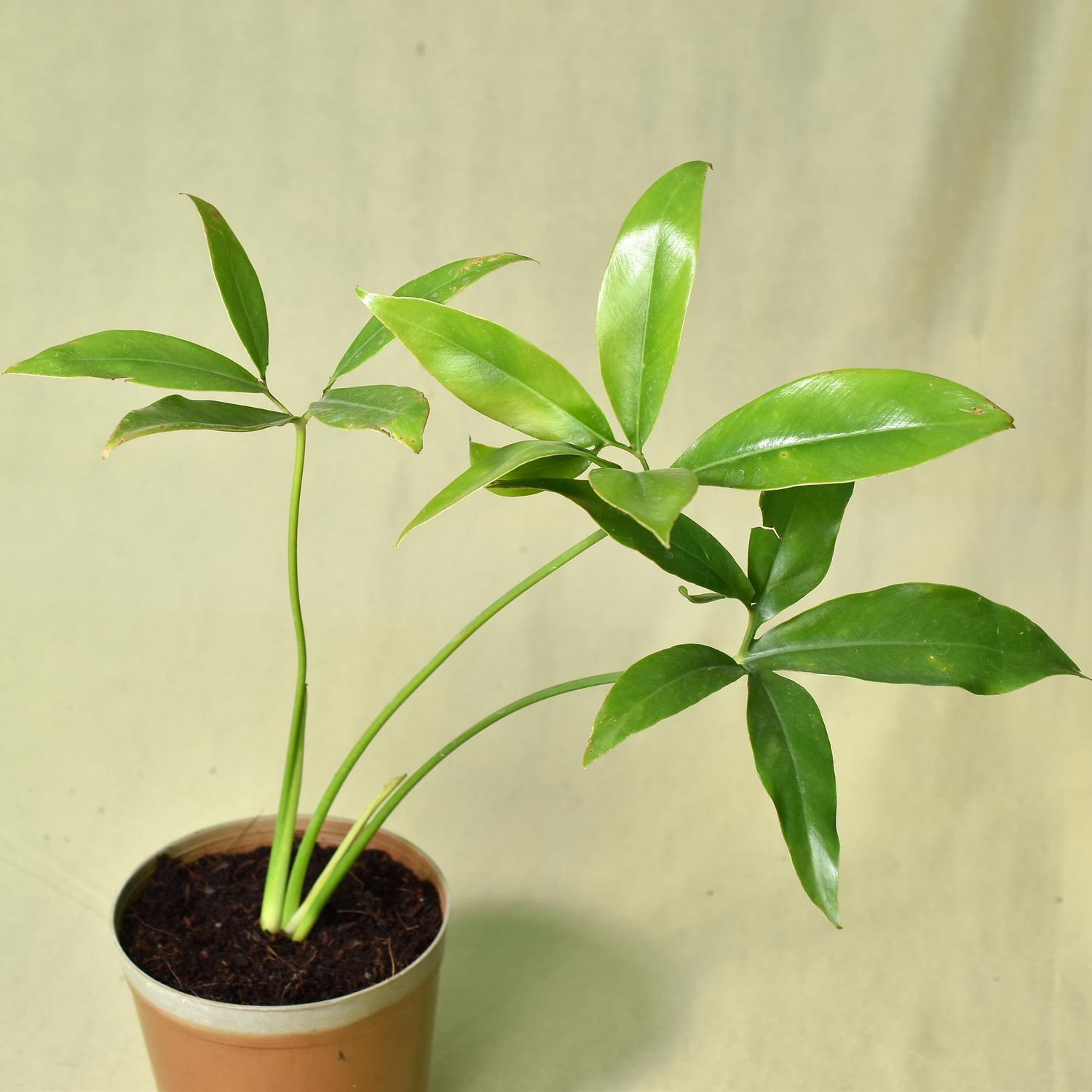
Philodendron goeldii
SKU GG015
₹280.00
A rare Monstera with flame-like leaves and unmatched collector appeal.
In stock: 15 available
1
Save this product for later
Customer reviews
Reviews only from verified customers
No reviews yet. You can buy this product and be the first to leave a review.
Philodendron goeldii
Product Details
A living firework from the Amazon — Philodendron goeldii throws out leaves in a perfect spiral, each one splayed into a fan of slender, arching fingers. Compact, sculptural and endlessly photogenic, it’s the ‘Fun Bun’ that turns any corner into a tropical statement.
Origin of Name
The genus name Philodendron comes from the Greek philo (love) and dendron (tree), a nod to the many species that climb trees. The epithet goeldii honours Emílio Augusto Goeldi (1859–1917), the Swiss-born naturalist who directed the Museu Paraense in Belém, Brazil. The museum now bears his name. The type specimen was collected by Goeldi on 30 September 1903 at Igarapé das Flores near Manaus. Brazilian botanist Graziela M. Barroso formally described the species in 1957 in Arquivos do Jardim Botânico do Rio de Janeiro.
The plant’s naming history is unusual. It had already been described in 1859 by Austrian botanist Heinrich Wilhelm Schott as Thaumatophyllum spruceanum, from the Greek thauma (wonder) and phyllon (leaf), meaning “wonder-leaf”. The epithet spruceanum honours English botanist Richard Spruce, who collected it during his Amazon travels. For a long time it was the only species in that genus. In 1962 Barroso tried to transfer Schott’s name to Philodendron as P. spruceanum, but she left out the required reference to the original name, which made the combination invalid. As a result, her own 1957 name, P. goeldii, became the accepted one. In 2018 a molecular study revived Thaumatophyllum, so you may see it sold under that name, but Kew’s Plants of the World Online keeps it in Philodendron.
Synonyms: Thaumatophyllum spruceanum Schott; Philodendron spruceanum (Schott) G.M.Barroso (invalid).
Trade names: ‘Fun Bun’, Finger Leaf Philodendron.
Origin of Plant
Philodendron goeldii is native to northern South America: northern Brazil, Colombia, Ecuador, Peru, Venezuela, Suriname and French Guiana. It grows in several Amazonian habitats:
- permanently flooded igapó forest
- seasonally flooded várzea
- terra firme rainforest
- Amazonian caatinga, the stunted forest on white sand
- riverbanks and roadside secondary forest
It grows either on the ground as a self-supporting shrub or up in trees as a hemiepiphyte. When it climbs, its thick aerial roots hang all the way down to the forest floor.
Description
- Form: a self-heading (tree-like) aroid. In cultivation it stays compact and upright when young, then slowly develops a short, thick, woody stem.
- Leaves: pedately compound, made up of about 7–20 narrow, oblong leaflets. The leaflets fan out from a curved central rib and arch gracefully downward. New leaves emerge in a tight spiral, giving the clustered “bun” look that inspired its trade name.
- Petioles: long and slender, often longer than the leaf blade itself.
- Stems and roots: cut tissue releases a sticky resin that turns yellow-orange. The aerial roots are thick and cord-like.
- Size: usually 60–150 cm in containers. In the wild, the stems can reach several metres.
- Flowers: a typical aroid inflorescence, a cream spadix inside a spathe. It rarely flowers indoors and is grown mainly for its foliage.
Conservation Status
The species has not been assessed on the IUCN Red List and is not listed under CITES. It is widespread across the Amazon basin and common along river margins, so there are no trade restrictions. Our plants are nursery-propagated.
Care
- Light: bright, indirect light. Morning sun is fine, but harsh afternoon sun scorches the leaflets. Outdoors, grow it under 50% shade net.
- Watering: water when the top 3–4 cm of mix is dry. Reduce watering in winter. It tolerates the occasional missed watering better than soggy roots.
- Soil: a chunky, airy aroid mix, such as coco chips, perlite, bark and some leaf mould. The mix must drain well.
- Pot: use one with ample drainage. A heavier pot helps balance the spreading crown.
- Humidity: it handles average household humidity well, and leaf size improves above 50%.
- Temperature: it grows best at 18–32°C. Protect it from cold winter nights and move it indoors when temperatures fall below 12°C.
- Feeding: a balanced liquid fertiliser at half strength every 3–4 weeks from spring to monsoon.
- Tips: rotate the pot occasionally to keep the rosette symmetrical. Wipe the leaflets to keep them dust-free. Wear gloves when pruning, because the sap can irritate skin and the plant is toxic to pets if eaten.
A Story Worth Telling
Both people behind this plant’s names are legends of Amazonian science. Richard Spruce spent fifteen years (1849–1864) collecting plants along the Amazon and its tributaries, often while seriously ill. In 1860 he was sent to the Andes to gather seeds of the Cinchona tree, the source of quinine. Those seeds were carried to British India and planted in the Nilgiri Hills, where they helped provide anti-malarial medicine to millions. Emílio Goeldi turned a struggling provincial museum in Belém into one of Brazil’s great scientific institutions, and a small Amazonian primate, Goeldi’s monkey, also carries his name. So every ‘Fun Bun’ on a windowsill holds two chapters of Amazon exploration, one linked by a thread of quinine all the way to India.
You May Also Like
New


Monsoon Guardian Kit (5 in 1)
Monsoon Guardian Kit (5 in 1)
Complete 5-in-1 biological protection kit for cacti & succulents
SKU MNS024
₹850.00
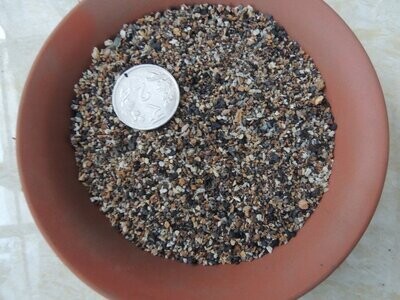
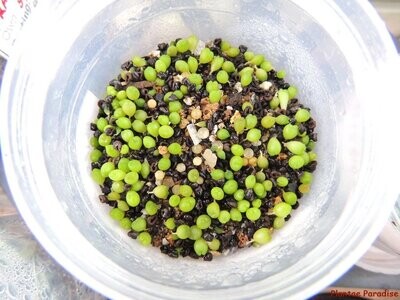
Cactus Seed Planting Mix
Cactus Seed Planting Mix
Sterile, Fine-Grain Media for Cactus & Succulent Seeds
SKU MNS005
₹74.85
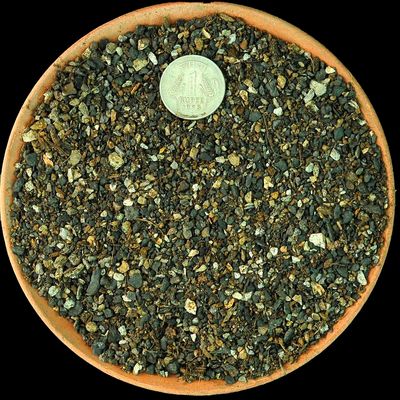
FORTIFIED Cactus & Succulent SOIL (FINE)
FORTIFIED Cactus & Succulent SOIL (FINE)
SKU MNS002
5.0
(4)
₹49.85
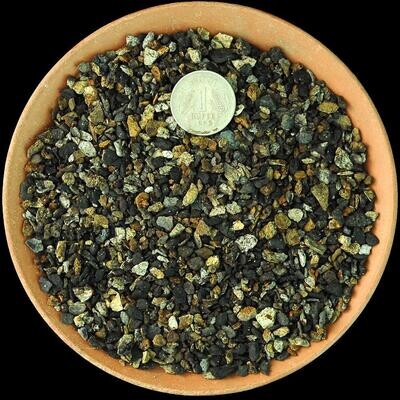
Cactus & Succulent Planting Mix COARSE (aka Cactus Soil Mix or Succulent Soil Mix)
Cactus & Succulent Planting Mix COARSE (aka Cactus Soil Mix or Succulent Soil Mix)
Washed, Free-Draining Mineral Mix for Cactus & Succulents
SKU MNS003
5.0
(1)
₹44.85
Display prices in:INR
