
Categories
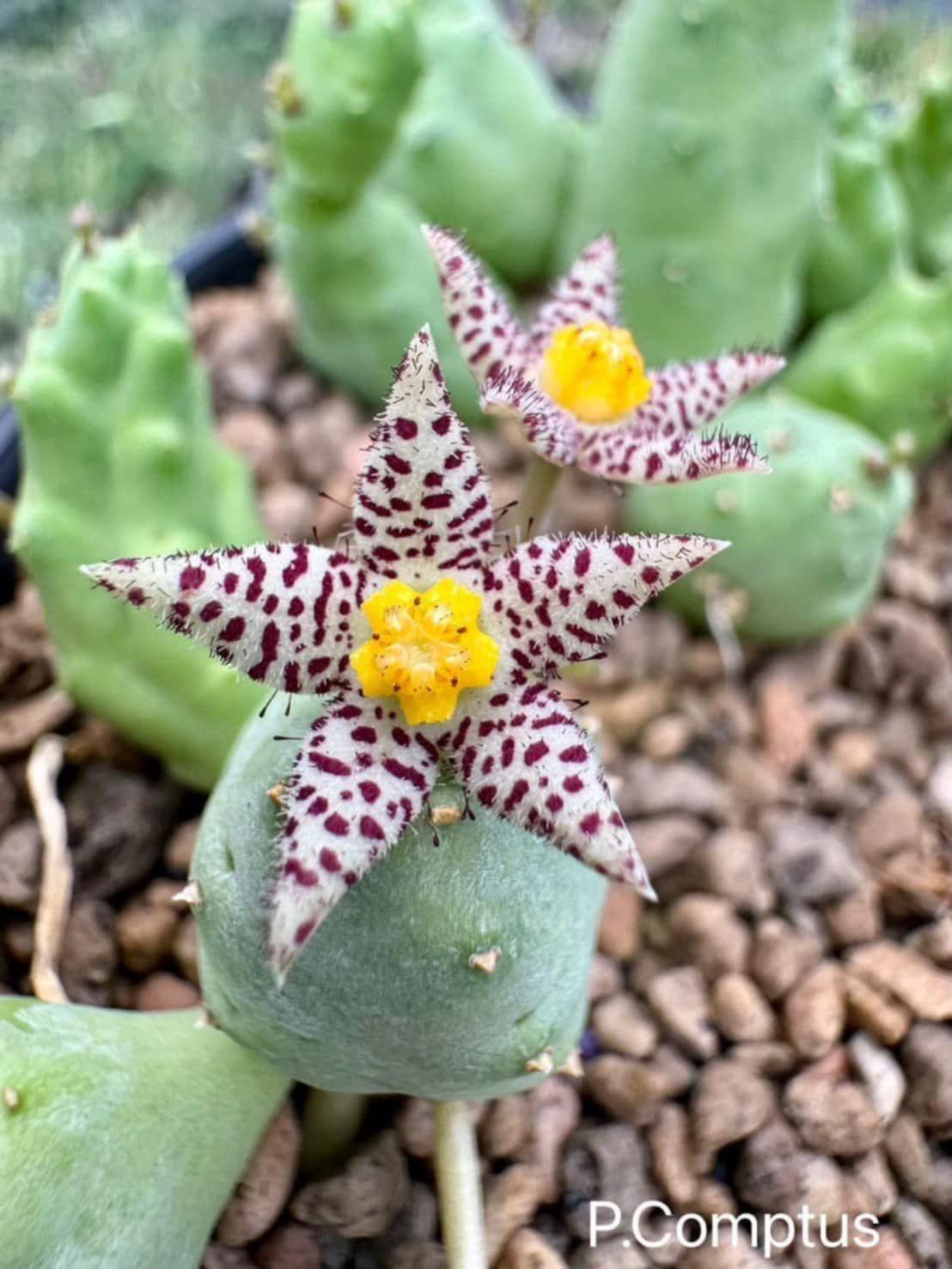
Piaranthus comptus
SKU ASC091
₹225.00
Sold out
Sold out
Save this product for later
Customer reviews
Reviews only from verified customers
No reviews yet. You can buy this product and be the first to leave a review.
Piaranthus comptus
Product Details
Geometric Gem: Piaranthus comptus
A miniaturized marvel of the Karoo, this mat-forming succulent produces exquisite, star-shaped blooms with intricate velvet patterning.
- Origin & History of Name: The genus name Piaranthus is derived from the Greek piar (fat/grease) and anthos (flower), a reference to the succulent, fleshy nature of the corolla lobes.
The specific epithet comptus is Latin for "ornate" or "adorned," highlighting the decorative, speckled markings found on the floral surfaces. The genus was first established by Robert Brown in 1810 to categorize these distinct members of the Apocynaceae family. - Morphology: Piaranthus comptus is a low-growing succulent featuring globose to oblong stems. The epidermis is typically dull green to grey-green, often turning reddish under high light. Unlike many stapeliads, it lacks prominent costae (ribs), featuring instead rounded tubercles topped with minute, non-pungent teeth. The flowers are actinomophic (radially symmetrical), boasting five distinct lobes covered in fine, glandular hairs and a pale yellow base color densely mottled with maroon spots.
- Habitat & Origin: This is a wild species endemic to the arid regions of the Western and Eastern Cape provinces of South Africa. It typically grows in the shelter of "nurse plants" or rocky crevices in the Great Karoo. Our specimens are nursery-propagated via stem cuttings or seed to ensure the protection of wild populations and adhere to sustainable trade practices.
- Cultivation Profile:
- Substrate: Requires a strictly porous, mineral-based mix. A blend of 60% grit (pumice or coarse sand) and 40% organic compost is ideal to manage the high humidity of the Indian subcontinent.
- Light: Thrives in bright, indirect light. In India, provide 50% shade cloth protection during the summer peak to prevent epidermal scorching, while maximizing light during the monsoon.
- Water/Dormancy: Implement a "dry-between-watering" regime. This species is susceptible to fungal rot if kept damp during the winter dormancy period (typical in Northern India) or during the peak of the tropical monsoon; ensure high ventilation at all times.
- Scientific/Historical Anecdote: Piaranthus belongs to the tribe Stapeliae, often called "carrion flowers." While many relatives emit a scent of decaying matter to attract flies, P. comptus often possesses a much milder, sometimes sweet or fungal odor. Interestingly, the pollination mechanism involves a sophisticated "trap" where the insect's leg must slide into a specific slit to pick up the pollinia (pollen masses), a trait shared with orchids.
You May Also Like

Cactus & Succulent Planting Mix COARSE (aka Cactus Soil Mix or Succulent Soil Mix)
Cactus & Succulent Planting Mix COARSE (aka Cactus Soil Mix or Succulent Soil Mix)
Washed, Free-Draining Mineral Mix for Cactus & Succulents
SKU MNS003
5.0
(1)
₹44.85
New
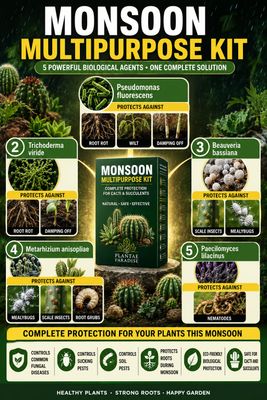
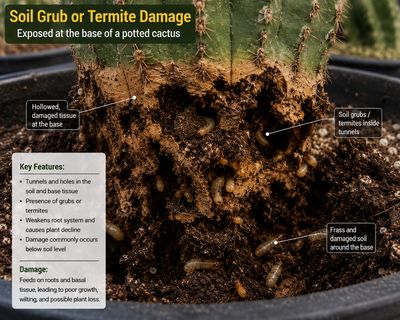
Monsoon Guardian Kit (5 in 1)
Monsoon Guardian Kit (5 in 1)
Complete 5-in-1 biological protection kit for cacti & succulents
SKU MNS024
₹850.00

FORTIFIED Cactus & Succulent SOIL (COARSE)
FORTIFIED Cactus & Succulent SOIL (COARSE)
SKU MNS004
5.0
(12)
₹54.85


Cactus & Succulent Planting Mix FINE (aka Cactus Soil Mix or Succulent Soil Mix)
Cactus & Succulent Planting Mix FINE (aka Cactus Soil Mix or Succulent Soil Mix)
Fine-Grain Potting Mix for Cactus & Succulent Roots
SKU MNS001
5.0
(3)
₹39.85
Display prices in:INR
