
Categories
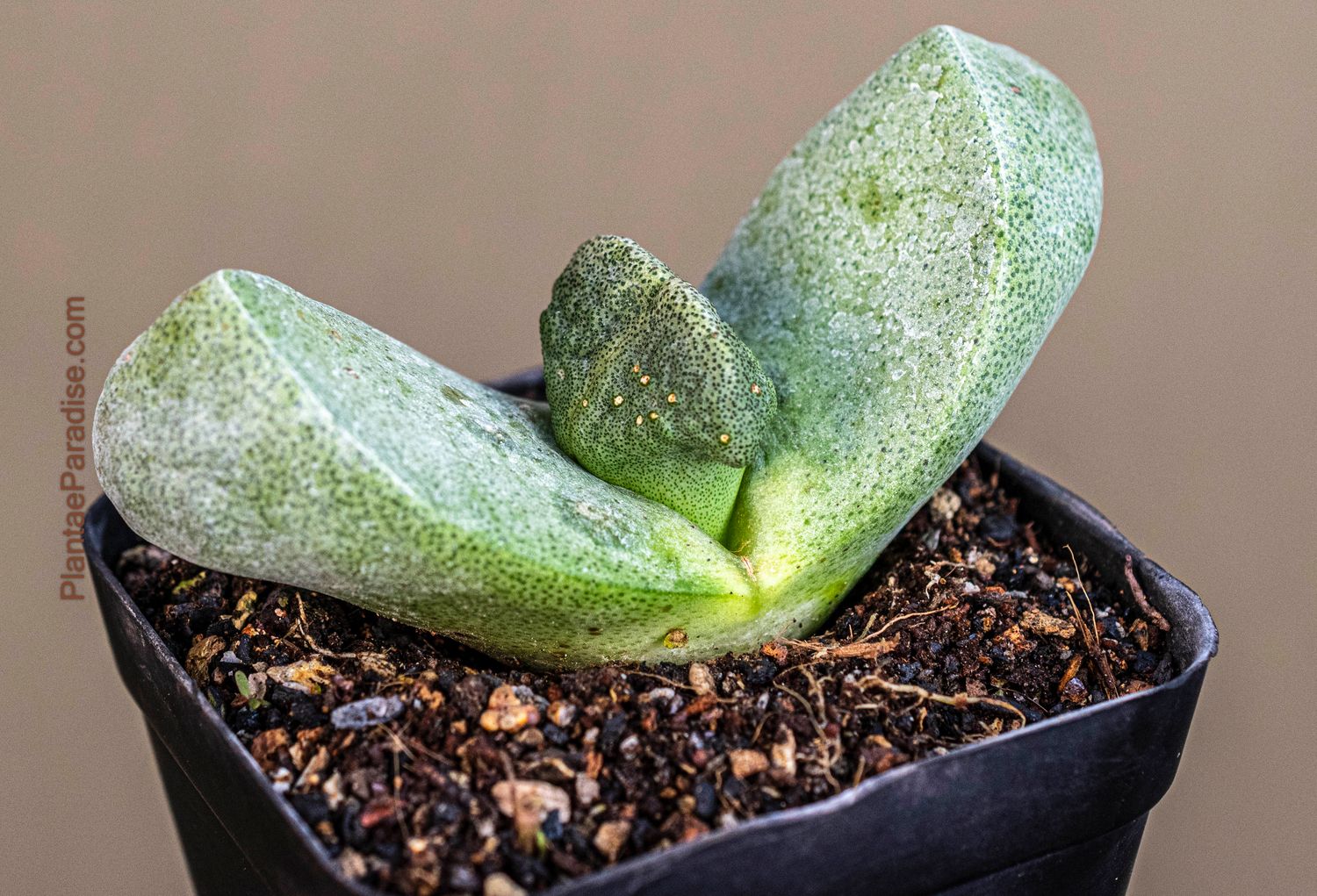
Pleiospilos bolusii
SKU MM002
₹625.00
Sold out
Sold out
Save this product for later
Customer reviews
Reviews only from verified customers
No reviews yet. You can buy this product and be the first to leave a review.
Pleiospilos bolusii
Product Details
Spotted Split Rock: Pleiospilos bolusii
A captivating mimicry succulent, its stone-like foliage and vibrant daisy-like blooms offer a fascinating blend of camouflage and unexpected beauty.
- Origin & History of Name: The genus Pleiospilos combines the Greek pleios (many) and spilos (spot), directly describing the characteristic spotted texture of its leaves. The specific epithet bolusii honors Harry Bolus (1834–1911), a renowned South African botanist, orchidologist, and botanical artist who made significant contributions to the study of Southern African flora.
- Morphology: This compact, stemless succulent typically forms clumps of 2-4 (rarely more) pairs of thick, highly succulent, grey-green leaves. The leaves are hemispherical to obconical, often keeled on the underside, and intricately mottled with numerous darker green or purplish spots. This coloration and texture allows it to perfectly camouflage among rocks. Large, solitary, daisy-like flowers, typically bright golden-yellow to orange-yellow, emerge from the fissure between the youngest leaf pair, often fragrant.
- Habitat & Origin: This is a wild species native to the arid Karoo regions of the Eastern Cape Province, South Africa. It typically grows camouflaged among quartzite stones and rocky outcrops. While locally common, commercial specimens are exclusively nursery-propagated from seed, ensuring sustainable cultivation and preventing depletion of wild populations.
- Cultivation Profile:
- Substrate: Requires an extremely well-draining, mineral-based mix; a blend of 90% inorganic grit (e.g., pumice, lava rock, coarse sand) and 10% minimal organic material is essential.
- Light: Thrives in full sun to very bright, indirect light. Insufficient light leads to etiolation and a loss of its compact, stone-like form.
- Water/Dormancy: Water very sparingly, only when the oldest leaf pair begins to shrivel and is almost entirely absorbed. Maintain strict dryness during its summer dormancy and when new leaves emerge and are actively absorbing old ones. Overwatering is fatal.
- Scientific/Historical Anecdote: Pleiospilos belongs to the Aizoaceae family, commonly known as "mesembs," famous for their remarkable mimicry of surrounding rocks. This camouflage strategy is an evolutionary adaptation to avoid herbivory in their harsh, arid habitats. During periods of drought, the plant survives by drawing moisture and nutrients from its older leaves, gradually absorbing them until only a new, compact pair remains, effectively "shedding" its old skin and maintaining its rock-like disguise.
You May Also Like
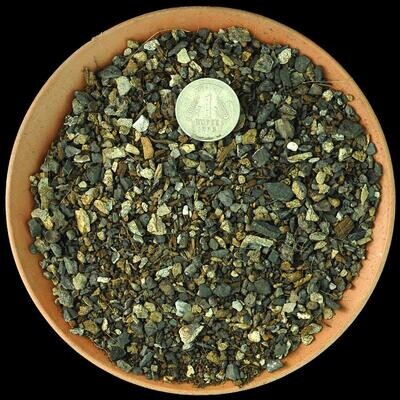
FORTIFIED Cactus & Succulent SOIL (COARSE)
FORTIFIED Cactus & Succulent SOIL (COARSE)
SKU MNS004
5.0
(12)
₹54.85
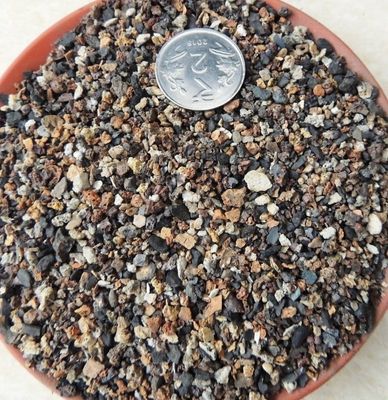
Cactus & Succulent Planting Mix FINE (aka Cactus Soil Mix or Succulent Soil Mix)
Cactus & Succulent Planting Mix FINE (aka Cactus Soil Mix or Succulent Soil Mix)
Fine-Grain Potting Mix for Cactus & Succulent Roots
SKU MNS001
5.0
(3)
₹39.85

FORTIFIED Cactus & Succulent SOIL (FINE)
FORTIFIED Cactus & Succulent SOIL (FINE)
SKU MNS002
5.0
(4)
₹49.85


Cactus Seed Planting Mix
Cactus Seed Planting Mix
Sterile, Fine-Grain Media for Cactus & Succulent Seeds
SKU MNS005
₹74.85
Display prices in:INR
