
Categories
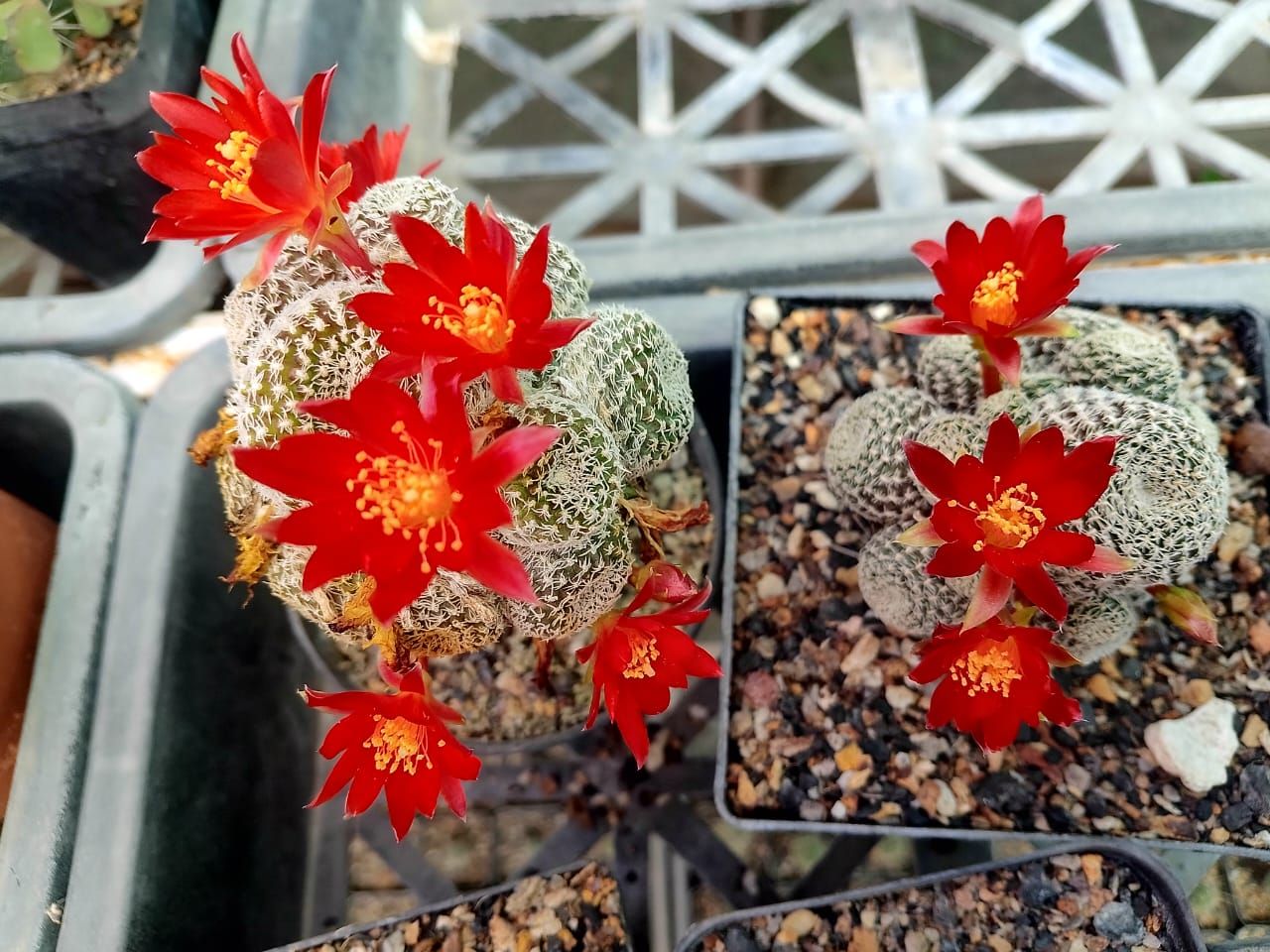
Rebutia hybrid Crimson Red Flower
SKU RE015Gb
₹630.00
In stock: 1 available
1
Save this product for later
Customer reviews
Reviews only from verified customers
No reviews yet. You can buy this product and be the first to leave a review.
Rebutia hybrid Crimson Red Flower
Product Details
In the hushed geometry of a Rebutia clump, colour arrives almost as an ambush — a crown of flame-red silk unfurling low against a cushion of white, hair-fine spines, as if the plant had spent all winter saving its fire for one perfect week in spring. This Rebutia Hybrid carries no fixed pedigree and no single species name — it is, instead, the product of the genus's famous promiscuity, a garden-raised cross whose parentage blurs somewhere among Bolivia and Argentina's countless Rebutia forms. What it lacks in taxonomic certainty, it makes up for in sheer flowering generosity.
Origin of Name
The genus Rebutia was formally established in 1895 by the German botanist Karl Moritz Schumann, who named it in honour of Pierre Rebut, a French botanist and nurseryman who specialised in cacti during the mid-to-late 19th century. The genus name follows the standard botanical convention of adding the Latin suffix "-ia" to a personal surname ending in a consonant — a common practice for genera honouring collectors and horticulturists of the period. Rebut himself was awarded a gold medal by the Côte-d'Or Society of Horticulture and Arboriculture for his large cactus collection, which also encompassed Crassula, Aloe, Agave, and Mesembryanthemum.
The honour, however, was not entirely without controversy. Correspondence from the period, later published in cactus society journals, records the grower Albert Weber pointedly noting that many of the "novelties" Rebut brought to market had in fact originated with other collectors, who received little acknowledgment — a reminder that 19th-century plant-naming, much like today's collector world, was as much about who got to the marketplace first as who did the botanical legwork. As for this particular plant, "Hybrid" is used here in its most literal sense: a garden or nursery cross of unrecorded Rebutia parentage, deliberately or accidentally pollinated, and selected for the vividness of its bloom rather than fidelity to any single named species.
Origin of Plant
While this specimen itself is of hybrid, cultivated origin, the genus it descends from is rooted firmly in the high Andes. Rebutia species are native to the high-altitude eastern Andes of southern Bolivia and northwestern Argentina, growing at elevations of roughly 1,500 to 5,000 metres. The type species, Rebutia minuscula, has been in cultivation since 1887, and the genus quickly became a favourite among European collectors for its combination of small stature and outsized flower power. Because so many Rebutia forms hybridise freely and produce abundant seed that germinates readily around the parent plant, the genus has long been a hotbed of both natural and deliberately bred crosses — which is precisely how plants like this one come to exist, carrying the compact habit and floral brilliance of their wild Andean ancestors without a tidy species label to match.
Description
This is a densely clustering, globular cactus, its many small stems packed shoulder to shoulder into a tight mound rather than growing as a single dominant body. Individual heads are typically small — a few centimetres tall and wide — and lack true ribs, instead bearing spirally arranged tubercles from which fine, radiating white spines emerge, giving the whole cluster a soft, almost furred appearance. Against this pale, bristled surface, the flowers land with real impact: broad, multi-petaled blooms in a saturated, glowing red, opening flat to reveal a dense boss of golden-yellow stamens at the centre. Rebutia flowers are diurnal and characteristically emerge laterally from the sides or base of the stem rather than from the growing tip — so blooms tend to ring the lower flanks of the cluster rather than crown its summit, a habit distinct from many other globular cacti. As the plant matures and continues to offset, expect the clump to broaden steadily, each new head eventually capable of flowering in its own right.
Conservation Status
As a nursery-originated hybrid rather than a wild-collected species, this plant carries no individual IUCN or CITES listing of its own. The genus Rebutia as a whole falls under CITES Appendix II, which governs international trade in wild cactus specimens; artificially propagated material — as this hybrid is — is exempt from the permit requirements that apply to wild-collected plants. Several of the wild species that likely sit somewhere in this hybrid's ancestry face localised pressure from habitat disturbance and over-collection in their native Andean ranges, which makes nursery propagation of forms like this one a genuinely low-impact way to enjoy the genus's colour and diversity without drawing on wild populations.
Care
- Light: Bright light to full sun; a touch of light shade in the most intense summer afternoon heat helps prevent scorching, especially for plants moved outdoors after a period indoors
- Watering: Water generously through the active spring–summer growing season, letting the mix dry out between waterings; cut back sharply in winter, watering only enough to prevent the stems from shrivelling
- Soil: A fast-draining, mineral-rich cactus mix; avoid soils that hold moisture around the base of the cluster, where rot is most likely to start
- Pot: Terracotta is preferable to plastic, as it wicks away excess moisture and helps the fine root system stay healthy
- Temperature: Prefers warm days and cool nights during the growing season; needs a cool, dry winter rest (ideally 10–15°C) to trigger strong spring flowering
- Feeding: A low-nitrogen, high-potassium cactus fertiliser during the growing season encourages flowering and firm, compact growth rather than soft, lush stems
A Story Worth Telling
There's a quiet irony sitting inside every Rebutia's name tag. The genus was named to honour Pierre Rebut as the man who introduced its type species to European collectors — yet in his own lifetime, fellow growers were already grumbling that Rebut was often simply first to sell what others had actually raised from seed. One correspondence even records Rebut's own plant catalogue listing a variety under a different breeder's name entirely, while the credit for introducing it publicly went to Rebut regardless.
It's a fitting bit of history for a plant like this one, whose own "identity" is similarly a matter of who-crossed-what and who-gets-the-credit. This Rebutia Hybrid carries no single, tidy lineage — just generations of collectors crossing whatever bloomed best, chasing exactly the kind of saturated red-on-white display you see here. In that sense, owning an unnamed Rebutia hybrid puts you in very good historical company: the genus has never really been about pedigree. It's always been about the flower.
You May Also Like

Cactus & Succulent Planting Mix COARSE (aka Cactus Soil Mix or Succulent Soil Mix)
Cactus & Succulent Planting Mix COARSE (aka Cactus Soil Mix or Succulent Soil Mix)
Washed, Free-Draining Mineral Mix for Cactus & Succulents
SKU MNS003
5.0
(1)
₹44.85


Cactus Seed Planting Mix
Cactus Seed Planting Mix
Sterile, Fine-Grain Media for Cactus & Succulent Seeds
SKU MNS005
₹74.85
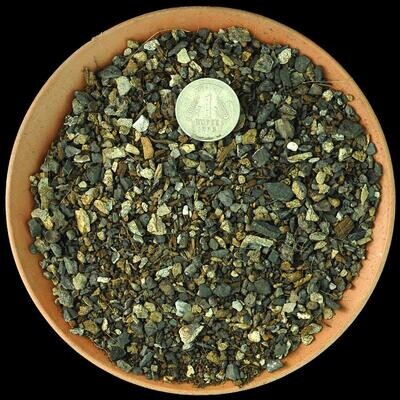
FORTIFIED Cactus & Succulent SOIL (COARSE)
FORTIFIED Cactus & Succulent SOIL (COARSE)
SKU MNS004
5.0
(11)
₹54.85
New

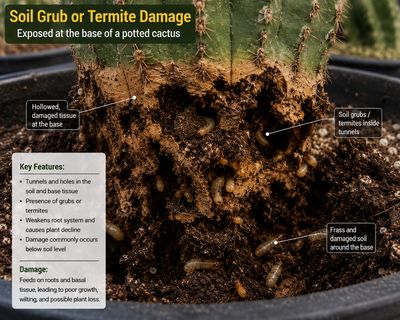
Monsoon Guardian Kit (5 in 1)
Monsoon Guardian Kit (5 in 1)
Complete 5-in-1 biological protection kit for cacti & succulents
SKU MNS024
₹850.00
Display prices in:INR
