
Categories
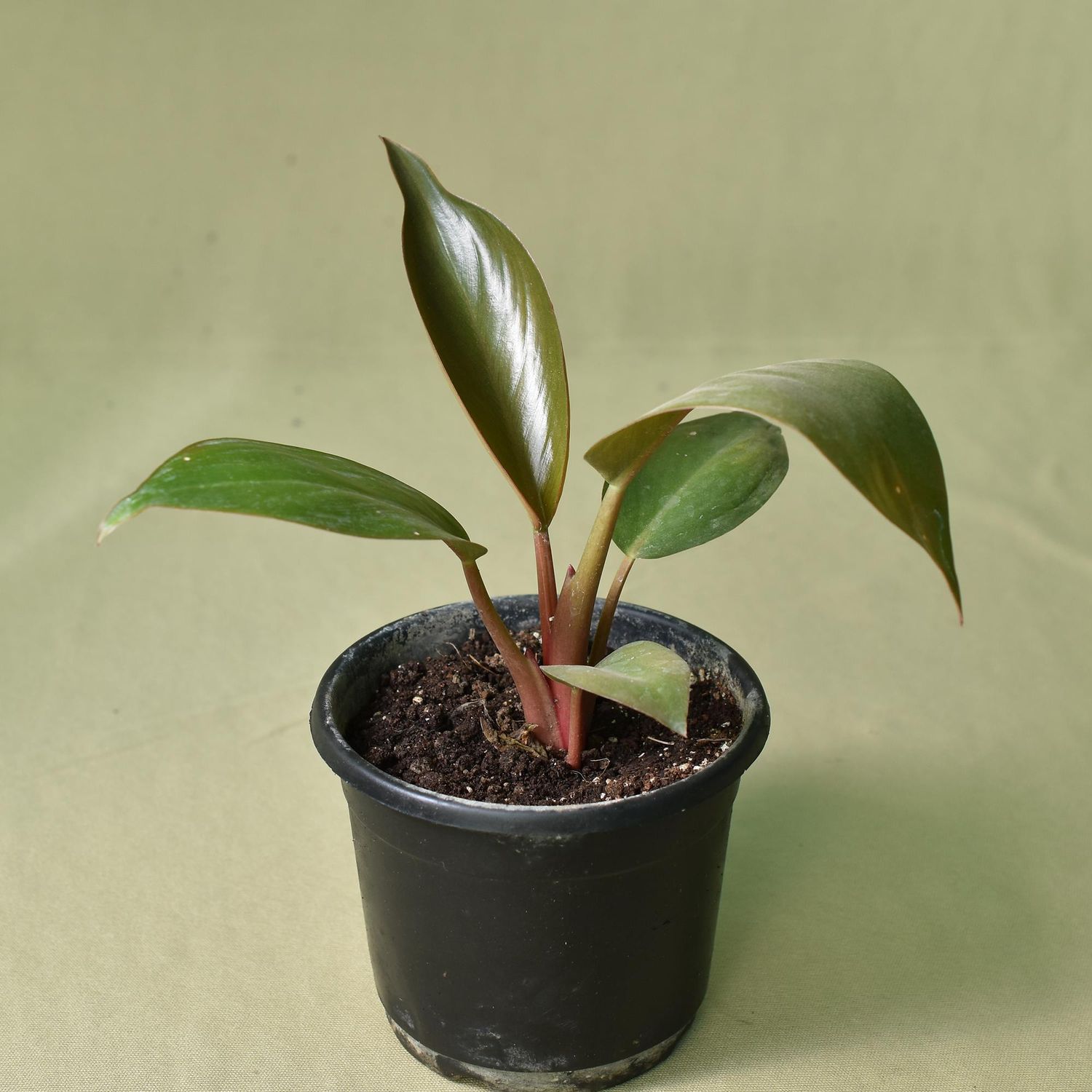
Red leaf Philodendron
SKU GG018
₹170.00
On Sale
List Price ₹200.00 Save 15%
In stock: 20 available
1
Save this product for later
Customer reviews
Reviews only from verified customers
No reviews yet. You can buy this product and be the first to leave a review.
Red leaf Philodendron
Product Details
Crimson Elegance: Philodendron erubescens
A striking collector's gem defined by its dramatic wine-red stems and high-gloss foliage.
- Origin & History of Name: The name derives from the Greek words philo (love/affection) and dendron (tree), referencing its natural epiphytic habit of "hugging" trees. The specific epithet erubescens translates to "blushing" or "turning red," describing the characteristic reddish hue of the leaf undersides and petioles.
It was first formally described in the mid-19th century as European botanists began documenting the diverse flora of the Neotropics. - Morphology: This hemiepiphyte features a thick epidermis on its cordate (heart-shaped) leaves, providing a waxy, reflective sheen. Its most distinct feature is the cataphyll—the protective sheath that covers emerging leaves—which exhibits a deep burgundy pigment. As the plant matures, it develops prominent costae (midribs) that support the weight of the sprawling foliage.
- Habitat & Origin: While many variations are modern cultivars, the Philodendron erubescens is a wild species native to the tropical rainforests of Colombia.
Our specimens are sustainably propagated via tissue culture or stem cuttings from established mother plants, ensuring no disruption to wild forest ecosystems. - Cultivation Profile:
- Substrate: Use a coarse, well-draining mix of coco-chips, perlite, and burnt rice husk. Avoid heavy garden soil which compacts during the Indian monsoon.
- Light: Bright, indirect light. In India, a north or east-facing balcony is ideal; avoid harsh 12:00 PM – 4:00 PM direct sun which scorches the foliage.
- Water/Dormancy: Water when the top two inches of substrate feel dry. During the high-humidity monsoon, reduce frequency. It undergoes a slight growth slowdown during the cooler months of December and January.
- Scientific/Historical Anecdote: Philodendron species possess a unique biological trait called thermogenesis.
During pollination, the plant can chemically increase its temperature—sometimes reaching over 10°C above the ambient air—to better disperse pheromones and attract specific beetle pollinators in the dense jungle canopy.
You May Also Like

FORTIFIED Cactus & Succulent SOIL (COARSE)
FORTIFIED Cactus & Succulent SOIL (COARSE)
SKU MNS004
5.0
(11)
₹54.85

FORTIFIED Cactus & Succulent SOIL (FINE)
FORTIFIED Cactus & Succulent SOIL (FINE)
SKU MNS002
5.0
(4)
₹49.85


Cactus & Succulent Planting Mix FINE (aka Cactus Soil Mix or Succulent Soil Mix)
Cactus & Succulent Planting Mix FINE (aka Cactus Soil Mix or Succulent Soil Mix)
Fine-Grain Potting Mix for Cactus & Succulent Roots
SKU MNS001
5.0
(3)
₹39.85

Cactus Seed Planting Mix
Cactus Seed Planting Mix
Sterile, Fine-Grain Media for Cactus & Succulent Seeds
SKU MNS005
₹74.85
Display prices in:INR
