
Categories
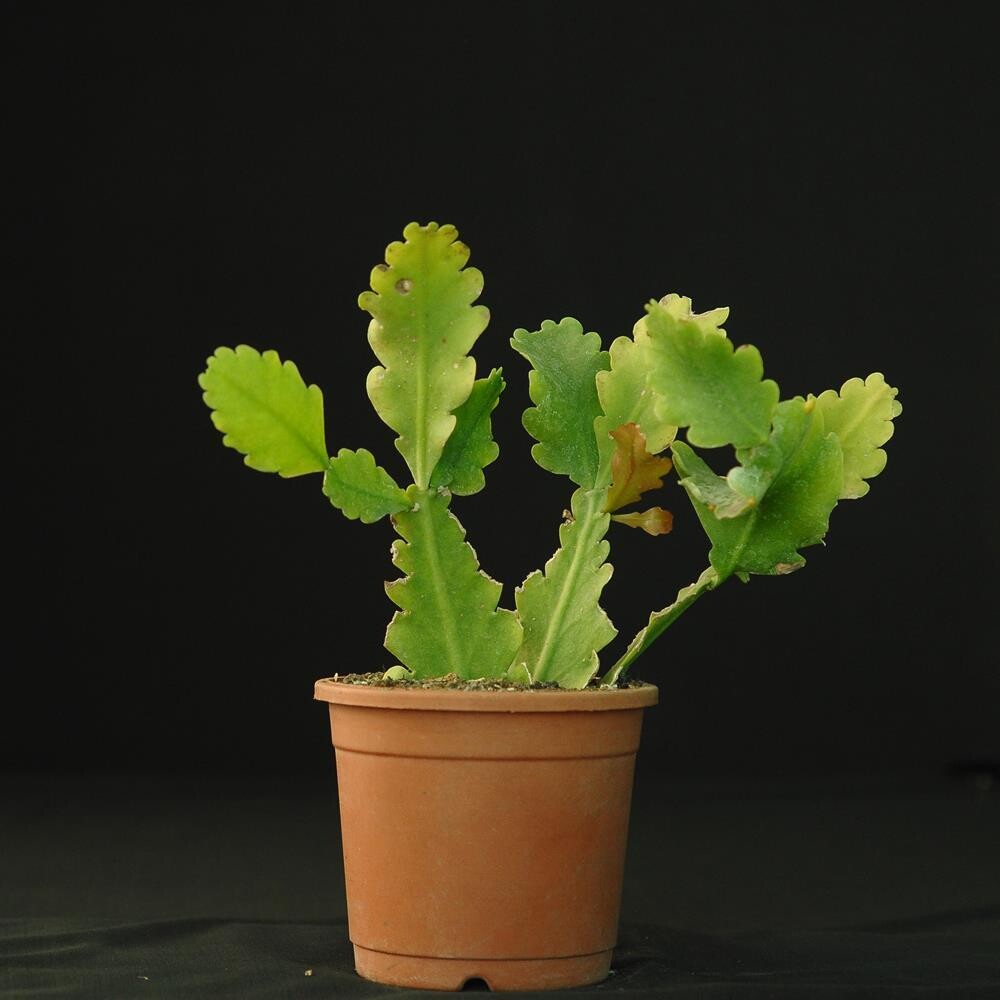
Rhipsalis oblonga
SKU EE041A
₹380.00
Sold out
Sold out
Save this product for later
Customer reviews
Reviews only from verified customers
No reviews yet. You can buy this product and be the first to leave a review.
Rhipsalis oblonga
Product Details
Origin of Name
The genus name "Rhipsalis" derives from the Greek word "rhips," meaning wickerwork, referring to the plant's long, flexible stems that resemble woven baskets. "Oblonga" refers to the oblong shape of the plant's segments, highlighting the distinctive form of this particular species within the genus.
Technical Description of Plant
Rhipsalis oblonga is a shrubby cactus with segmented, semi-erect to pendent, olive green or light green stems that grow up to 8.2 feet (2.5 m) long. The main stems are cylindrical at the base, becoming flattened above, branching apical or lateral, up to 8 inches (20 cm) long, and up to 0.4 inches (2 cm) across. The stem segments have serrated margins and large areoles. They are up to 6 inches (15 cm) long and 2.4 inches (6 cm) wide.
Origin of Plant
Rhipsalis species are primarily found in Central and South America, with Rhipsalis oblonga being found in Southern Bahia, Espirito Santo, Rio de Janeiro, and Sao Paulo, Brazil . As an epiphytic plant, it naturally grows on the surface of other plants, especially in the crooks of tree branches where decomposed material provides nutrients, rather than parasitizing its host. This growth habit allows it to thrive in environments with indirect light and high humidity.
Conservation Status
The conservation status of Rhipsalis oblonga specifically is not widely documented, but like many epiphytic cacti, it could be susceptible to habitat loss due to deforestation and climate change. Preserving their natural habitats and promoting cultivation can aid in the conservation of this and similar species.
Care Instructions
Rhipsalis oblonga thrives in bright, indirect light, mimicking the dappled sunlight of its natural forest canopy habitat. It prefers a well-draining, organic-rich potting mix, ideally suited for epiphytic plants. Water regularly, allowing the soil to slightly dry out between waterings, and maintain high humidity if possible. This plant is best kept in temperatures above 50°F (10°C) and should be fertilized lightly during the growing season. Due to its trailing habit, Rhipsalis oblonga is perfect for hanging baskets or elevated planters where its stems can gracefully drape downwards.
You May Also Like
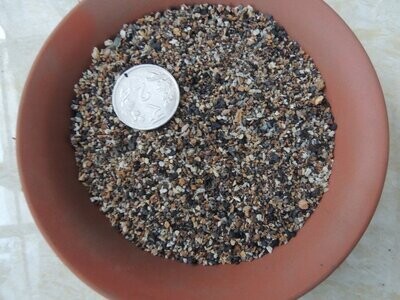
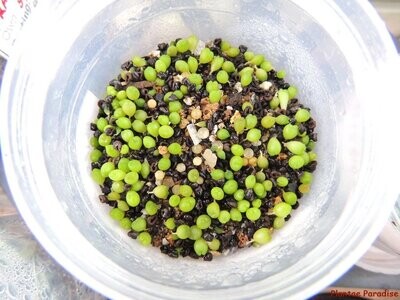
Cactus Seed Planting Mix
Cactus Seed Planting Mix
Sterile, Fine-Grain Media for Cactus & Succulent Seeds
SKU MNS005
₹74.85

FORTIFIED Cactus & Succulent SOIL (COARSE)
FORTIFIED Cactus & Succulent SOIL (COARSE)
SKU MNS004
5.0
(12)
₹54.85

Cactus & Succulent Planting Mix COARSE (aka Cactus Soil Mix or Succulent Soil Mix)
Cactus & Succulent Planting Mix COARSE (aka Cactus Soil Mix or Succulent Soil Mix)
Washed, Free-Draining Mineral Mix for Cactus & Succulents
SKU MNS003
5.0
(1)
₹44.85
New
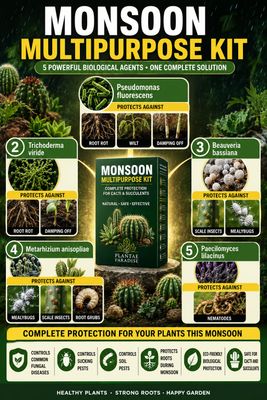
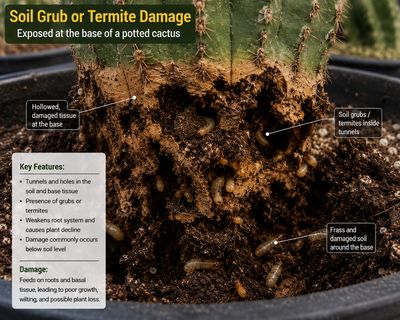
Monsoon Guardian Kit (5 in 1)
Monsoon Guardian Kit (5 in 1)
Complete 5-in-1 biological protection kit for cacti & succulents
SKU MNS024
₹850.00
Display prices in:INR
