
Categories
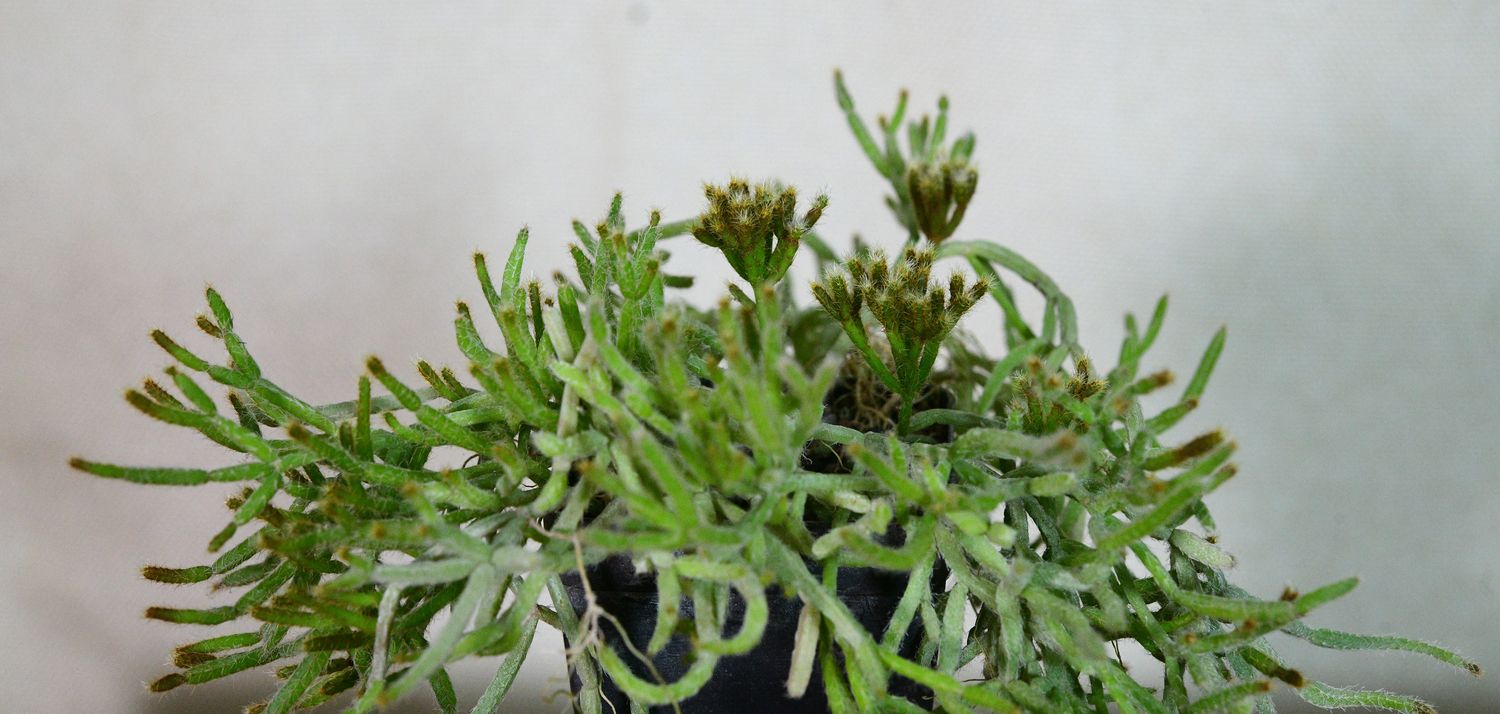
Rhipsalis teres
SKU RS003
₹450.00
In stock: 1 available
1
Save this product for later
Customer reviews
Reviews only from verified customers
No reviews yet. You can buy this product and be the first to leave a review.
Rhipsalis teres
Product Details
Rhipsalis teres (Brazilian Mistletoe Cactus)
A cactus that looks nothing like one — no pads, no spines, just a cascading tangle of slender, pencil-thin, jointed green stems that branch and rebranch into a soft, trailing thicket. Native to Brazil's Atlantic rainforest, this easygoing epiphyte thrives in the same low, indirect light most houseplants struggle in, and rewards patience with small starry flowers and pale, mistletoe-like berries at its branch tips, just visible here on this actively budding specimen.
Origin of Name
The genus name Rhipsalis comes from the ancient Greek word for "wickerwork," a nod to the way its many thin, intertwining stems weave together into a basket-like tangle. It was coined in 1788 by German botanist Joseph Gaertner — though in something of a botanical false start, Gaertner originally believed he was describing a species of Cassytha, a parasitic vine in the laurel family, and only later was the genus correctly recognized as a true, if highly unusual, cactus.
The species epithet teres is Latin for "smooth and cylindrical" or "rounded" — precisely describing this species' slender, rod-like stem segments, in contrast to the flattened or angled stems found in many of its Rhipsalis relatives. It was first described by the Brazilian friar-botanist José Mariano da Conceição Vellozo in his monumental Flora Fluminensis, a survey of the plants around Rio de Janeiro compiled in the 1790s, and was later validly published under this name by German botanist Ernst Gottlieb von Steudel in 1841.
Origin of Plant
Rhipsalis teres is native to Brazil's Atlantic Forest (Mata Atlântica), found across a broad swath of the country's southeastern and southern states — Minas Gerais, Rio de Janeiro, São Paulo, Paraná, Santa Catarina, and Rio Grande do Sul — typically at elevations below 1,000 meters. Like most Rhipsalis species, it grows as an epiphyte, rooting in the pockets of leaf litter and moss that gather in the forks of rainforest trees rather than in soil on the ground, absorbing moisture and nutrients from the humid, filtered-light world of the forest canopy above.
Description
A much-branched, semi-trailing to erect succulent made up of slender, woody-based, cylindrical (terete) stem segments roughly 10–12 mm across, branching freely — especially toward the growing tips — into the dense, cascading tangle visible in this pot, with fine hair-like bristles at the areoles giving the newer growth a soft, fuzzy texture. Stems are green, sometimes blushed with red in bright light. Clusters of small, pale yellow, star-shaped flowers around 10–12 mm across open at the branch tips and scattered along the older stems, exactly as shown budding here, followed by small round berries about 4–5 mm across that ripen white to soft pink — the "mistletoe" berries that give the species its common name. It's a notably variable species in the wild, with several distinct growth forms recognized, ranging from especially fine, hair-like stems to more robust, angled ones.
Conservation Status
Rhipsalis teres has not been individually assessed on the IUCN Red List and is not considered rare within cultivation or across its native range. That said, its home habitat — Brazil's Atlantic Forest — is one of the most heavily reduced biomes on Earth, with less than an estimated 12% of the original forest cover remaining after centuries of clearing for agriculture and development, so wild populations of forest epiphytes like this one exist within an increasingly fragmented landscape even where the species itself isn't formally threatened.
Care
Light: Bright, indirect light suits it best — think dappled forest canopy rather than direct sun, which can scorch the thin stems. It also tolerates lower light better than most cacti, making it a genuinely good indoor plant.
Watering: Water more like a tropical houseplant than a desert cactus: keep lightly moist through the growing season, letting the top layer of soil dry between waterings, and reduce watering somewhat in winter. It should never be allowed to dry out completely for long, unlike desert cacti.
Soil: A loose, well-draining mix with added organic matter — an orchid bark and potting soil blend, or a standard succulent mix cut with extra compost — mimics the leaf litter it roots into in the wild.
Temperature & Humidity: Prefers warm, humid conditions typical of a rainforest understory and should be protected from temperatures below about 10°C (50°F). Higher household humidity is appreciated but not essential.
General tips: An excellent hanging basket plant, since its trailing stems cascade attractively over the pot's edge as it matures. It's slow to moderate in growth and rarely needs repotting; propagates easily from stem cuttings left to callus for a few days before rooting.
An Interesting Note
Rhipsalis holds a genuinely strange distinction in the cactus world: it's the only cactus genus found growing wild outside the Americas at all. One relative, Rhipsalis baccifera, occurs naturally across parts of Africa, Madagascar, and Sri Lanka — and exactly how it got there remains an unsolved botanical mystery. The leading theory, that migratory birds carried the seeds across the Atlantic in their guts, runs into a real problem: no fruit-eating bird is known to make that crossing. A rival theory suggests 16th-century sailors carried cuttings aboard ships along early trade routes, since the plant can survive for long stretches without soil or water — but the evidence for that is circumstantial too. Nearly a century of research still hasn't settled it, which makes even this humble, thread-stemmed cactus family part of one of botany's more entertaining open questions.
You May Also Like

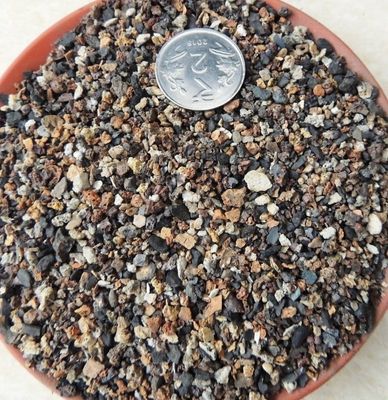
Cactus & Succulent Planting Mix COARSE (aka Cactus Soil Mix or Succulent Soil Mix)
Cactus & Succulent Planting Mix COARSE (aka Cactus Soil Mix or Succulent Soil Mix)
Washed, Free-Draining Mineral Mix for Cactus & Succulents
SKU MNS003
5.0
(1)
₹44.85
Cactus & Succulent Planting Mix FINE (aka Cactus Soil Mix or Succulent Soil Mix)
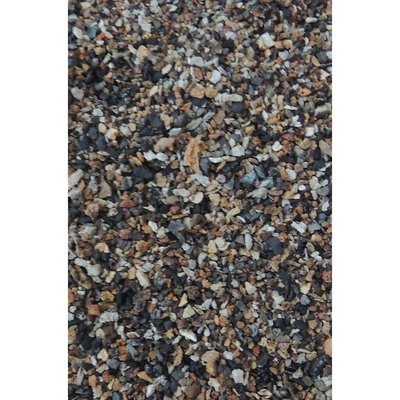
Cactus & Succulent Planting Mix FINE (aka Cactus Soil Mix or Succulent Soil Mix)
Fine-Grain Potting Mix for Cactus & Succulent Roots
SKU MNS001
5.0
(3)
₹39.85

FORTIFIED Cactus & Succulent SOIL (FINE)
FORTIFIED Cactus & Succulent SOIL (FINE)
SKU MNS002
5.0
(4)
₹49.85

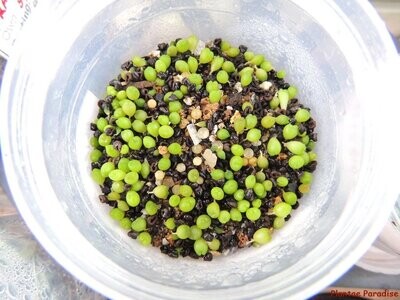
Cactus Seed Planting Mix
Cactus Seed Planting Mix
Sterile, Fine-Grain Media for Cactus & Succulent Seeds
SKU MNS005
₹74.85
Display prices in:INR
