
Categories
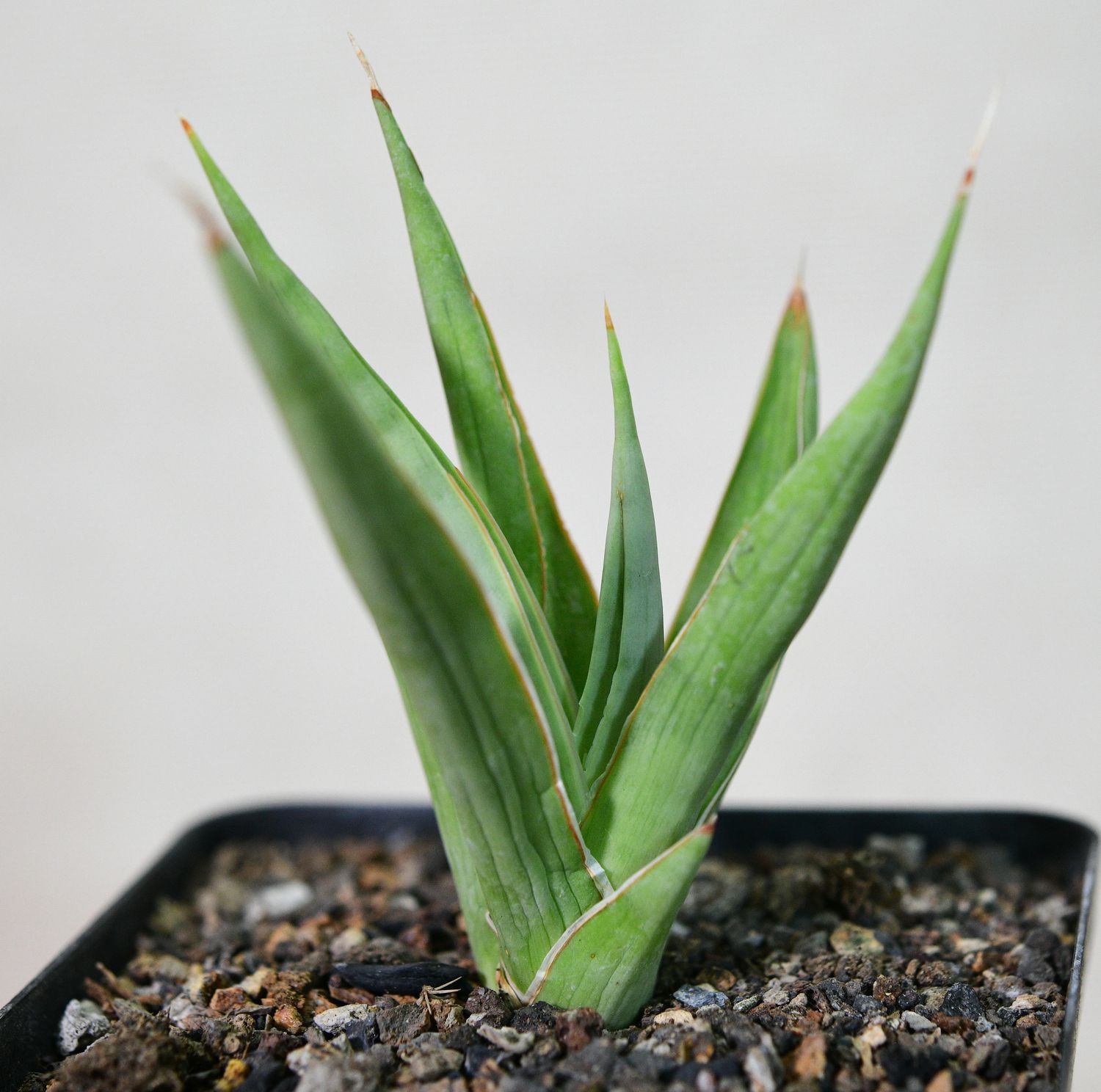
Sansevieria Hybid 'Bai Bid'
SKU SN031
₹785.00
In stock: 1 available
1
Save this product for later
Customer reviews
Reviews only from verified customers
No reviews yet. You can buy this product and be the first to leave a review.
Sansevieria Hybid 'Bai Bid'
Product Details
Sansevieria Hybrid 'Bai Bid'
A compact, upright fan of narrow, channelled snake-plant leaves that spiral gently along their own length as they grow, each blade rimmed in a thin coppery-red line and tapering to a dry, papery point — proof that even the toughest houseplant genus still has room for a party trick.
Origin of Name
The genus name Sansevieria carries a genuinely tangled history. It's generally said to honour Raimondo di Sangro, Prince of San Severo, an 18th-century Italian nobleman and inventor, though the more precise trail leads to botanist Vincenzo Petagna, who in 1787 coined the related name "Sanseverinia" for a different patron, Pietro Antonio Sanseverino, Count of Chiaramonte. When Swedish botanist Carl Peter Thunberg published "Sansevieria" in 1794, it's unclear whether he deliberately amended Petagna's name or simply misspelled it — but his version is the one that survived. In 2017, DNA evidence showed Sansevieria nested entirely within Dracaena, and around seventy species were formally folded into that genus, making "Dracaena" the technically correct name today even though "Sansevieria" remains what growers and nurseries call it worldwide.
'Bai Bid' itself isn't a single registered cultivar in the way a patented Western hybrid would be — it's a trade name used across Thailand's large and prolific Sansevieria nursery scene for a particular growth trait rather than one fixed clone, which is why the same name turns up attached to plants of different sizes and slightly different leaf counts from different growers. The name is straightforwardly descriptive Thai: bai (ใบ) means "leaf," and bid (บิด) means "twist" or "twisted" — so 'Bai Bid' translates simply to "twisted leaf," describing exactly the trait it's selected for: leaves that spiral and torque along their length instead of growing perfectly straight, a quirk Thai hybridizers have deliberately hunted for and propagated among their seedling batches for years, much as they have with crested, variegated, and dwarf forms across the wider succulent trade.
Origin of Plant
Every Sansevieria (now Dracaena, in the strict botanical sense) traces back to the drier parts of Africa, Madagascar, and southern Asia, where these tough, rhizomatous succulents evolved stiff, water-storing leaves to survive long dry spells in rocky or sandy, often shaded ground. Twisting or spiralling leaf growth isn't unique to any one species — it turns up periodically as a spontaneous variation within several wild and cultivated Sansevieria lines, caused by uneven growth rates across the width of a developing leaf, and collectors have prized and propagated such twisted seedlings whenever they appear.
This particular plant, however, owes its existence entirely to cultivation rather than any wild population. It was raised and selected within Thailand's booming ornamental Sansevieria nursery trade, a scene that in recent decades has turned a once-humble, indestructible houseplant genus into a serious collector's category — chasing dwarf rosettes, twisted or channelled leaf forms, and unusual variegation patterns with the same intensity long seen in Thai cactus and mangave breeding circles.
Description
'Bai Bid' grows as a low, upright fan of narrow, blade-like leaves rising from a compact basal cluster, with no visible above-ground stem. Each leaf is deeply channelled along its length, tapering to a sharp point, and — true to its name — twists gently as it grows, giving the whole rosette a loosely spiralling, almost windswept look rather than the rigid, ruler-straight profile of a typical snake plant. The leaf blade itself is a solid mid-to-deep green, edged along both margins with a thin, contrasting coppery-red line that's most visible where the light catches it, and the very tips often dry down to a papery tan-brown as each leaf hardens off — a normal feature of mature Sansevieria growth rather than a sign of trouble. Like its relatives, it spreads slowly over time via thick underground rhizomes, sending up new, similarly twisted leaves from the base as the clump matures.
Conservation Status
As a nursery-selected hybrid trait rather than a wild-collected species, 'Bai Bid' has no conservation status of its own and places no demand on any wild population — it's propagated exclusively by rhizome division in cultivation. The wild Sansevieria species behind the broader genus are, on the whole, common and widespread across Africa and Asia; none of the well-known parent lines used in ornamental hybridizing are considered threatened, and several — including the classic Sansevieria trifasciata — have naturalized so successfully outside their native range that they're flagged as potential garden weeds in parts of the tropics.
Care
Light: Highly adaptable — tolerates low light better than almost any houseplant, but grows fuller, more compact, and holds its leaf colour and twist best in bright, indirect light. Avoid harsh, prolonged direct sun, which can scorch the leaves.
Watering: Let the soil dry out completely between waterings, then water thoroughly — roughly every 2–3 weeks in the growing season, far less in winter. Overwatering, not drought, is what actually kills this plant, so when in doubt, wait.
Soil: A fast-draining, gritty cactus or succulent mix, exactly as shown in its nursery tray — good drainage around the rhizome is essential.
Temperature: Comfortable across typical indoor conditions, roughly 15–30°C (60–86°F); protect from cold drafts and anything below about 10°C (50°F).
General tips: Feed sparingly, once or twice during the growing season, with a diluted balanced fertilizer — this is a plant that thrives on being left alone. To keep the twisted-leaf trait true to type, propagate only by dividing rooted offsets from the rhizome; leaf cuttings will root but tend to lose both variegation and this kind of growth quirk, reverting to plain, straight-leaved seedlings.
An Interesting Note
The gentle spiral in each leaf isn't decoration added after the fact — it happens because the two sides of a growing Sansevieria leaf can expand at very slightly different rates, and over the length of the leaf that small mismatch compounds into a visible twist, the same basic mechanical principle behind corkscrew hazel branches or spiralling grass leaves. What makes 'Bai Bid' worth growing is that Thai nurseries have taken a trait most gardeners would consider a minor cosmetic flaw and turned it, through patient selection, into the entire point of the plant.
You May Also Like

FORTIFIED Cactus & Succulent SOIL (COARSE)
FORTIFIED Cactus & Succulent SOIL (COARSE)
SKU MNS004
5.0
(11)
₹54.85

Cactus & Succulent Planting Mix COARSE (aka Cactus Soil Mix or Succulent Soil Mix)
Cactus & Succulent Planting Mix COARSE (aka Cactus Soil Mix or Succulent Soil Mix)
Washed, Free-Draining Mineral Mix for Cactus & Succulents
SKU MNS003
5.0
(1)
₹44.85
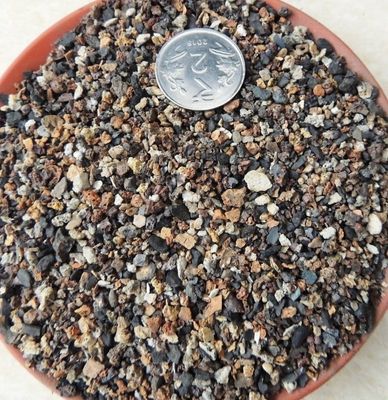

Cactus & Succulent Planting Mix FINE (aka Cactus Soil Mix or Succulent Soil Mix)
Cactus & Succulent Planting Mix FINE (aka Cactus Soil Mix or Succulent Soil Mix)
Fine-Grain Potting Mix for Cactus & Succulent Roots
SKU MNS001
5.0
(3)
₹39.85

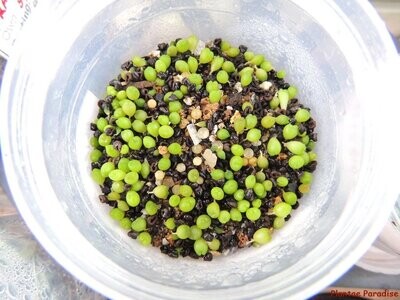
Cactus Seed Planting Mix
Cactus Seed Planting Mix
Sterile, Fine-Grain Media for Cactus & Succulent Seeds
SKU MNS005
₹74.85
Display prices in:INR
