
Categories
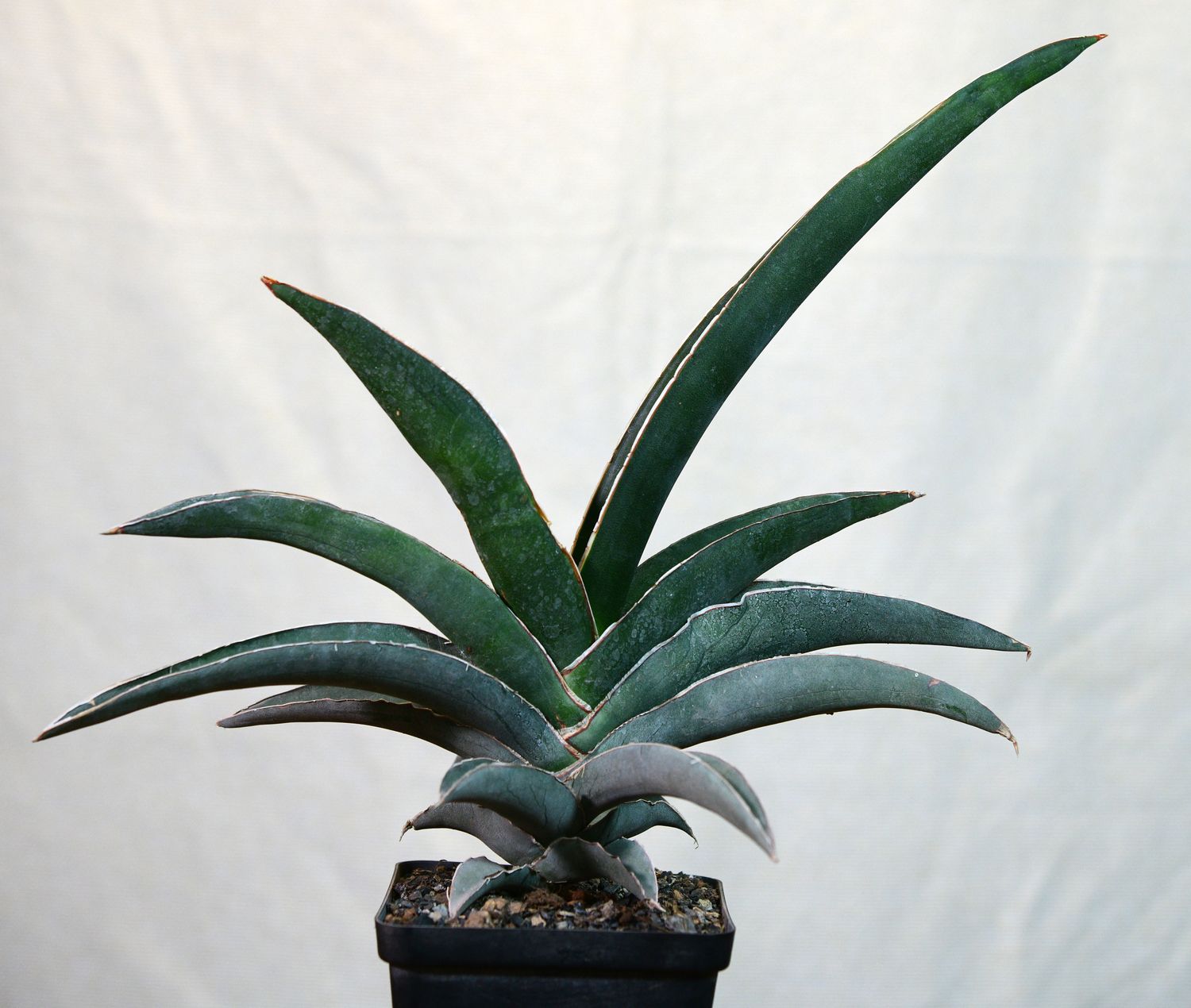
Sansevieria robusta blue
SKU SN073
₹530.00
Price Drop
List Price ₹750.00 Save 29%
In stock: 1 available
1
Save this product for later
Customer reviews
Reviews only from verified customers
No reviews yet. You can buy this product and be the first to leave a review.
Sansevieria robusta blue
Product Details
Sansevieria robusta 'Blue' (Blue Snake Plant)
A bold, architectural rosette of broad, blade-like leaves in a striking blue-grey green, each one channeled down the middle and rimmed in a fine reddish edge, fanning outward like a slow-motion firework — one of the most sculptural members of the whole snake plant tribe.
Origin of Name
The genus name Sansevieria carries an unusually tangled history for such a familiar houseplant. It's generally said to honour Raimondo di Sangro, Prince of San Severo, an 18th-century Italian nobleman and inventor — though the more precise story credits Italian botanist Vincenzo Petagna, who in 1787 first coined the related name "Sanseverinia" to honour a different patron, Pietro Antonio Sanseverino, Count of Chiaramonte, in whose garden Petagna had studied the plant. When Swedish botanist Carl Peter Thunberg published "Sansevieria" in 1794, it's unclear whether he was deliberately renaming the genus or simply misspelling Petagna's original — but Thunberg's version is the one that stuck, and remains the name most growers still use today.
The species epithet robusta is straightforward Latin for "robust" or "sturdy" — a nod to this plant's thick, substantial leaves and vigorous, wide-spreading rosette, noticeably bolder in build than many of its narrower-leaved cousins. It was formally described in 1915 by Nicholas Edward Brown, a prolific British botanist at the Royal Botanic Gardens, Kew, who personally catalogued dozens of Sansevieria species from across Africa in the early twentieth century, publishing this one in the Kew Bulletin of Miscellaneous Information — the same venue and the same year he described several other species in the genus. The name has since settled into synonymy with the earlier-published Sansevieria perrotii, described by German botanist Otto Warburg in 1901, with which it's now considered to be the same plant.
The "Blue" tag isn't part of the formal botanical name — it's a descriptive trade name, used by growers to flag this particular form's distinctive smoky, blue-grey cast, setting it apart from plainer green-leaved forms of the same species sold under the same name.
Origin of Plant
Sansevieria robusta is native to tropical East Africa, recorded across the dry bushland, wooded grassland, rocky hillsides, and low limestone outcrops of the region — harsh, sun-baked terrain where its thick, water-storing leaves and tough, fibrous structure give it a real survival advantage over drought and grazing pressure alike. Like most of the genus, it was gathered and formally documented during the intensive period of British and German botanical exploration of East Africa in the late 19th and early 20th centuries, the same wave of collecting that brought dozens of other Sansevieria species into European herbaria and, eventually, cultivation.
In 2017, DNA-based studies revealed that Sansevieria actually sits nested within the genus Dracaena (the dragon tree genus), making the old Sansevieria an artificial, non-natural grouping. Botanists responded by folding the roughly seventy Sansevieria species into Dracaena — though, as with most of its relatives, "Sansevieria robusta" remains by far the name most growers, nurseries, and collectors still use.
Description
This is one of the larger, more imposing members of the snake plant group: a clumping, upright succulent that builds into a loose, open rosette 60 cm to a metre across as it matures. The leaves themselves are broad, thick, and lance-shaped, tapering from a solid base to a sharp point, each one channeled with a shallow central groove running its length. Colour is where this form earns its name — a cool, smoky blue-green to silvery grey-green overlay across the leaf surface, sometimes with darker mottling, edged along the margin in a fine reddish-brown line that deepens toward the leaf tips. Unlike the fan-shaped, two-ranked leaf arrangement seen in some related species, the leaves here radiate outward in a genuine rosette, giving the whole plant a strong, sculptural, almost agave-like presence despite belonging to a completely different family.
Mature plants can eventually send up a tall, upright flower spike bearing clusters of small, star-shaped, greenish-white to cream flowers, often pleasantly fragrant, particularly in the evening when they open to attract night-flying pollinators — though in cultivation, especially in a container, plants are typically grown and admired for their foliage rather than for flowering, which can take years to occur.
Conservation Status
Sansevieria robusta has not been formally assessed on the IUCN Red List, and it is not considered a rare or threatened species — it occurs across a fairly broad swath of tropical East Africa's dry bushland habitats. As with many African succulents, habitat conversion to agriculture and grazing land is worth watching in parts of its range, but the species faces no known acute risk of extinction at present, and it is widely propagated in cultivation, which keeps collection pressure on wild populations low.
Care
Light: Bright light brings out the leaves' blue-grey colouring at its best — a spot in bright indirect light or a few hours of gentle direct sun suits it well, though it also tolerates lower light reasonably gracefully, just with slower growth and less colour contrast.
Watering: Water thoroughly but infrequently, letting the soil dry out completely between waterings — like all snake plants, it is far more tolerant of underwatering than overwatering, and soggy soil is the fastest way to lose it to root or crown rot. Cut back further in winter, watering only occasionally while growth slows.
Soil: A fast-draining succulent or cactus mix is essential, ideally in a pot with a generous drainage hole; a mineral-heavy blend echoes the rocky, well-drained soils of its native bushland.
Temperature: A warm grower that dislikes cold and damp in combination; keep it above about 10°C (50°F) and protect it from frost entirely.
General tips: Slow-growing and long-lived, it rarely needs repotting and is well suited to being left undisturbed for years in the same container. Propagates readily by dividing offsets from the base, or more slowly from leaf cuttings, though divisions preserve the leaf colouring more reliably than leaf cuttings do. As with other snake plants, the leaves are mildly toxic if chewed or ingested in quantity, so keep it out of reach of curious pets.
An Interesting Note
The wider genus this plant has spent over two centuries in — Sansevieria — was long known by the common name "bowstring hemp," because the tough, fibrous leaves of related African species were traditionally stripped, dried, and twisted into cordage strong enough to string a bow or weave rope, long before anyone thought to grow them as ornamental houseplants. There's something fitting about that history showing up in a plant this substantial: the same robustness Nicholas Edward Brown reached for when he named it in 1915 is exactly what once made its African relatives useful as raw material rather than décor.
You May Also Like
New


Monsoon Guardian Kit (5 in 1)
Monsoon Guardian Kit (5 in 1)
Complete 5-in-1 biological protection kit for cacti & succulents
SKU MNS024
₹850.00
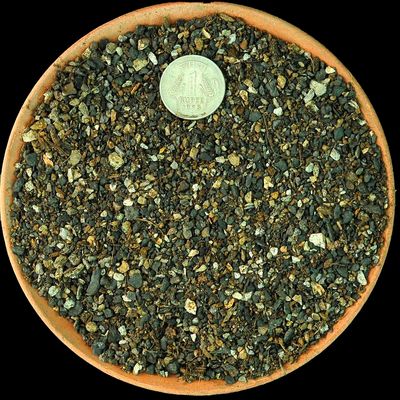
FORTIFIED Cactus & Succulent SOIL (FINE)
FORTIFIED Cactus & Succulent SOIL (FINE)
SKU MNS002
5.0
(4)
₹49.85


Cactus Seed Planting Mix
Cactus Seed Planting Mix
Sterile, Fine-Grain Media for Cactus & Succulent Seeds
SKU MNS005
₹74.85
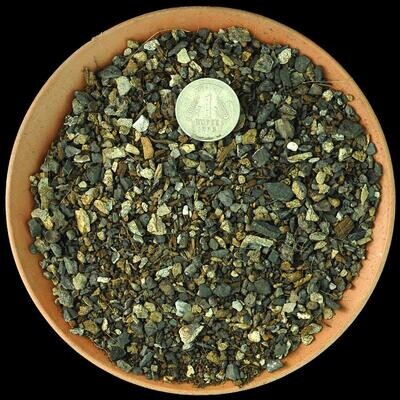
FORTIFIED Cactus & Succulent SOIL (COARSE)
FORTIFIED Cactus & Succulent SOIL (COARSE)
SKU MNS004
5.0
(12)
₹54.85
Display prices in:INR
