
Categories
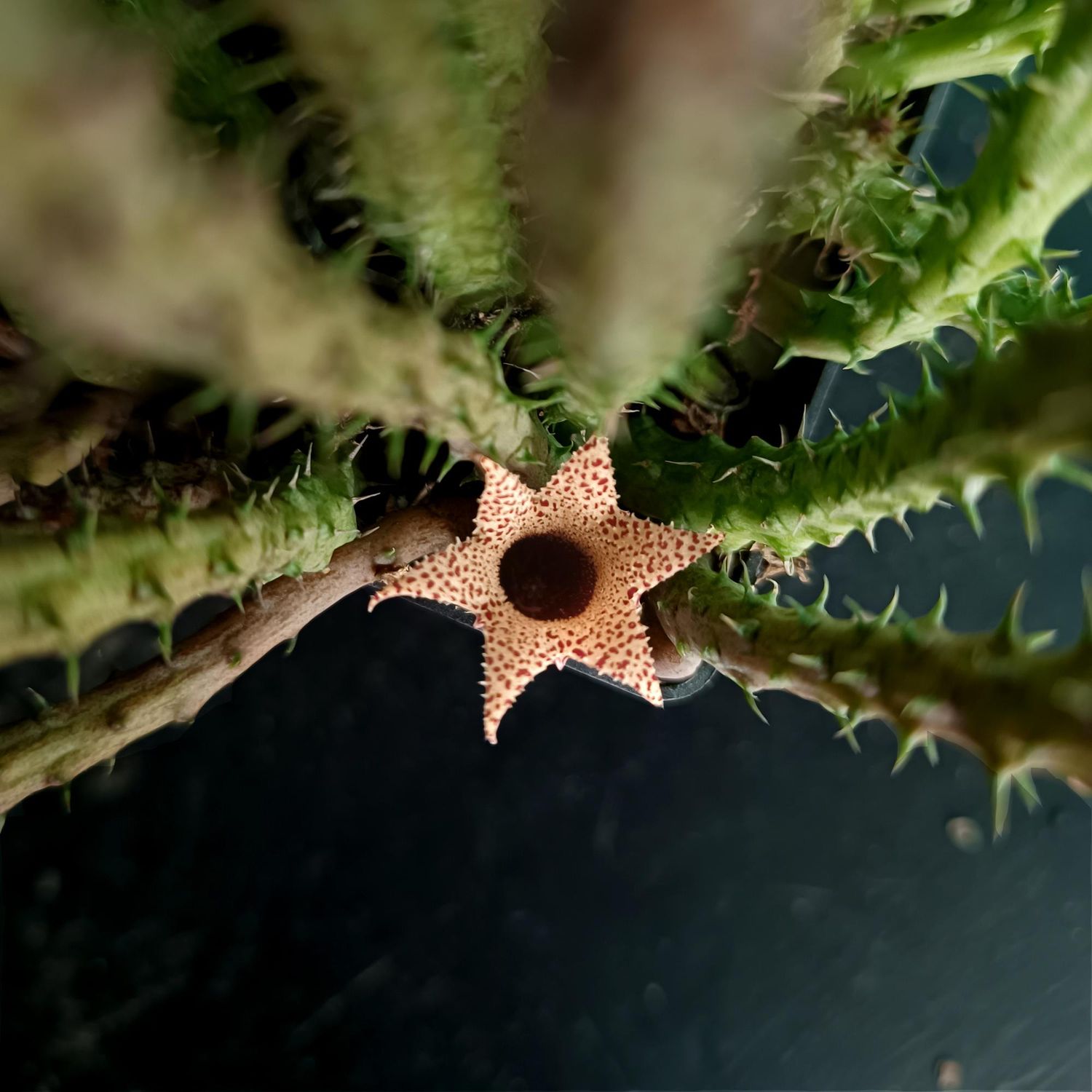
Stapilanthus decaryi
SKU ASC032
₹250.00
In stock: 1 available
1
Save this product for later
Customer reviews
Reviews only from verified customers
No reviews yet. You can buy this product and be the first to leave a review.
Stapilanthus decaryi
Product Details
A miniature clump of speckled, tuberculate stems from the deep south of Madagascar, opening into starry, freckled little chalice-shaped blooms with a dark, glossy centre — a true collector's stapeliad for anyone who loves oddball, otherworldly flowers.
Origin of Name
Stapelianthus decaryi carries two layers of botanical history in its name. The genus, Stapelianthus, combines Stapelia — itself named by Carl Linnaeus in honour of Johannes Bodaeus van Stapel (1602–1636), a Dutch physician and botanist whose monumental, posthumously published 1644 commentary on the ancient Greek botanist Theophrastus's Historia Plantarum was a landmark reference for European botany — with the Greek anthos, "flower," giving the sense of "a Stapelia-like flower." The genus was formally established in 1933 by the French botanist Pierre Choux, who recognised that these small Madagascan succulents, though closely related to the African Stapelia clan and sharing their starry, often foul-smelling blooms, were distinct enough to warrant their own genus.
The species epithet, decaryi, honours Raymond Decary (1891–1973), a French administrator and self-taught naturalist who spent decades in southern Madagascar and became one of the island's most prolific plant collectors, with dozens of species across many genera ultimately named for him. Choux himself described this particular species in 1934 from material Decary had collected — in fact, it was the third new species Decary had turned up in the scrubland around Fort-Dauphin (now Tôlanaro) in that period, a testament to how much of Madagascar's succulent flora was still being discovered plant by plant in the early twentieth century.
Origin of Plant
Stapelianthus decaryi is endemic to the far south of Madagascar, found in the dry, thorny scrub and spiny forest northwest of Fort-Dauphin and across the Ambovombe and Toliara (Tuléar) region. It grows low to the ground on acidic, gneiss-derived soils, often tucked among rocks and low scrub alongside other small succulents such as Rhipsalis cassytha, in one of the most botanically distinct — and increasingly threatened — ecoregions on Earth. It reached European cultivation early in its history: it first flowered in a European collection in 1938, only a few years after its formal description, and a molecular and morphological study in 2004 later confirmed Stapelianthus as a genuinely distinct, monophyletic genus within the broader stapeliad group.
Description
This is a small, clump-forming succulent, its grey-green stems only 2.5–10 cm long and just 5–15 mm thick, densely set with soft tubercles and freckled with red-brown spotting — a texture that makes even a young plant look intricately detailed. Left to grow, it slowly builds into a dense, low mat of these stubby, mottled fingers. The real draw, though, is the flower: a chalice- to bell-shaped bloom up to about 2.5 cm across, cream to pale yellow on the outside and finely peppered with maroon or brown spots, with the upper throat lined in small spine-tipped papillae and, at the very centre, a dark, almost velvety-looking corona. Blooms typically appear in late summer and autumn, opening low among the stems rather than held up on a stalk — an intimate, close-up flower built to be admired at eye level with the pot. Interestingly, cultivated plants at Madagascar's own Tsimbazaza Botanical Garden were recorded producing crested (cristate) forms as early as the 1950s, a mutation still occasionally seen in collections today.
Conservation Status
Stapelianthus decaryi was assessed for the IUCN Red List in 1997 and classified as Near Threatened — a reflection of the ongoing pressure on southern Madagascar's spiny thicket habitat from clearance, grazing, and collection, even though the species itself is not yet considered at imminent risk of extinction. It is fortunately well established in cultivation, held in more than twenty botanical gardens worldwide, which takes real pressure off wild populations and makes a nursery-grown plant like this one a responsible way to enjoy the species.
Care
Light: Give it a good amount of bright light — plenty of sun is what keeps the stems compact and tuberculate rather than soft and stretched, and it's essential for reliable flowering. A little protection from the most scorching midday sun in very hot climates is sensible, but overall this plant wants brightness, not shade.
Watering: Water moderately through the active growing months of spring and autumn, letting the soil dry out thoroughly between waterings — stapeliads rot far more easily from overwatering than they suffer from being kept slightly dry. Cut back sharply in summer if conditions are very hot and humid, and withhold water almost entirely from late autumn through winter while the plant rests.
Soil: A very free-draining, mineral-rich succulent mix — standard potting soil cut generously with coarse sand, pumice, or perlite works well, echoing the gritty, gneiss-derived soils of its native habitat.
Temperature: A warm grower at heart, comfortable in typical room temperatures and happiest above about 10°C (50°F); protect it from cold, damp conditions in winter, which are far more dangerous to it than cool temperatures alone.
Propagation tip: Like most stapeliads, it roots readily from stem cuttings taken almost any time during the growing season — a good way to build up a fuller clump or share plants with fellow collectors.
An Anecdote Worth Knowing
Raymond Decary, the naturalist this species is named for, was not a career botanist by training — he arrived in Madagascar as a colonial administrator and became, almost by accident of curiosity and circumstance, one of the most important plant collectors the island ever had, eventually amassing tens of thousands of herbarium specimens and having an extraordinary number of species named in his honour across dozens of plant families. Stapelianthus decaryi is a small but telling piece of that legacy: one of three new stapeliads he turned up around Fort-Dauphin in a single stretch of fieldwork, at a time when entire genera of Madagascar's succulent flora were still being written into science for the first time.
You May Also Like

FORTIFIED Cactus & Succulent SOIL (FINE)
FORTIFIED Cactus & Succulent SOIL (FINE)
SKU MNS002
5.0
(4)
₹49.85
New


Monsoon Guardian Kit (5 in 1)
Monsoon Guardian Kit (5 in 1)
Complete 5-in-1 biological protection kit for cacti & succulents
SKU MNS024
₹850.00
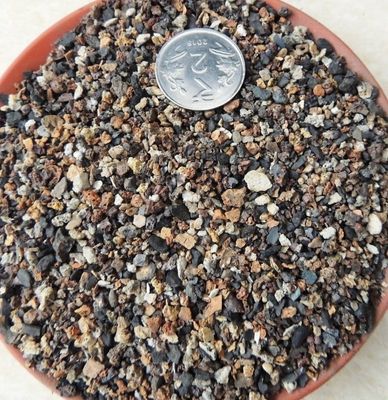
Cactus & Succulent Planting Mix FINE (aka Cactus Soil Mix or Succulent Soil Mix)
Cactus & Succulent Planting Mix FINE (aka Cactus Soil Mix or Succulent Soil Mix)
Fine-Grain Potting Mix for Cactus & Succulent Roots
SKU MNS001
5.0
(3)
₹39.85

FORTIFIED Cactus & Succulent SOIL (COARSE)
FORTIFIED Cactus & Succulent SOIL (COARSE)
SKU MNS004
5.0
(12)
₹54.85
Display prices in:INR
