
Categories

Suparnee Pink (Water Lily) Nymphaea
SKU WL039
₹425.00
On Sale
List Price ₹500.00 Save 15%
In stock: 1 available
1
Save this product for later
Customer reviews
Reviews only from verified customers
No reviews yet. You can buy this product and be the first to leave a review.
Suparnee Pink (Water Lily) Nymphaea
Product Details
2 inch rhizome will be sent.
Layer upon layer of soft blush-pink petals build toward a warm, sunset-orange heart, its yellow-gold stamens catching the light at the center. 'Suparnee Pink' is a densely double, chrysanthemum-like water lily bloom in the same prolific, many-petaled style that's made Thai-bred hybrids so sought after in recent years.
Origin of Name
The genus name Nymphaea traces back to the Greek nymphaia and, further still, to nymphē — "nymph" or "bride" — the water-dwelling spirits of Greek mythology that ancient writers associated with floating river and pond flowers long before botany existed as a formal discipline. Carl Linnaeus formalized Nymphaea as a genus in his 1753 Species Plantarum.
'Suparnee Pink' is a cultivar name rather than a formally published botanical one, and no wider breeding record — hybridizer, parentage, or introduction date — turns up in the available literature, which is common for the many small-nursery and hobbyist-raised water lily cultivars now circulating out of Thailand. "Suparnee" reads as an English transliteration of a Thai given name (compare the more commonly seen spelling "Supannee"), itself rooted in the Sanskrit/Pali suvarṇā, meaning "golden" or "golden one" — very possibly naming the plant after the grower, a family member, or simply chosen for a name that sounds elegant, in keeping with how many Thai water lily hybridizers title their crosses.
Origin of Plant
Nymphaea is a genuinely global genus, with roughly 65 wild species growing in still and slow-moving fresh water across the tropics and temperate zones of Asia, Africa, the Americas, and Europe. Thailand has become one of the world's foremost centers of ornamental water lily breeding over the past two decades, with hybridizers there responsible for a steady stream of award-winning, densely petaled cultivars in exactly this style. 'Suparnee Pink,' like those, has no wild habitat of its own — it exists purely as a deliberately bred garden cultivar, propagated and distributed by division from the original cross.
Description
'Suparnee Pink' produces a full, many-layered, dahlia-like bloom: soft blush-pink outer petals cool toward pale near-white at the tips, while the inner petals deepen into a warm rosy-orange near the center, opening to a bright golden-yellow core dense with fine stamens. The flower sits low and full, built from many overlapping rows of narrow, pointed petals rather than a simple single ring — the same dense, fully double structure seen in other prized Thai hybrids. As with any multi-petaled water lily, the precise petal count and depth of color can vary somewhat between individual blooms and with growing conditions.
Conservation Status
As a cultivated hybrid, 'Suparnee Pink' has no individual IUCN Red List status — it exists purely in the ornamental trade, propagated by division rather than seed dispersal, and poses no risk of naturalizing in the wild. The wider Nymphaea genus includes a number of geographically restricted wild species under real conservation pressure, but this cultivar itself is a purely horticultural plant.
Care
- Light: Full sun — at least 6 hours of direct light daily for strong, continuous flowering.
- Water & Planting Depth: Set the rhizome in a planting basket at the bottom of a pond or large water container, with roughly 15–45 cm (6–18 in) of water over the crown for a compact grower of this type.
- Soil: Heavy aquatic planting soil or garden loam in a mesh basket, topped with pea gravel to keep it in place.
- Temperature: If grown as a hardy type, the rhizome can overwinter in place in temperate climates provided it sits below the pond's freeze line; if grown as a tropical or ISG (intersubgeneric) hybrid, protect from cold and expect it to need warmer water to thrive, so confirm the type with your supplier if overwintering outdoors.
- Feeding & Maintenance: Feed every 2–3 weeks through the growing season with aquatic fertilizer tablets pushed into the soil near the roots. Deadhead spent blooms and trim yellowing pads regularly to keep the plant tidy and encourage continued flowering.
A Story Worth Telling
Water lily breeding has quietly become one of Thailand's great horticultural exports, with countless hybridizers — some internationally known, many working quietly at small local nurseries — producing an enormous range of densely petaled, richly colored cultivars every year, far more than international competitions or catalogues ever formally record. 'Suparnee Pink' sits comfortably in that tradition: a flower clearly built with the same care and eye for layered color as its more famous, better-documented cousins, even without a published pedigree to its name — a reminder that plenty of genuinely beautiful cultivars are still being made and named one pond at a time, well outside the spotlight of formal horticultural literature.
You May Also Like

FORTIFIED Cactus & Succulent SOIL (COARSE)
FORTIFIED Cactus & Succulent SOIL (COARSE)
SKU MNS004
5.0
(11)
₹54.85


Cactus Seed Planting Mix
Cactus Seed Planting Mix
Sterile, Fine-Grain Media for Cactus & Succulent Seeds
SKU MNS005
₹74.85

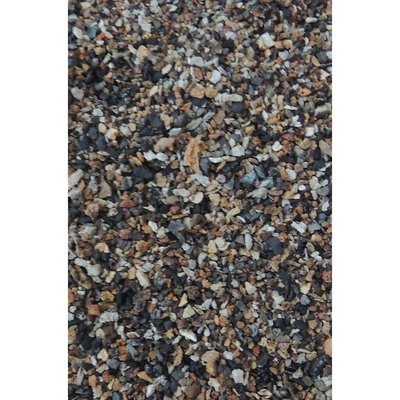
Cactus & Succulent Planting Mix FINE (aka Cactus Soil Mix or Succulent Soil Mix)
Cactus & Succulent Planting Mix FINE (aka Cactus Soil Mix or Succulent Soil Mix)
Fine-Grain Potting Mix for Cactus & Succulent Roots
SKU MNS001
5.0
(3)
₹39.85
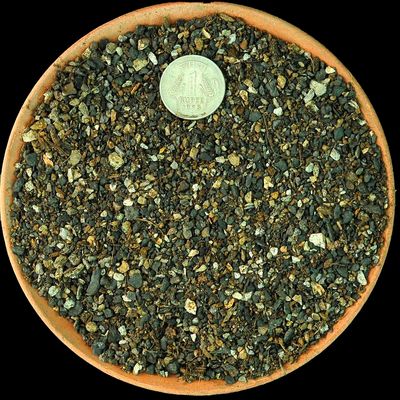
FORTIFIED Cactus & Succulent SOIL (FINE)
FORTIFIED Cactus & Succulent SOIL (FINE)
SKU MNS002
5.0
(4)
₹49.85
Display prices in:INR
