
Categories
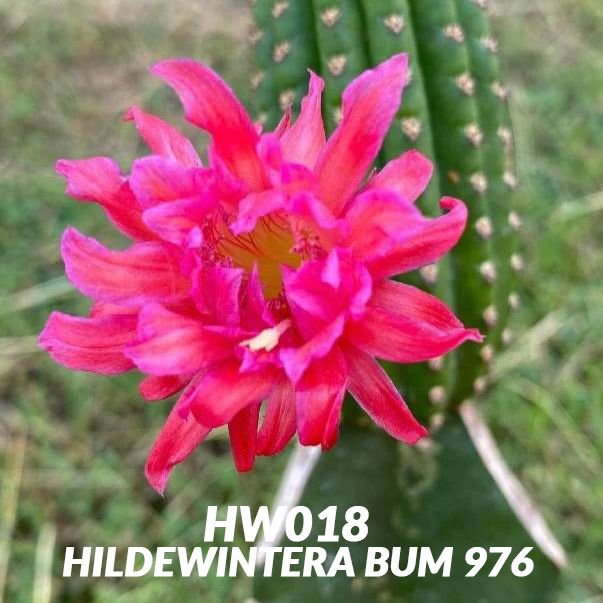
The Monkey Tail Five — A Trailing Cactus Collector's Set
5.0
3 reviews
Reviews from verified customers who have purchased products at this store.
SKU BS007
₹2 450.00
On Sale
List Price ₹4 300.00 Save 43%
Curated collection of 8 rare Astrophytum varieties
In stock: 5 available
1
Save this product for later
Customer reviews
Reviews only from verified customers
Reviews are only accepted from verified customers who have signed in and purchased the products. This ensures that each review is based on genuine customer experiences. All reviews are checked before publication to prevent spam.
Debanjan P.
Kolkata,
India
Sun, September 6, 2026
All 8 plants received in this set were beautiful, healthy and the size was apt for the pricing. It included some rare and unique Astrophytum varieties like the Super Kabuto , Onzuka , Coahuilense, Ooibo etc and all this for just 550 bucks . Thank you PP team for these unique plants at a very nominal price. Highly recommended !
The Monkey Tail Five — A Trailing Cactus Collector's Set
Product Details
The Monkey Tail Five — A Trailing Cactus Collector's Set
Five hanging cacti, one shared secret: strip away the spines and every plant in this set is built the same way — slender, pendulous stems bred to trail, each erupting in a wildly different, jewel-toned bloom. Four are Hildewintera hybrids and one is a closely related Akersia, but side by side in a hanging basket they read as a single, electric-flowered collection.
Origin of the Name — Hildewintera & Akersia
The genus name Hildewintera honours Hildegard "Hilde" Winter (1893–1975), sister of the German cactus collector and taxonomist Friedrich Ritter, who established the genus in 1966 in tribute to her role distributing the cactus seeds he collected across the Bolivian Andes. Modern DNA sequencing has since folded these plants taxonomically into Cleistocactus, but "Hildewintera" persists as the working name among specialist growers and nurseries worldwide, and we retain it here for that reason. The related genus Akersia, represented here by cv. 'Otto Schultz', honours American botanist John F. Akers, who explored South American flora; its cultivar name commemorates German cactus breeder Otto Schultz, part of the same mid-20th-century wave of European hybridising that produced most of the plants in this set.
What's in the Set
1. Hildewintera 'Rotenfels' (HW009) — A rare, trailing beauty with golden-spined stems and vibrant salmon-pink to coral, zygomorphic blooms. Cultivar name 'Rotenfels' ("Red Rock" in German) nods to the reddish-orange hue of its flowers; in the wild, this lineage is pollinated by hummingbirds drawn to its scentless, tubular blooms.
2. Hildewintera hybrid 'Ebernburg' (HW027) — A single, hair-fine stem climbs toward the light before erupting into a wide, layered bloom in coral, magenta and rose, ringed by a haze of pink-tipped stamens — deliberate contrast between an understated body and an extravagant flower. Named for a hilltop castle above Germany's Nahe river.
3. Hildewintera 'Bum 976' (HW018) — A high-performance hybrid prized by collectors for dramatic pendulous growth and exceptional flowering frequency, with shallow ribs giving a fluid, rope-like form and vivid pink and dark-pink blooms. The cultivar code traces to German hybridiser Hans-Georg "Bum" Mainda's numbered breeding records.
4. Hildewintera hybrid 'HUMKES RO-RO' (HW005) — An architectural standout with exceptionally dense, shimmering golden spination on cascading stems, topped with multi-toned salmon, pink and orange blooms. Bred by prolific German hybridiser Klaus Humke, whose "HUMKES" prefix marks his extensive Hildewintera breeding line.
5. Akersia cv. Otto Schultz (HW006) — Slender, golden-spined columns transition from upright to trailing as they mature, crowned with prolific, saturated pinkish-red to neon-magenta blooms — a close Hildewintera relative that fits seamlessly into this set.
Care (General Guide for the Set)
All five share the same "monkey tail" cactus care needs — differing mainly in flower colour, not requirements.
Light: Bright, indirect sunlight or dappled shade. In Indian conditions, protect from harsh afternoon sun (roughly 12–4 pm) and hot summer "loo" winds, which can scorch the epidermis.
Watering: Water thoroughly once the substrate is completely dry, during the main growing season (March–October). Ease off sharply over the monsoon and winter months to respect the plants' dry dormancy.
Soil: A strictly mineral, fast-draining mix — roughly 60–70% pumice, perlite or coarse grit to 30–40% organic matter. A porous pot (terracotta is ideal) helps prevent root rot in humid conditions.
Temperature: Average warm room or greenhouse temperatures through the growing season; a cooler, drier winter rest encourages the best spring flowering.
Handling note: Fine, bristly spination rather than hooked or barbed spines — comfortable to handle, but the trailing stems are brittle, so support hanging baskets well and avoid knocking growth tips.
General tip: Because all five share the same pendulous "monkey tail" habit, this set is ideally displayed together in hanging pots or on a raised shelf where the trailing stems — and eventually the flowers — can cascade freely.
An Anecdote Worth Knowing
In the wild, Hildewintera's brightly coloured, scentless, tubular flowers are a textbook case of ornithophily — pollination by hummingbirds rather than the bees, moths or bats that service most cacti. The tube shape and colour saturation evolved specifically to catch a hummingbird's eye and fit its beak, which is part of why the blooms in this set look so different from typical "cactus flower" expectations. Fittingly, the genus's naming itself was an act of tribute rather than pure taxonomy — a reminder that even scientific names often carry a personal story.
You May Also Like

FORTIFIED Cactus & Succulent SOIL (COARSE)
FORTIFIED Cactus & Succulent SOIL (COARSE)
SKU MNS004
5.0
(11)
₹54.85
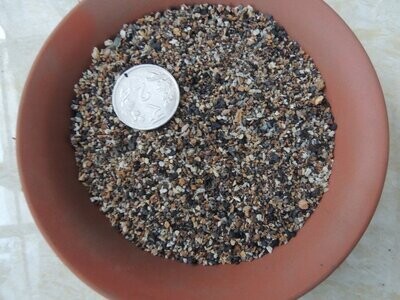
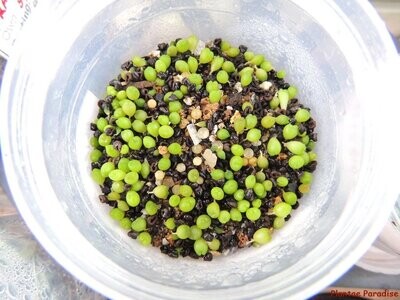
Cactus Seed Planting Mix
Cactus Seed Planting Mix
Sterile, Fine-Grain Media for Cactus & Succulent Seeds
SKU MNS005
₹74.85
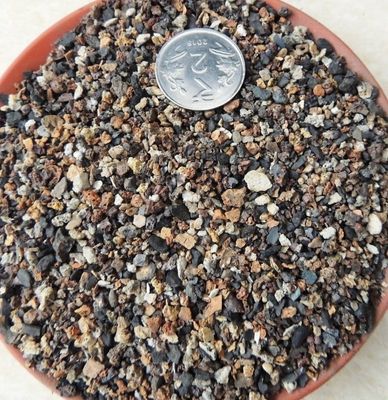

Cactus & Succulent Planting Mix FINE (aka Cactus Soil Mix or Succulent Soil Mix)
Cactus & Succulent Planting Mix FINE (aka Cactus Soil Mix or Succulent Soil Mix)
Fine-Grain Potting Mix for Cactus & Succulent Roots
SKU MNS001
5.0
(3)
₹39.85
New


Monsoon Guardian Kit (5 in 1)
Monsoon Guardian Kit (5 in 1)
Complete 5-in-1 biological protection kit for cacti & succulents
SKU MNS024
₹850.00
Display prices in:INR
