
Categories
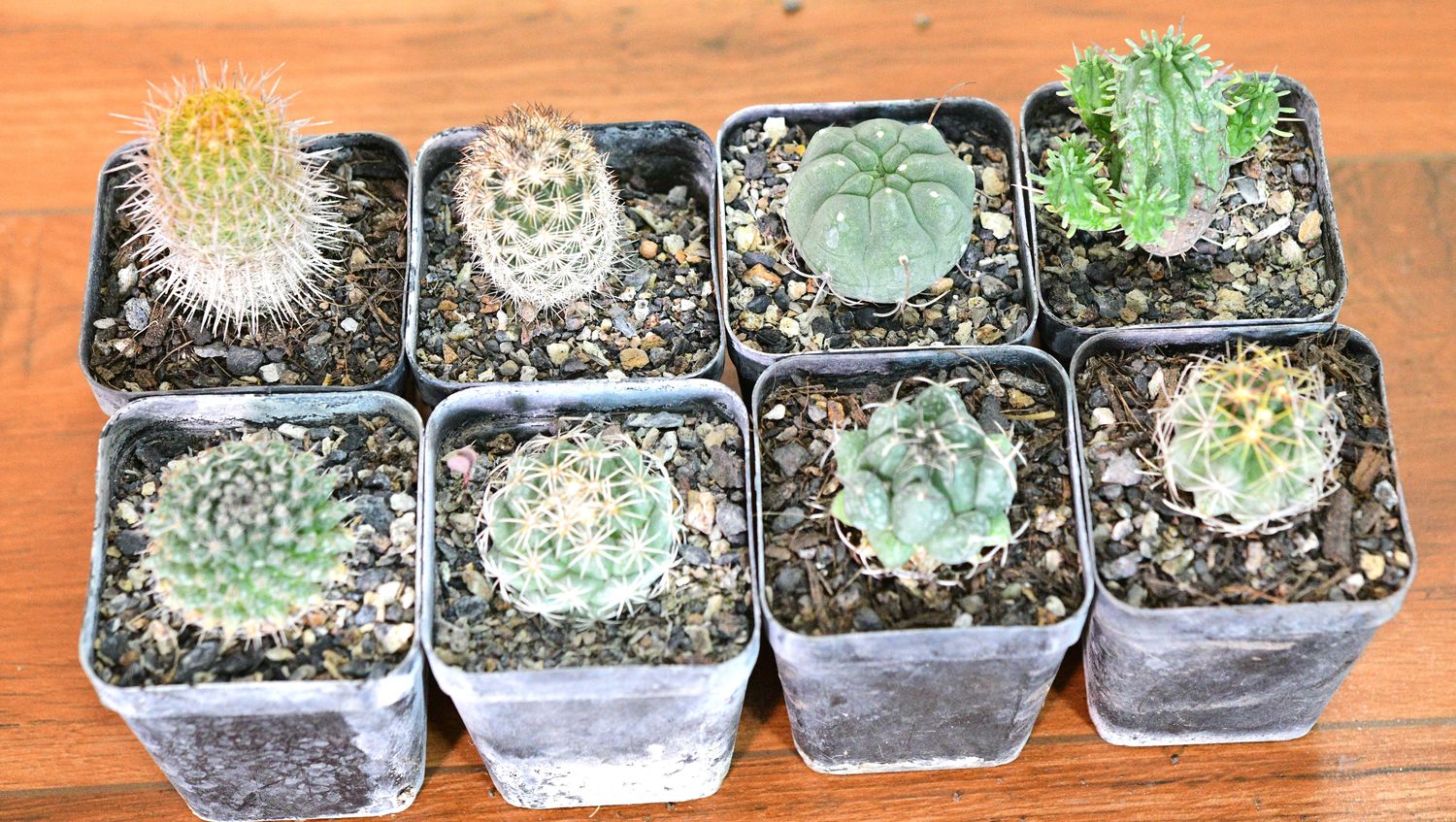
The Three Continents Eight — A Global Cactus & Succulent Collector's Set
SKU BS006
₹750.00
In stock: 4 available
1
Save this product for later
Customer reviews
Reviews only from verified customers
No reviews yet. You can buy this product and be the first to leave a review.
The Three Continents Eight — A Global Cactus & Succulent Collector's Set
Product Details
The Three Continents Eight — A Global Cactus & Succulent Collector's Set
Eight pots that circle the globe's three great succulent hotspots in a single tray: five spine-armoured Mexican desert-dwellers from the Chihuahuan Desert and its outlying ranges, a solitary, near-spineless Andean oddity from a remote Peruvian river valley, and a fiercely thorned South African Euphorbia hybrid to round it out. From woolly white crowns to hooked yellow spines to a flower described by its own discoverers as one of the strangest they'd seen, this is a set built for a collector who wants the full geographic range of the succulent world on one windowsill.
What's in the Set
1. Mammillaria formosa subsp. chionocephala (MA064) — Often still sold under the older synonym "Neomammillaria," a name once used for much of the genus before it was folded back into Mammillaria proper. The subspecies name chionocephala comes from the Greek chion ("snow") and kephale ("head"), describing the dense, white, woolly crown this solitary-growing plant develops with age — eventually rising to a striking, snow-capped column up to 30 cm tall. Native to Coahuila, Nuevo León, and Durango in northern Mexico, it flowers in soft rose-pink shading to a creamy-white centre.
2. Coryphantha calipensis (COR009) — More formally Coryphantha pallida subsp. calipensis, named for its type locality near Calipan in the Tehuacán Valley of Puebla, Mexico, where it grows on gravelly, limestone-derived slopes around 2,000 metres. A dimorphic species — young plants carry only fine white radial spines, while mature ones add stout, downward-hooked central spines and swell into a distinctly pineapple-like tubercled body, eventually opening lemon-yellow flowers with red stamens.
3. Coryphantha maiz-tablasensis (COR006) — One of the most habitat-specific Coryphanthas in cultivation, its name stitched together from two places in San Luis Potosí, Mexico: Ciudad del Maíz and Las Tablas, a dry, gypsum-floored lagoon bed where the type specimen was collected growing in up to 98% pure gypsum soil. A small, depressed-globular species that clusters readily with age, it's noted for white, dark-tipped spines and generous crème-white blooms.
4. Thelocactus bicolor subsp. heterochromus (TH003) — The subspecies name is built from Greek heteros ("different") and chroma ("colour"), a direct nod to its banded, multicoloured spines, which shift from white through yellow to red along a single spine's length. The westernmost form of T. bicolor, found on limestone hills of Durango and Coahuila, it's also unusually cold-hardy for the genus and rewards growers with large, magenta flowers deepening to an orange-red throat.
5. Mammillaria eriacantha (MA021) (Lau 1104, Jalapa–Palma Sola, Veracruz, Mexico) — The species epithet combines Greek erion ("wool") and akantha ("spine"), for the fine, slightly downy texture of its golden-yellow spination. This is a narrow, columnar Mammillaria endemic to a small pocket of central Veracruz, and the "Lau 1104" tag traces it to a specific wild collection site near Jalapa and Palma Sola, recorded under the field numbering system of Alfred Lau — one of the most prolific and meticulous cactus field collectors of the 20th century, whose locality data is still used by growers and botanists to track a plant's exact wild origin decades later.
6. Echinocereus reichenbachii subsp. fitchii (ER006) — Known as Fitch's hedgehog or lace cactus, native to the brushy river banks of the Rio Grande in Texas and northern Mexico. Its ribs are wrapped edge to edge in fine, spiralling white spines that give the whole plant a delicate, woven "lace" texture before it opens large, fragrant magenta flowers with a darker throat.
7. Matucana madisoniorum (MT002) (syn. Submatucana madisoniorum) — Named for Marshall and Elena Madison, San Francisco patrons of the University of California Botanical Garden, this is one of the most distinctive cacti in cultivation: a solitary, blue-grey, broadly ribbed globe that is often entirely spineless or carries only a few sparse blackish bristles, native to a narrow stretch of Peru's remote Marañón river valley. From that smooth body it sends out narrow, funnel-shaped, orange-red flowers up to 10 cm long — a combination striking enough that it's become one of the most sought-after Matucanas among collectors. In the wild it is assessed as Critically Endangered on the IUCN Red List, making a nursery-propagated specimen like this one a genuinely responsible way to own it.
8. Euphorbia ferox hybrid (EU022) — The species this hybrid is bred from, Euphorbia ferox, takes its name from the Latin for "fierce," a fair description for a plant whose ridged, columnar stems bristle with extra-thick, sharp, purple-toned thorns — modified flower stalks rather than true spines, as in all Euphorbias. Native to South Africa, straight E. ferox is prized among succulent collectors for exactly this dramatic armament; hybrid selections like this one carry the same fierce, richly coloured spination on a garden-bred plant, without a formally published parentage record beyond the ferox influence that gives it both its look and its name.
Care (General Guide for the Set)
This set spans three quite different native climates, so treat it as three loose groups.
Light: All eight want bright light. The five Mexican desert species (1–5) and the Echinocereus (6) are true sun-lovers and want direct sun for most of the day. The Euphorbia hybrid (8) is equally sun-hungry. The Matucana (7), coming from higher-elevation Andean valleys with cooler, sometimes hazier light, does best in very bright light but appreciates a touch of relief from the most intense midday sun in hot climates.
Watering: Water thoroughly, then let the soil dry out completely before watering again through the growing season, cutting back hard in winter. The Matucana (7) is a little less drought-tolerant than the Mexican species here and prefers not to be left bone-dry for extended stretches, though it still demands sharp drainage.
Soil: A gritty, fast-draining cactus or succulent mix for the whole set; the two Coryphanthas (2, 3) and the Thelocactus (4) in particular come from limestone or gypsum-rich ground and appreciate a slightly mineral, alkaline mix.
Temperature: Average warm room temperatures suit the group well through the growing season. The Thelocactus (4) is notably cold-hardy (to around -7°C/19°F) if kept dry; the Matucana (7) and Euphorbia hybrid (8) prefer to stay above roughly 5–10°C and dry through winter.
Handling note: The Coryphanthas (2, 3) carry stout, hooked central spines, and the Thelocactus (4) and Echinocereus (6) are both sharply spined — handle all four with care when repotting. The Euphorbia hybrid's (8) milky latex is toxic and irritating to skin and eyes; wear gloves when pruning or taking cuttings.
General tip: The spineless-to-sparsely-spined Matucana (7) is the one plant in this set that can't rely on armour for protection, so give it slightly more filtered light and a touch more care with placement than its heavily armed neighbours.
An Interesting Note
Half the story behind this set is written right there on the plant tags. "Lau 1104" on the Mammillaria eriacantha isn't decoration — it's a direct link back to a specific hillside near Jalapa and Palma Sola in Veracruz, catalogued by Alfred Lau, a German-born collector who spent decades crossing Mexico by Volkswagen van documenting exact wild localities for thousands of cactus populations, many now reduced or lost to development. That same instinct for precise provenance is why a name like maiz-tablasensis can still point a botanist to one specific gypsum lagoon bed in San Luis Potosí, and it's the same principle that makes the Critically Endangered Matucana madisoniorum in this set worth propagating from cultivated stock rather than ever taking from the wild — in cactus collecting, knowing exactly where a plant came from is often as valuable as the plant itself.
You May Also Like

Cactus & Succulent Planting Mix COARSE (aka Cactus Soil Mix or Succulent Soil Mix)
Cactus & Succulent Planting Mix COARSE (aka Cactus Soil Mix or Succulent Soil Mix)
Washed, Free-Draining Mineral Mix for Cactus & Succulents
SKU MNS003
5.0
(1)
₹44.85
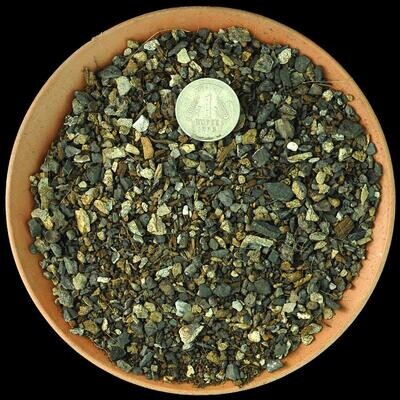
FORTIFIED Cactus & Succulent SOIL (COARSE)
FORTIFIED Cactus & Succulent SOIL (COARSE)
SKU MNS004
5.0
(11)
₹54.85

FORTIFIED Cactus & Succulent SOIL (FINE)
FORTIFIED Cactus & Succulent SOIL (FINE)
SKU MNS002
5.0
(4)
₹49.85
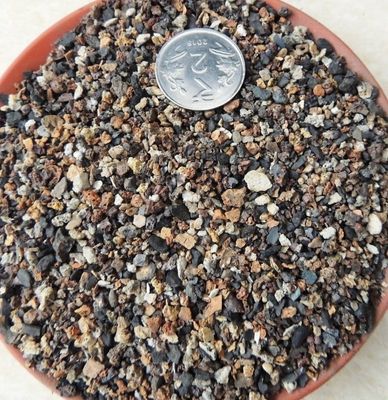
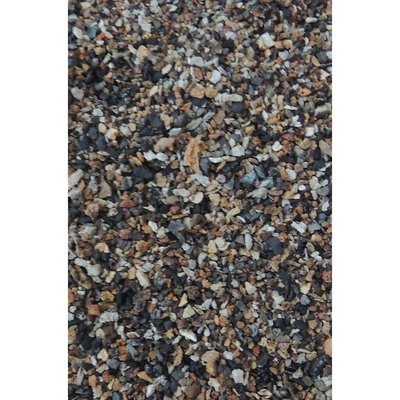
Cactus & Succulent Planting Mix FINE (aka Cactus Soil Mix or Succulent Soil Mix)
Cactus & Succulent Planting Mix FINE (aka Cactus Soil Mix or Succulent Soil Mix)
Fine-Grain Potting Mix for Cactus & Succulent Roots
SKU MNS001
5.0
(3)
₹39.85
Display prices in:INR
