
Categories
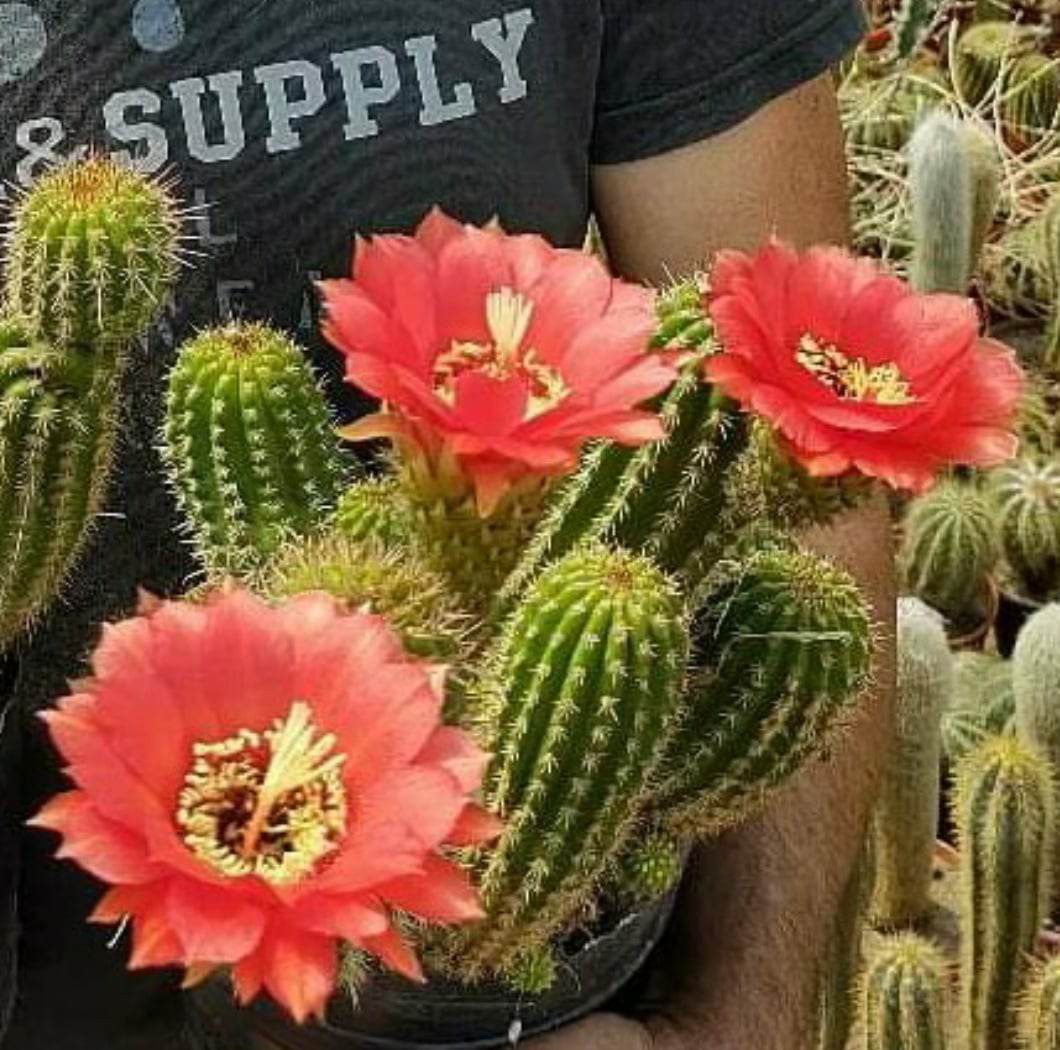
Trichocerous hybrid Morgan Marusteri
SKU LET386
₹850.00
In stock: 1 available
1
Save this product for later
Customer reviews
Reviews only from verified customers
No reviews yet. You can buy this product and be the first to leave a review.
Trichocerous hybrid Morgan Marusteri
Product Details
Blurb: A big, blooming clump of columnar power — this Trichocereus hybrid produces enormous, satin-textured coral-red flowers with golden throats, held atop ribbed, spine-studded stems that clump generously with age. Bold, sun-loving, and built to put on a show, 'Morgan Marusteri' is a showpiece for collectors who want their cactus to flower big and flower often.
Trichocereus hybrid "Morgan Marusteri"
1. Origin of Name
The genus name Trichocereus derives from the Greek thrix / trichos ("hair") combined with Cereus, the Latin term (from cera, "wax," referencing candle-like growth) long used for columnar cacti. The name refers to the fine hairs or bristles often present in the areoles of species within the genus, distinguishing them from the smoother-areoled true Cereus. The genus was established in 1920 by German botanist Alwin Berger, splitting out a large group of South American columnar cacti that had previously been lumped into Cereus or Echinopsis. Modern taxonomy has since folded much of Trichocereus back into Echinopsis sensu lato, though "Trichocereus" remains the name of choice among growers and hybridizers, particularly within the passionate community that breeds these plants for large, colourful, night- or day-blooming flowers.
The cultivar epithet 'Morgan Marusteri' follows the common practice among specialist cactus breeders of naming exceptional seedlings after the grower, breeder, or person who selected and propagated them — a personal signature attached to a flower judged distinctive enough to be named, cloned, and passed into wider cultivation. Names like this one trace a direct lineage back to an individual hybridizer's line of work, often shared and celebrated within tight-knit collector circles and cactus society plant sales.
2. Origin of Plant
Trichocereus species are native to the Andean regions of South America, ranging across Peru, Bolivia, Argentina, and Chile, growing from coastal deserts up into high-altitude scrub and rocky slopes. These are among the most robust and adaptable columnar cacti in cultivation, tolerating both the intense sun of low-elevation deserts and the cooler nights of higher terrain. Many species were collected and described through 19th- and early 20th-century European botanical expeditions into the Andes, and Trichocereus has since become one of the most extensively hybridized cactus genera in the world — prized for combining vigorous, architectural growth with some of the largest, most spectacular flowers in the entire cactus family.
Hybrids like 'Morgan Marusteri' are the product of deliberate modern breeding programs, crossing select Trichocereus species and existing hybrid lines to intensify flower colour, size, and bloom frequency well beyond what's typically seen in wild populations.
3. Description
This is a cactus built for spectacle on two fronts: structure and bloom. The plant grows as a clustering, columnar specimen, with multiple ribbed, upright-to-sprawling stems radiating outward from a central base, each stem lined with regularly spaced areoles bristling with pale golden spines. Left to mature, it forms a dense, architectural clump — a landscape of green columns punctuated by starburst spine clusters.
The true showstopper, however, is the flower. Blooms open wide and saucer-shaped, with broad, satiny petals in a vivid coral-red to salmon-orange hue that intensifies toward the petal base, surrounding a bright golden-yellow throat packed with a dense central cluster of stamens. Flowers are large relative to the stem diameter — often rivaling the width of the stem itself — and a well-grown clump can produce multiple blooms simultaneously, turning the entire plant into a flush of colour for a few glorious days each flowering cycle.
4. Conservation Status
As a cultivated hybrid, 'Morgan Marusteri' has no independent IUCN listing and places no pressure on wild populations. Its wild Trichocereus/Echinopsis parent species fall under CITES Appendix II, which governs international trade in wild-sourced material. Nursery-propagated hybrids like this one qualify for the standard artificially propagated exemption, allowing them to be sold and shipped freely, though appropriate documentation may still be required for cross-border sales.
5. Care
- Light: Full sun to very bright light is ideal — these are tough, sun-adapted plants that colour up and flower best with maximum light exposure. Indoors, a south-facing window is the minimum; outdoor sun exposure will produce the strongest growth and flowering.
- Watering: Water thoroughly and allow the soil to dry out fully between waterings. Cut back significantly in winter, keeping the plant nearly dry during its dormant period to prevent rot and encourage strong spring flowering.
- Soil: Use a sharply draining mineral cactus mix, amended generously with pumice, perlite, or coarse grit, to replicate the fast-draining rocky slopes of its Andean origins.
- Pot: Terracotta is preferable to plastic — its breathability helps excess moisture evaporate from the root zone, an important safeguard against rot in a plant this size and weight.
- Temperature: Vigorous and reasonably cold-tolerant once established, though best protected from hard frost. Warm, sunny summers encourage the strongest clumping growth and heaviest flower production.
- Feeding: A low-nitrogen, cactus-specific fertilizer during spring and summer supports both robust clumping growth and larger, more abundant blooms.
6. A Story Worth Telling
Among Trichocereus enthusiasts, there's a particular pride taken in growing a plant "into a clump" — coaxing a single columnar start into the kind of dense, multi-stemmed specimen seen here, cradled proudly in its grower's arm like a trophy. It can take years of patient care to reach this stage, and the payoff is exactly this: a single plant capable of opening a dozen or more enormous flowers at once, each one lasting only a few days before giving way to the next flush. Named cultivars like 'Morgan Marusteri' carry forward not just a flower colour, but a grower's personal legacy — a line of plants that collectors seek out by name, generation after generation, precisely because someone once looked at a first-time bloom and knew it was worth keeping.
You May Also Like
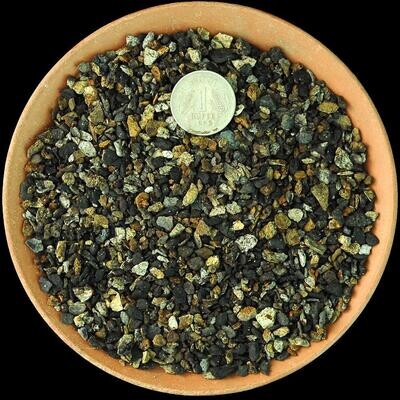
Cactus & Succulent Planting Mix COARSE (aka Cactus Soil Mix or Succulent Soil Mix)
Cactus & Succulent Planting Mix COARSE (aka Cactus Soil Mix or Succulent Soil Mix)
Washed, Free-Draining Mineral Mix for Cactus & Succulents
SKU MNS003
5.0
(1)
₹44.85
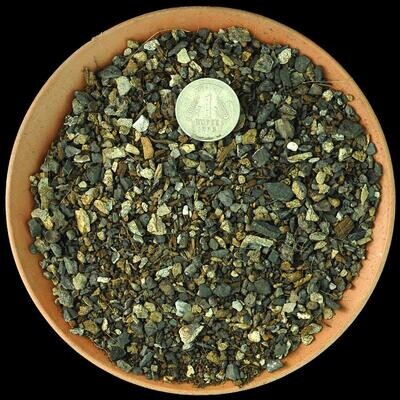
FORTIFIED Cactus & Succulent SOIL (COARSE)
FORTIFIED Cactus & Succulent SOIL (COARSE)
SKU MNS004
5.0
(11)
₹54.85
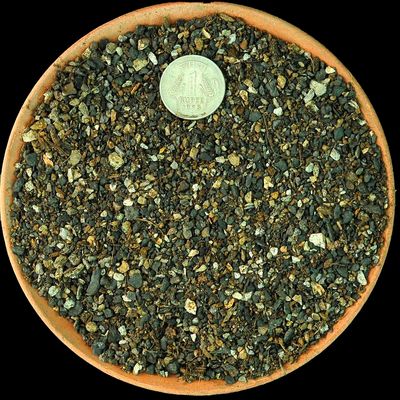
FORTIFIED Cactus & Succulent SOIL (FINE)
FORTIFIED Cactus & Succulent SOIL (FINE)
SKU MNS002
5.0
(4)
₹49.85
New


Monsoon Guardian Kit (5 in 1)
Monsoon Guardian Kit (5 in 1)
Complete 5-in-1 biological protection kit for cacti & succulents
SKU MNS024
₹850.00
Display prices in:INR
