
Categories
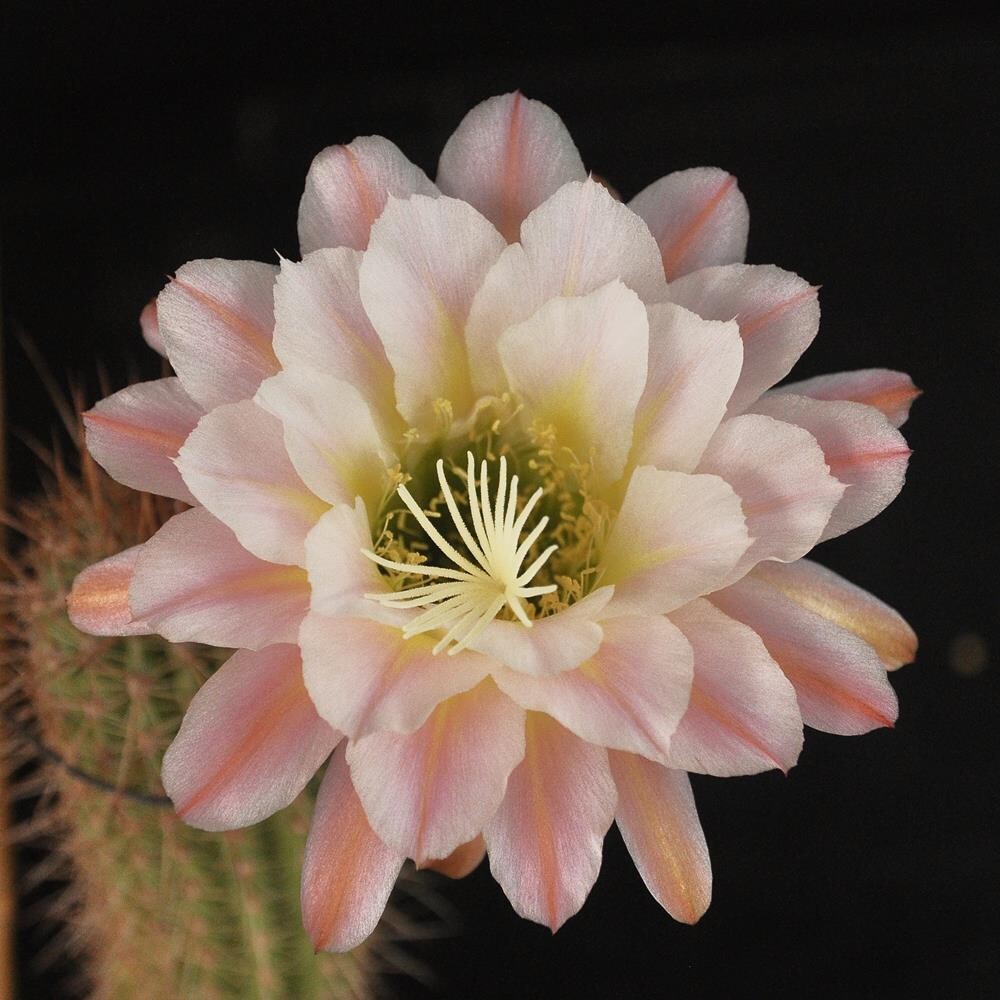
Trichocerous hybrid "PSNEUMOSYN"
SKU LET055
₹950.00
Sold out
Sold out
Save this product for later
Customer reviews
Reviews only from verified customers
No reviews yet. You can buy this product and be the first to leave a review.
Trichocerous hybrid "PSNEUMOSYN"
Product Details
Trichocereus hybrid 'Psneumosyn'
A large-flowered Trichocereus (Echinopsis) hybrid, 'Psneumosyn' opens breathtaking, many-petaled blooms in soft blush-pink shading to white, each petal traced with a fine rose midrib and gathered around a golden-green throat and a starburst of cream stamens and pale stigma lobes. Bred from the same lineage as the great South American "torch cacti," it brings a jungle-sized flower to a windowsill-sized plant — a true collector's showpiece for the day or two each season it chooses to perform.
Origin of Name
'Psneumosyn' is a cultivar name rather than a botanical one, and it belongs to that wonderfully idiosyncratic tradition among cactus hybridizers of coining their own names for a seedling that has earned distinction. Unlike registered cultivars such as 'Kincsem' or 'Maria Piazza', whose breeding records were published through institutions like the Huntington Botanical Gardens, 'Psneumosyn' does not appear in the widely circulated hybrid registries or nursery catalogues — it is the kind of name that travels by word of mouth and hand-written labels through the collector community, as thousands of unregistered Trichocereus and Echinopsis hybrids do every year. Its precise breeder, cross, and coining story are, as a result, not part of the published record.
The name itself is worth lingering over. Its unusual construction — an initial "Ps-" followed by "neumosyn" — reads as a deliberate, invented coinage rather than a standard transliteration, but its sound and shape echo the Greek pneuma ("breath" or "spirit," the root behind words like pneumonia and pneumatic) fused with a suffix reminiscent of Mnemosyne, the Greek Titaness of memory and mother of the nine Muses. Whether intentional or coincidental, the effect is fitting: a flower this large and this fleeting — often open for only a single day — does feel like something you catch a "breath" of before it becomes a memory. Cactus hybridizers, working outside formal Latin nomenclature, have a long history of reaching for evocative, invented, or mythological-sounding names for their prized seedlings, and 'Psneumosyn' sits comfortably in that tradition.
The genus name Trichocereus has a far better documented history. It combines the Greek thrix / trichos ("hair") with the Latin cereus ("wax candle" or "torch"), a reference to the tall, ribbed, torch-like columns of these cacti and to the tufts of hair or wool often found in their areoles. The name was first proposed by German botanist Alwin Berger in 1905 as a subgenus of Cereus, then raised to full genus status by Italian botanist Vincenzo Riccobono in 1909. For much of the 20th century, Trichocereus stood as a distinct genus of tall, columnar South American cacti prized for their enormous, fragrant flowers. In 1974, botanist Herbert Friedrich demonstrated that the flowers of Trichocereus and the globular genus Echinopsis shared the same essential structure — a spineless but hairy floral tube, an open nectar chamber, and stamens arranged in two distinct series — and argued the two genera should be merged. That reclassification has been broadly followed ever since, with Trichocereus now generally treated as a synonym of Echinopsis, though the name "Trichocereus" remains in everyday use among growers and nurseries, especially for the tall, columnar, large-flowered hybrids like this one.
Origin of Plant
As a hybrid, 'Psneumosyn' has no wild habitat of its own — it is a garden-bred plant, the product of deliberate crossing among cultivated Trichocereus/Echinopsis parent plants rather than a species collected in the field. Its genetics, however, trace back to the columnar "torch cacti" native to the Andean regions of South America — Argentina, Bolivia, Peru, Chile, and neighboring countries — where wild Trichocereus species grow as tall, ribbed columns across high-altitude deserts, scrubby foothills, and rocky slopes, some reaching elevations of 3,000 meters (nearly 10,000 feet) or more. These wild species are famous for producing some of the largest flowers in the entire cactus family, often trumpet-shaped, intensely fragrant, and adapted to open at dusk to attract long-tongued hawkmoths as pollinators. Twentieth-century hybridizers — building on early breeding work by figures such as Harry Johnson and later specialists including Robert Schick — crossed these giant-flowered columnar species with smaller, day-blooming globular relatives to fix bigger blooms, brighter and more varied colors, and more manageable, garden-friendly growth onto more compact plants. 'Psneumosyn' belongs to this broad, decades-deep tradition of large-flowered Trichocereus/Echinopsis hybridizing that continues today among specialist nurseries and hobbyist breeders worldwide.
Description
'Psneumosyn' grows as an upright, ribbed, columnar to semi-columnar stem in typical Trichocereus fashion, deep green and studded along its ribs with areoles bearing clusters of short-to-medium spines. Left to its own devices it will, over years, build height and may offset from the base, but for most of the year it is a quietly handsome, architectural plant that gives little warning of its floral ambitions.
The flower is the reason to grow it. Each bloom opens wide into a full, layered rosette of numerous lance-shaped petals — the outer ranks blushed a soft rose-pink deepening along a fine midrib, the inner petals paling toward near-white, and the whole flower gathered at the center around a yellow-green throat. From that throat radiates a dense cluster of creamy stamens surrounding a pale, multi-lobed stigma that fans out like a small starburst — a hallmark of the grandiflorus-type hybrids in this group. Blooms of this style commonly span 5 to 7 inches (13–18 cm) or more across, dwarfing the stem that produces them. True to the genus, the flowers are short-lived, typically lasting a single day (occasionally stretching into a second), often opening in the cooler hours of morning or evening — but a healthy, well-grown plant will send up flushes of buds in succession through the flowering season, turning each appearance into a small event worth watching for.
Conservation Status
As a cultivated hybrid, 'Psneumosyn' has no IUCN Red List assessment of its own — it exists in cultivation, propagated from cuttings or offsets rather than gathered from the wild, and its survival depends only on its continued appeal to growers. Its wild Trichocereus/Echinopsis ancestors range in status from common and widespread to locally uncommon depending on the species, and as with all cacti, international trade in wild-collected material is regulated under CITES Appendix II to guard against over-collection. Choosing a nursery-propagated hybrid like this one is always the responsible way to bring a dramatic flowering column cactus into a collection.
Care
Light: Give it as much bright light as you can — a sunny south- or west-facing window indoors, or several hours of direct sun outdoors. Strong light is essential for good flowering and for keeping growth compact and well-colored rather than pale and stretched.
Watering: Water generously during the active growing season (spring through early autumn), letting the soil dry out fully between waterings. Cut back sharply in winter, keeping the plant nearly dry while it rests — cold, damp roots are the most common cause of rot in this group.
Soil: Use a fast-draining, mineral-rich cactus mix. A standard cactus potting soil amended with extra pumice, perlite, or coarse sand keeps the roots healthy and helps prevent rot around the base.
Temperature: Thrives in warm weather and handles typical summer heat well. Keep above roughly 5°C (41°F) in winter where possible; a dry, dormant plant can tolerate brief cooler dips, but protect it from hard frost.
General tips: As the plant matures, stake taller columns if needed to keep them upright, especially once they start carrying heavy flower buds. Any offsets can be removed once rooted, left to callus for a few days, and potted separately. Feed with a diluted, low-nitrogen cactus fertilizer through the growing season to encourage strong flowering, and repot every couple of years as the root system fills its container.
An Interesting Note
Wild Trichocereus species are, in the main, night-blooming — their enormous white or pale flowers unfurl at dusk and pour out a heavy, sweet fragrance specifically tuned to draw in hawkmoths, the long-tongued nocturnal pollinators capable of reaching deep into the flower's long floral tube. It's a striking piece of desert theater: a plant that spends the daylight hours as an unremarkable spiny column, then transforms after sunset into one of the largest, most fragrant flowers in the plant kingdom, only to close again by morning. Generations of hybridizers working with this group — crossing these giant night-bloomers with smaller, day-flowering relatives — have gradually coaxed color, daytime opening, and compact growth into their seedlings without losing the sheer scale of the wild flowers. A hybrid like 'Psneumosyn', with its huge daytime rosette of petals, is a direct descendant of that nocturnal desert spectacle — bred to let you actually be there, in daylight, to see it happen.
You May Also Like

FORTIFIED Cactus & Succulent SOIL (COARSE)
FORTIFIED Cactus & Succulent SOIL (COARSE)
SKU MNS004
5.0
(12)
₹54.85
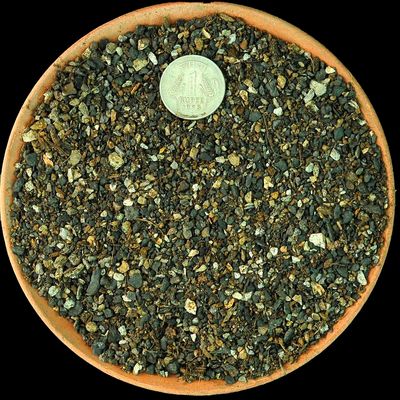
FORTIFIED Cactus & Succulent SOIL (FINE)
FORTIFIED Cactus & Succulent SOIL (FINE)
SKU MNS002
5.0
(4)
₹49.85
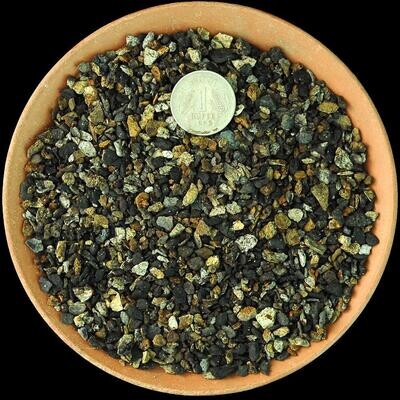
Cactus & Succulent Planting Mix COARSE (aka Cactus Soil Mix or Succulent Soil Mix)
Cactus & Succulent Planting Mix COARSE (aka Cactus Soil Mix or Succulent Soil Mix)
Washed, Free-Draining Mineral Mix for Cactus & Succulents
SKU MNS003
5.0
(1)
₹44.85
New


Monsoon Guardian Kit (5 in 1)
Monsoon Guardian Kit (5 in 1)
Complete 5-in-1 biological protection kit for cacti & succulents
SKU MNS024
₹850.00
Display prices in:INR
