
Categories
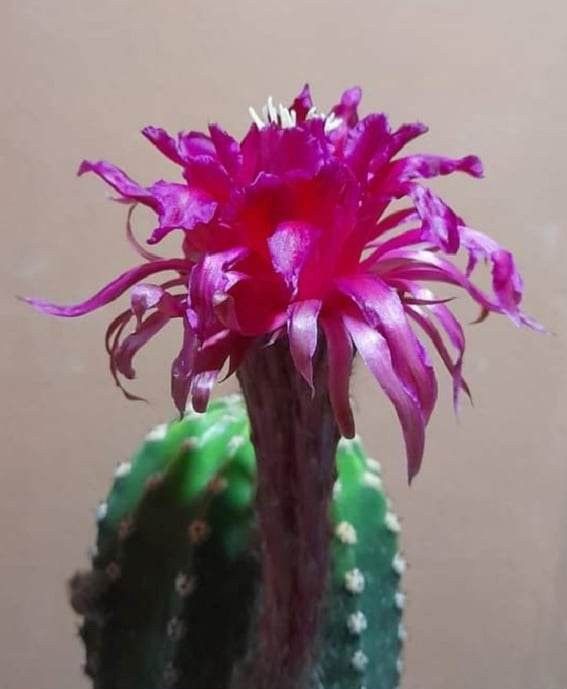
Trichocerous hybrid Papagino
SKU LET380
₹870.00
In stock: 1 available
1
Save this product for later
Customer reviews
Reviews only from verified customers
No reviews yet. You can buy this product and be the first to leave a review.
Trichocerous hybrid Papagino
Product Details
A wild, feathery bloom of magenta and violet, its narrow curling petals fanned out like exotic plumage around a glowing red-and-white throat — a Trichocereus hybrid whose flower looks more like a bird of paradise than a cactus.
Origin of Name
'Papagino' is a cultivar name rather than a botanical one, and no formally published breeding record for this specific clone appears in the wider literature — typical for collector-traded Trichocereus hybrids, which circulate on the strength of the flower alone. The name reads as a playful variant of Papageno, the cheerful bird-catcher from Mozart's opera The Magic Flute, whose own name comes from the German Papagei, "parrot." It's an apt echo here: the flower's narrow, twisting, brightly colored petals genuinely resemble ruffled feathers more than typical cactus petals.
The genus name Trichocereus comes from Greek trichos ("hair") and cereus ("candle" or "torch"), referring to the tufts of hair-like bristles found in the areoles of many species in the group. Long a hybridizing favorite for its huge, spectacular flowers, Trichocereus has been folded taxonomically into Echinopsis by most modern authorities, though "Trichocereus hybrid" remains the name growers and collectors use.
Origin of Plant
Like all named Trichocereus hybrids, 'Papagino' has no wild habitat of its own — it's a deliberate garden cross, not a species collected from nature. Its genetics trace back to wild, columnar Trichocereus species native to the Andes of Peru, Bolivia, Chile, and Argentina, where they grow as tall, ribbed, spiny columns on rocky slopes and desert margins. Hybridizers have long crossed these species with other Echinopsis-group cacti to combine vigorous, easy-to-grow bodies with ever larger and more colorful flowers — the tradition 'Papagino' belongs to.
Description
The plant grows as an upright, ribbed, spine-studded column, typical of the group and unremarkable outside of bloom time. The flower is the draw: a large, fully open bloom with slender, slightly twisted petals in shades of hot magenta and violet-purple, paling toward the tips, surrounding a vivid red-and-white throat and a cluster of pale stamens. As with the rest of the Echinopsis/Trichocereus group, each flower is short-lived, typically open for a day or so, often opening in the evening or overnight.
Conservation Status
As a cultivated hybrid propagated from cuttings, 'Papagino' has no IUCN Red List status of its own. Its wild Trichocereus ancestors are mostly not classified as broadly threatened, though international trade in wild-collected cacti generally falls under CITES Appendix II. A nursery-grown hybrid like this one is always the sustainable choice.
Care
Light: Full sun to bright light for strong growth and flowering, with a little shade in the hottest climates.
Watering: Water well through spring–autumn, letting the soil dry between waterings; keep nearly dry in winter.
Soil: A gritty, fast-draining cactus mix, amended with pumice or coarse sand.
Temperature: Tolerates average warm-season conditions and light cold better than most tender cacti, but keep frost-free.
General tips: Feed lightly with a diluted, low-nitrogen fertilizer during the growing season to encourage flowering, and give the plant sturdy support as it grows tall.
An Interesting Note
Many large-flowered Trichocereus hybrids, this one included, open their blooms at dusk and close by midday — a trait inherited from moth-pollinated wild ancestors. Catching 'Papagino' in full bloom means checking in the early morning before the flower folds for good.
You May Also Like
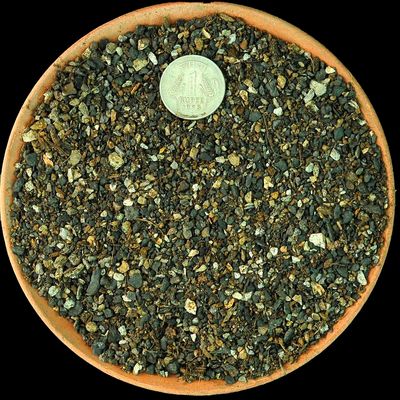
FORTIFIED Cactus & Succulent SOIL (FINE)
FORTIFIED Cactus & Succulent SOIL (FINE)
SKU MNS002
5.0
(4)
₹49.85
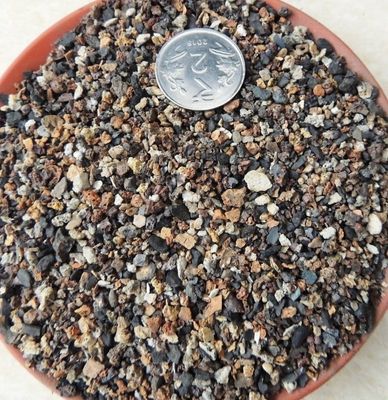

Cactus & Succulent Planting Mix FINE (aka Cactus Soil Mix or Succulent Soil Mix)
Cactus & Succulent Planting Mix FINE (aka Cactus Soil Mix or Succulent Soil Mix)
Fine-Grain Potting Mix for Cactus & Succulent Roots
SKU MNS001
5.0
(3)
₹39.85
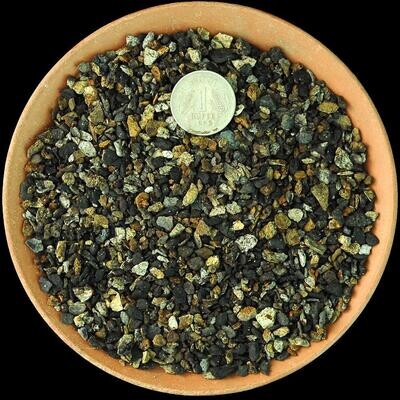
Cactus & Succulent Planting Mix COARSE (aka Cactus Soil Mix or Succulent Soil Mix)
Cactus & Succulent Planting Mix COARSE (aka Cactus Soil Mix or Succulent Soil Mix)
Washed, Free-Draining Mineral Mix for Cactus & Succulents
SKU MNS003
5.0
(1)
₹44.85
New


Monsoon Guardian Kit (5 in 1)
Monsoon Guardian Kit (5 in 1)
Complete 5-in-1 biological protection kit for cacti & succulents
SKU MNS024
₹850.00
Display prices in:INR
