
Categories
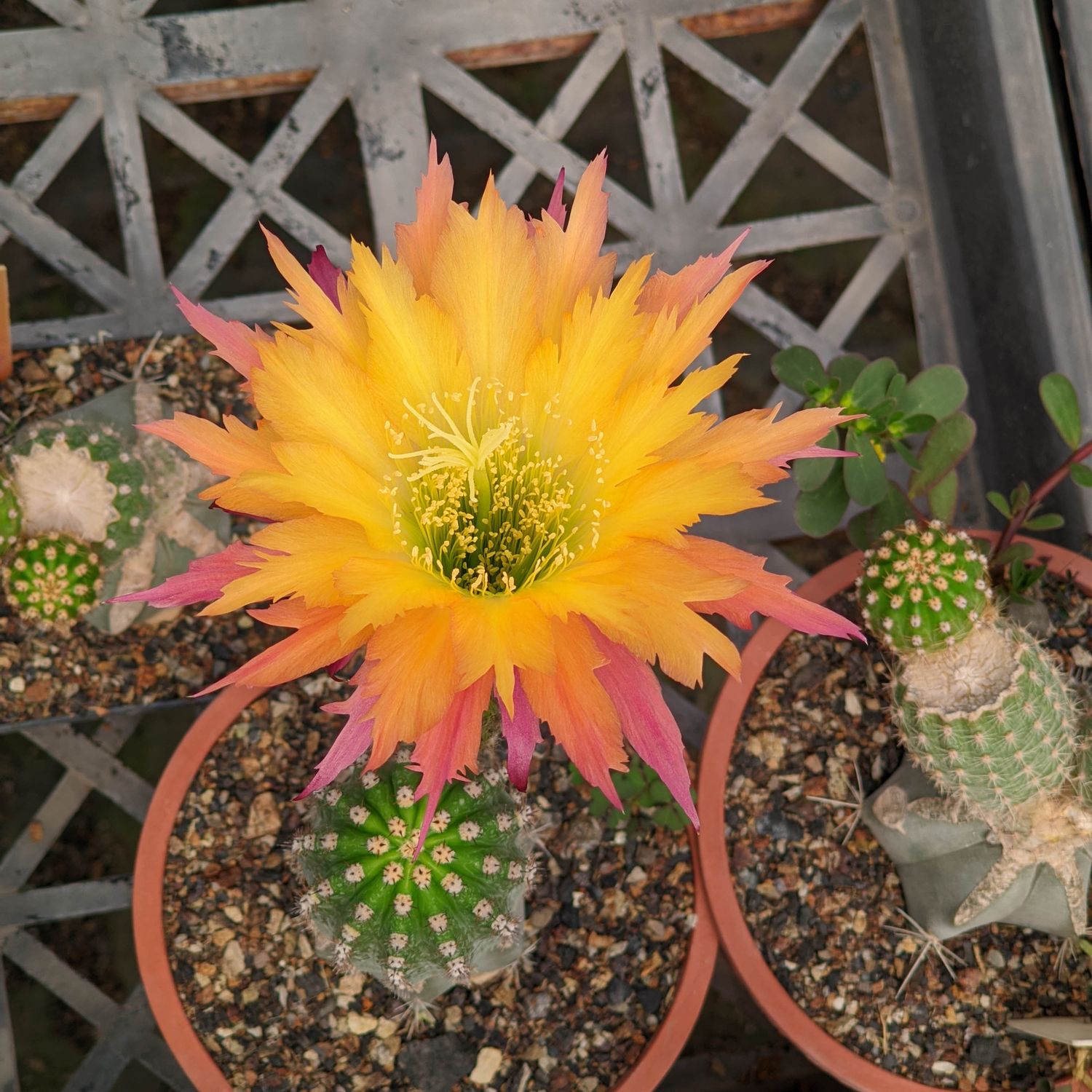
Trichocerous hybrid Super Apricot
SKU LET141
₹450.00
Sold out
Golden throats blending into coral-pink petals
Sold out
Save this product for later
Customer reviews
Reviews only from verified customers
No reviews yet. You can buy this product and be the first to leave a review.
Trichocerous hybrid Super Apricot
Product Details
Sunset Spectrum: Trichocereus hybrid 'Super Apricot'
A high-chroma horticultural masterpiece featuring a multi-tonal, serrated bloom that mimics a celestial sunburst.
- Origin & History of Name: The genus name Trichocereus stems from the Greek thrix (hair) and the Latin cereus (torch), identifying its hairy floral tubes and columnar growth. 'Super Apricot' is a horticultural designation highlighting the cultivar's superior floral diameter and the specific apricot-like gradient of its petals, a name established to distinguish it from standard orange-flowering hybrids in the enthusiast market.
- Morphology: This hybrid possesses a columnar, glaucous epidermis supported by prominent costae (ribs) that facilitate rapid expansion during the Indian monsoon. The plant is distinguished by its serrated petal margins, creating a jagged, feathered aesthetic. The floral pigmentation is complex, exhibiting a radial transition from a yellow throat to a fiery orange mid-section, concluding in vivid pink terminal tips.
- Habitat & Origin: 'Super Apricot' is an anthropogenic cultivar, bred through selective cross-pollination of South American Trichocereus species. It does not occur in nature. All stock is produced via sustainable nursery propagation, ensuring that wild populations of ancestral species in the Andes remain undisturbed.
- Cultivation Profile:
- Substrate: Utilize a mineral-dominant, fast-draining mix (e.g., 60% scoria or coarse sand, 40% leaf mold). This is critical in India to prevent "damping off" during high-humidity cycles.
- Light: Requires full sun to high-intensity filtered light. In North Indian summers, 30% shade netting is recommended to prevent localized sunscald on the rib peaks.
- Water/Dormancy: Provide deep watering only when the medium is 100% dry. Maintain cool, dry conditions during the Indian winter (Nov–Feb) to induce the physiological stress required for vernalization and subsequent heavy blooming.
- Scientific/Historical Anecdote: Many Trichocereus hybrids are descendants of the famous "Schick hybrids," but the 'Super' series represents a modern push for "shatter" colors—where distinct pigments exist on a single petal. Biologically, these vivid transitions are designed to attract a wide array of pollinators, from diurnal bees drawn to the yellow centers to crepuscular moths attracted by the larger, pale-framed silhouette of the flower.
You May Also Like

FORTIFIED Cactus & Succulent SOIL (COARSE)
FORTIFIED Cactus & Succulent SOIL (COARSE)
SKU MNS004
5.0
(11)
₹54.85
New


Monsoon Guardian Kit (5 in 1)
Monsoon Guardian Kit (5 in 1)
Complete 5-in-1 biological protection kit for cacti & succulents
SKU MNS024
₹850.00
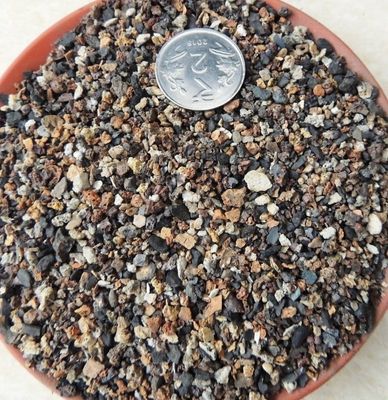

Cactus & Succulent Planting Mix FINE (aka Cactus Soil Mix or Succulent Soil Mix)
Cactus & Succulent Planting Mix FINE (aka Cactus Soil Mix or Succulent Soil Mix)
Fine-Grain Potting Mix for Cactus & Succulent Roots
SKU MNS001
5.0
(3)
₹39.85

Cactus & Succulent Planting Mix COARSE (aka Cactus Soil Mix or Succulent Soil Mix)
Cactus & Succulent Planting Mix COARSE (aka Cactus Soil Mix or Succulent Soil Mix)
Washed, Free-Draining Mineral Mix for Cactus & Succulents
SKU MNS003
5.0
(1)
₹44.85
Display prices in:INR
