
Categories
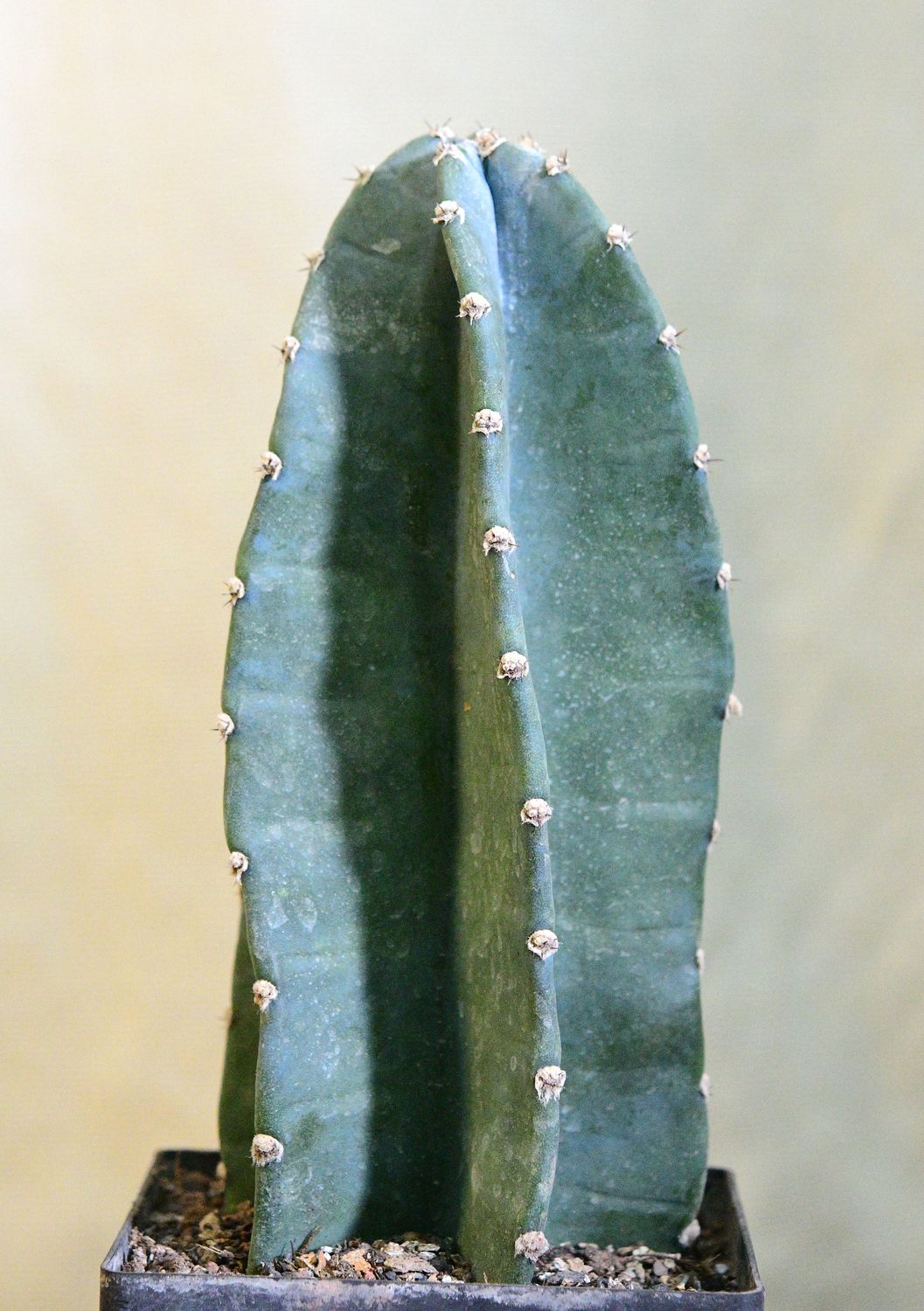
Trichocerous pachnoi
SKU CE025
₹650.00
Sold out
A quirky blue-grey cactus with extraordinary brain-like folds.
Sold out
Save this product for later
Customer reviews
Reviews only from verified customers
No reviews yet. You can buy this product and be the first to leave a review.
Trichocerous pachnoi
Product Details
Trichocereus pachanoi
High in the Andean foothills, where the air thins and the light turns gold before noon, grows a columnar giant that has walked beside humankind for three thousand years — part garden sentinel, part sacred relic. Trichocereus pachanoi, the San Pedro cactus, carries both a scientist's Latin binomial and a saint's borrowed name, and wears its history as plainly as its blue-green skin.
1. Origin of Name
The genus name Trichocereus draws from the Greek thrix ("hair") joined to the Latin cereus ("candle" or "torch") — a reference to the fine hairs that line the floral tubes of these tall, candle-like columnar cacti, distinguishing them from the smoother-throated Cereus.
The species epithet pachanoi is a tribute rather than a description. It honours Abelardo Pachano (1885–1958), an Ecuadorian professor and public figure who assisted the American botanist Joseph Nelson Rose during Rose's 1918 collecting expedition through the Andes. The species was formally published by Nathaniel Lord Britton and Rose in their landmark 1920 work The Cactaceae, with the type specimen traced to the Cuenca region of Ecuador.
Taxonomically, the plant has led a restless life. It has travelled under Cereus pachanoi (Werdermann, 1931), then Echinopsis pachanoi (Friedrich & Rowley, 1974) following a controversial lumping of Trichocereus into Echinopsis, and more recently Trichocereus macrogonus var. pachanoi (Albesiano & Kiesling, 2012), reflecting ongoing debate over how closely it relates to T. macrogonus. In the trade, growers and collectors still favour the older, more familiar Trichocereus pachanoi — a name we honour here alongside its scientific synonyms.
Its common name, San Pedro, invokes Saint Peter, keeper of the keys to heaven — a name given by Andean communities who regarded the plant as a key capable of opening doors between worlds. It is also known locally as huachuma, achuma, aguacolla, and gigantón.
2. Origin of Plant
Trichocereus pachanoi is native to the high intermontane valleys of southern Ecuador and Peru, typically found between 2,000 and 3,000 metres in elevation, with populations extending into Bolivia and reported naturalised stands in Colombia, central Chile, and even the Canary Islands. It thrives in the seasonally dry, rocky slopes characteristic of Andean scrub habitat, where cool nights and intense daytime sun shape its hardy, fast-growing constitution.
Rose's 1918 South American expedition — undertaken with Pachano's local guidance — brought the plant to formal botanical attention, though it had already been cultivated and revered across the Andes for millennia before any herbarium sheet was pressed.
3. Description
A fast-growing columnar cactus, T. pachanoi can reach 4 to 6 metres in height in maturity, branching freely from the base to form a candelabra-like cluster of upright stems. Each stem carries 4 to 8 ribs — most commonly 6 to 8 — clothed in a blue-green to deep green, often glaucous skin that gives the plant a faintly powdered, ghostly cast in strong light. Areoles are spaced evenly along the ribs and bear only a handful of short spines, sometimes vanishingly few in cultivated specimens, lending the plant a smooth, almost unarmed silhouette compared to its spinier relatives.
Its flowers are the plant's great seasonal event: enormous, trumpet-shaped, and pure white, opening after dusk and lingering into the following morning, often reaching 20 centimetres or more in length. Flower counts per flush vary from plant to plant and season to season and should never be treated as a fixed trait. Following pollination — historically by moths and hummingbirds — dark green fruits split to reveal white pulp studded with fine black seeds.
4. Conservation Status
As a member of the family Cactaceae, T. pachanoi is listed under CITES Appendix II, meaning international trade is regulated (export permits required) but not prohibited outright — this is a broad, family-wide listing rather than a reflection of individual rarity. It does not carry the stricter Appendix I status applied to a small number of other cacti. On the IUCN Red List, the species is currently assessed as Least Concern, reflecting its wide natural range and long history of cultivation. All specimens offered here are artificially propagated, exempting them from wild-collection trade restrictions.
5. Care
- Light: Full sun to bright light; young or newly potted specimens benefit from light afternoon shade in extreme heat
- Watering: Deep but infrequent watering through spring and summer, allowing the soil to dry fully between sessions; reduce sharply in autumn and keep nearly dry through winter
- Soil: A fast-draining, mineral-rich cactus mix; heavy or moisture-retentive soils invite root rot
- Pot: Terracotta is preferable to plastic, as its porous walls help excess moisture escape; ensure drainage holes are unobstructed
- Temperature: Thrives in warmth; protect from hard frost, ideally suited to USDA zones 8b–10 outdoors, or a bright indoor position elsewhere
- Feeding: A low-nitrogen cactus fertiliser applied monthly at half strength during the active growing season; withhold feeding entirely in winter
A Story Worth Telling
For more than three thousand years, this cactus has stood at the centre of Andean ceremonial life, its name borrowed from Saint Peter in recognition of its traditional role as a threshold-opener between the earthly and the sacred. That reputation travelled with it into the modern era largely unchanged — even as its Latin name shuffled between genera and its habitat crept from wild ravine to greenhouse bench.
There's a quieter story too, easy to overlook: the plant's very name is a small monument to collaboration. Joseph Nelson Rose could not have gathered his 1918 Andean specimens without Abelardo Pachano's local knowledge and guidance — and Britton and Rose repaid that debt in the only currency botanists have to offer, immortalising a local partner's name in Latin binomial for as long as the species is studied. Every pachanoi label is, in its own small way, a thank-you note two centuries in the making.
You May Also Like

FORTIFIED Cactus & Succulent SOIL (FINE)
FORTIFIED Cactus & Succulent SOIL (FINE)
SKU MNS002
5.0
(4)
₹49.85

Cactus & Succulent Planting Mix COARSE (aka Cactus Soil Mix or Succulent Soil Mix)
Cactus & Succulent Planting Mix COARSE (aka Cactus Soil Mix or Succulent Soil Mix)
Washed, Free-Draining Mineral Mix for Cactus & Succulents
SKU MNS003
5.0
(1)
₹44.85
New

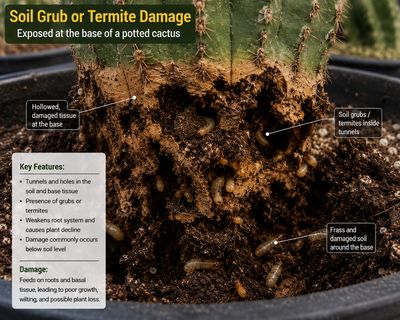
Monsoon Guardian Kit (5 in 1)
Monsoon Guardian Kit (5 in 1)
Complete 5-in-1 biological protection kit for cacti & succulents
SKU MNS024
₹850.00
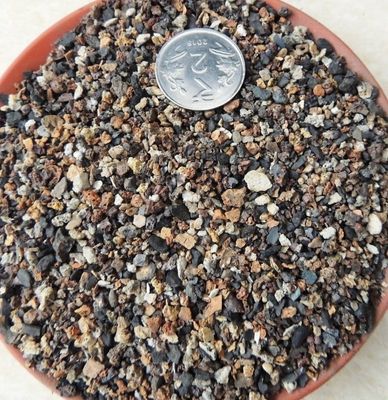
Cactus & Succulent Planting Mix FINE (aka Cactus Soil Mix or Succulent Soil Mix)
Cactus & Succulent Planting Mix FINE (aka Cactus Soil Mix or Succulent Soil Mix)
Fine-Grain Potting Mix for Cactus & Succulent Roots
SKU MNS001
5.0
(3)
₹39.85
Display prices in:INR
