
Categories
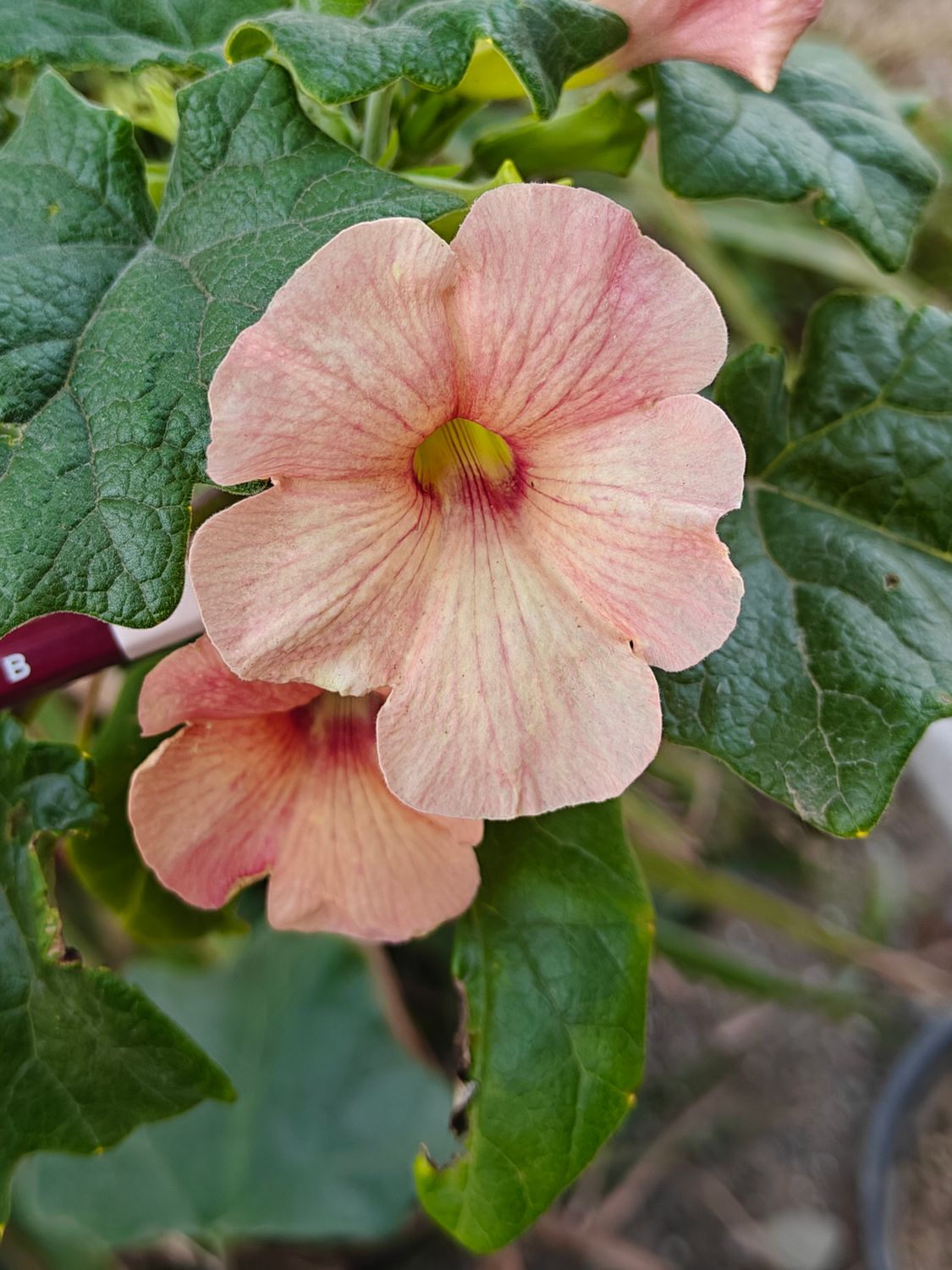
Uncarina Hybrid 'Apricot Lace'
SKU UN019
₹1 450.00
In stock: 1 available
1
Save this product for later
Customer reviews
Reviews only from verified customers
No reviews yet. You can buy this product and be the first to leave a review.
Uncarina Hybrid 'Apricot Lace'
Product Details
Uncarina Hybrid 'Apricot Lace'
A Madagascan caudiciform whose trumpet-shaped blooms wear a dusty, old-rose apricot like faded silk — every petal laced from base to edge with fine rose-red veining that converges into a deep garnet throat around a small, bright yellow-green eye, so the flower reads less like a typical bold succulent bloom and more like something hand-painted.
Origin of Name
The genus Uncarina takes its name from the Latin uncus, "hook" — a reference to its strange, barbed seed capsules, which so closely resemble those of the unrelated genus Uncaria that Austrian botanist Otto Stapf coined the name in 1895 specifically to flag the resemblance while keeping the two genera firmly distinct. All of the roughly fourteen accepted Uncarina species are endemic to Madagascar, placed within the sesame family, Pedaliaceae.
As a nursery-raised hybrid rather than a described wild species, this seedling carries no formal botanical epithet of its own — it's a selected cross from mixed Uncarina breeding lines, most likely descending from popular flowering parents such as Uncarina grandidieri or U. roeoesliana. We've named it 'Apricot Lace' for exactly what sets it apart on the bench: a soft, dusty apricot-salmon petal colour, deeper and dustier than the bright golds and coppers common in this hybrid line, overlaid with a fine network of rose-red veins that fans outward from the throat like lacework rather than the bolder, broader streaking seen in some of its siblings.
Origin of Plant
Every Uncarina traces back to Madagascar's hot, dry deciduous forests and scrubland, concentrated mainly in the west and south of the island — the same fire-adapted, drought-prone habitat that also produces Madagascar's iconic baobabs. Species such as Uncarina grandidieri were first collected and described in the late nineteenth century, as European botanists began systematically cataloguing Madagascar's extraordinary and highly endemic flora, a period shaped by explorer-naturalists like Alfred Grandidier, who crossed the island three times on foot in the 1860s to document its plants and animals in unprecedented detail.
This particular hybrid, however, was raised entirely under cultivation, its parent lines grown and crossed in nursery collections far from that dry Malagasy forest floor — the common path for the showy, large-flowered Uncarina hybrids now reaching collectors worldwide, selected seedling by seedling for striking, individual blooms exactly like this one.
Description
'Apricot Lace' is a semi-succulent, deciduous shrublet built on a swollen, water-storing caudex at its base, with soft, broad, gently lobed leaves that give the plant a lush, almost tropical look quite unlike a typical spiny succulent. From this modest frame come solitary, trumpet-shaped flowers, five broad petal lobes flaring out from a narrow tube — larger and showier than the plant's foliage would suggest.
The colour is the real draw. Rather than the saturated gold, copper, or hot pink seen in many Uncarina hybrids, this one settles into a soft, dusty apricot-salmon — closer to old rose wallpaper or sun-faded silk than to a punchy tropical bloom. Fine rose-red veins run the length of each petal from base to margin, converging as they near the centre into a deep garnet-maroon blotch that frames a small, bright chartreuse-yellow eye at the flower's mouth. That fine venation isn't just decorative: in flowers generally, this kind of contrasting line-work functions as a nectar guide, steering visiting pollinators efficiently toward the reward at the flower's centre rather than leaving them to search the whole bloom. Later, spent flowers give way to the genus's trademark seed capsules — woody pods armed with small hooked barbs, tough enough to snag on passing fur, exactly the trick they evolved for.
Conservation Status
As a cultivated hybrid, 'Apricot Lace' carries no conservation status of its own — it's propagated entirely in nurseries and never collected from the wild. Its wild Malagasy relatives depend on a habitat under real pressure: Madagascar's dry deciduous forests are protected across only a small fraction of their original range and continue to shrink under slash-and-burn agriculture, grazing, and logging. Choosing a nursery-bred hybrid like this one lets a collector enjoy the genus's flowers without adding any further strain on that dwindling forest.
Care
Light: Bright light keeps this plant flowering freely; full sun to lightly filtered sun is ideal. Strong light also tends to deepen and warm the petal colour, while cooler or softer conditions can hold blooms in a paler, more muted apricot.
Watering: Water generously through the warm growing season, letting the soil dry between waterings, then cut back sharply as the plant drops its leaves for winter dormancy. Keep it nearly dry while the caudex rests, resuming regular watering only as new growth appears.
Soil: A rich, very free-draining succulent or cactus mix, so the swollen caudex base never sits in damp soil.
Temperature: A warm-climate plant with no frost tolerance — protect it below about 2°C (35°F), and prioritise dry roots over humidity through any cool spell.
General tips: Feed sparingly with a diluted, low-nitrogen fertiliser during active growth to encourage flowers rather than soft leaf growth. Uncarinas are slow and genuinely difficult to propagate from seed or cuttings, so a well-flowered hybrid like this one is worth the patience.
An Interesting Note
The fine, lace-like veining that gives this hybrid its name isn't just a pretty accident — flowers across many plant families use exactly this kind of contrasting line-work as a "nectar guide," a visual signpost steering pollinators straight to the reward at the flower's centre. Some nectar guides are plain to human eyes, like the ones here; others are invisible to us entirely and only show up under ultraviolet light, which many pollinating insects can see but we can't. By cutting down how long a visitor spends searching a bloom, guides like these make pollination more efficient for the plant and foraging more efficient for the pollinator — a small design detail doing real evolutionary work, dressed up here as simple decoration.
You May Also Like
New

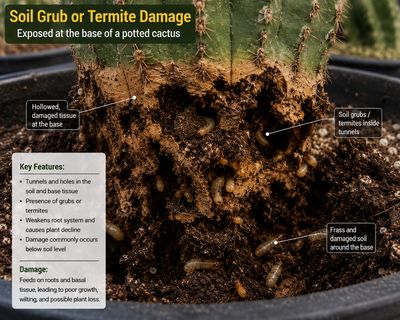
Monsoon Guardian Kit (5 in 1)
Monsoon Guardian Kit (5 in 1)
Complete 5-in-1 biological protection kit for cacti & succulents
SKU MNS024
₹850.00


Cactus & Succulent Planting Mix FINE (aka Cactus Soil Mix or Succulent Soil Mix)
Cactus & Succulent Planting Mix FINE (aka Cactus Soil Mix or Succulent Soil Mix)
Fine-Grain Potting Mix for Cactus & Succulent Roots
SKU MNS001
5.0
(3)
₹39.85

FORTIFIED Cactus & Succulent SOIL (COARSE)
FORTIFIED Cactus & Succulent SOIL (COARSE)
SKU MNS004
5.0
(11)
₹54.85
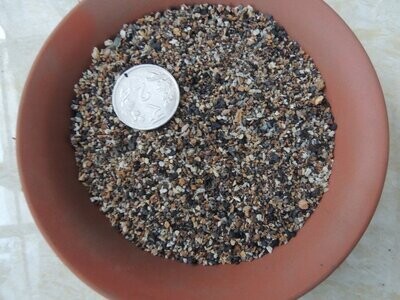
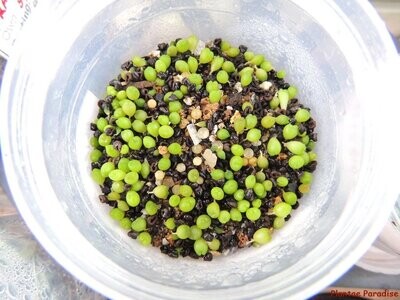
Cactus Seed Planting Mix
Cactus Seed Planting Mix
Sterile, Fine-Grain Media for Cactus & Succulent Seeds
SKU MNS005
₹74.85
Display prices in:INR
