
Categories
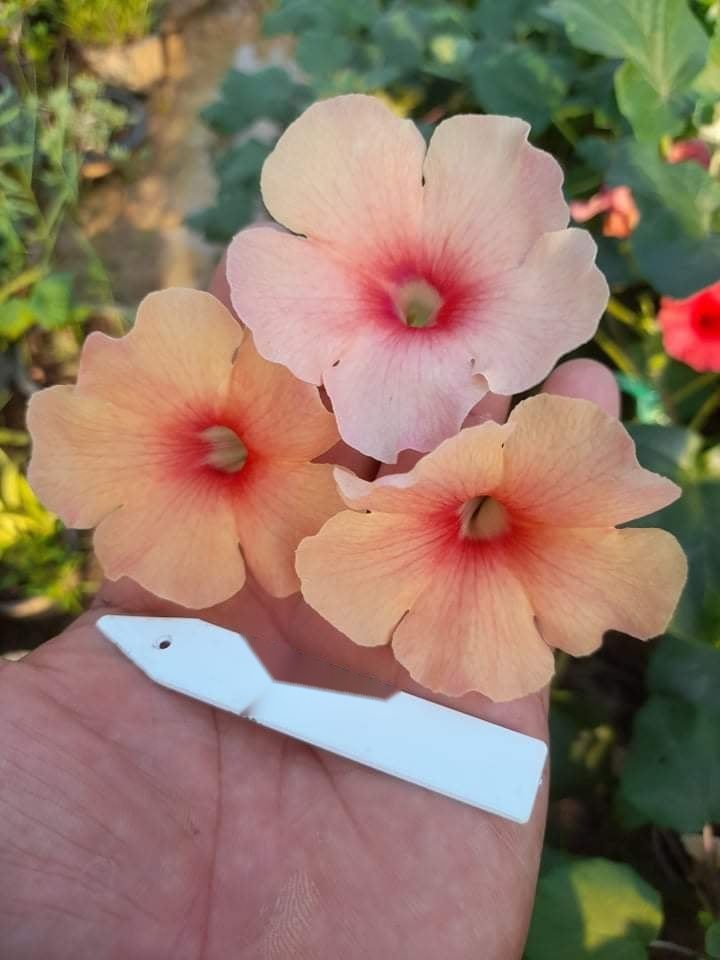
Uncarina Hybrid 'Chameleon Blush'
SKU UN015
₹1 450.00
Sold out
Sold out
Save this product for later
Customer reviews
Reviews only from verified customers
No reviews yet. You can buy this product and be the first to leave a review.
Uncarina Hybrid 'Chameleon Blush'
Product Details
A Madagascan caudiciform that never shows quite the same face twice — trumpet-shaped blooms that can open a soft, powdery blush pink one day and a warm peachy apricot the next, every one of them anchored by the same deep magenta-red throat.
Origin of Name
Uncarina comes from Latin uncus, "hook," coined by Otto Stapf in 1895 for the genus's barbed seed capsules, which resemble those of the unrelated Uncaria. All 14 species are Madagascar endemics in the sesame family, Pedaliaceae. As an unnamed nursery hybrid , it's named 'Chameleon Blush' for the trait that sets it apart even among its own siblings: flowers sliding from cool blush pink to warm peach-apricot, always anchored by the same red-magenta throat.
Origin of Plant
Native to Madagascar's dry deciduous forests and scrub — the same habitat as the island's baobabs — with species like U. grandidieri first catalogued in the era of 19th-century explorer-naturalists such as Alfred Grandidier. This hybrid itself was bred and raised entirely in cultivation.
Description
A deciduous shrublet on a swollen, water-storing caudex, with soft lobed leaves and large solitary trumpet flowers. Its signature trait: flower colour that shifts markedly with light and age — pale blush pink in cooler conditions or when freshly opened, warming to a richer peach-apricot in strong sun or as the bloom matures — while the deep red-magenta throat stays constant throughout. Later gives way to the genus's hooked, woody seed pods.
Conservation Status
No status of its own as a cultivated hybrid; wild Malagasy relatives depend on dry forest habitat under real pressure from agriculture and logging.
Care
Bright light for best flowering and colour; generous water in the growing season, dry dormancy in winter; rich, free-draining soil; protect below ~2°C (35°F); feed sparingly with a low-nitrogen fertilizer.
An Interesting Note
Flowers changing colour with age is a documented strategy across many plants — shifting pigment levels let pollinators tell fresh, rewarding blooms from older ones at a glance. 'Chameleon Blush' just wears that ordinarily subtle signal far more vividly than most.
You May Also Like


Cactus & Succulent Planting Mix FINE (aka Cactus Soil Mix or Succulent Soil Mix)
Cactus & Succulent Planting Mix FINE (aka Cactus Soil Mix or Succulent Soil Mix)
Fine-Grain Potting Mix for Cactus & Succulent Roots
SKU MNS001
5.0
(3)
₹39.85
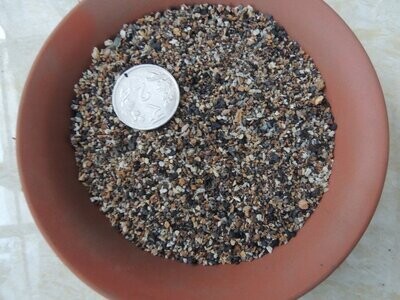
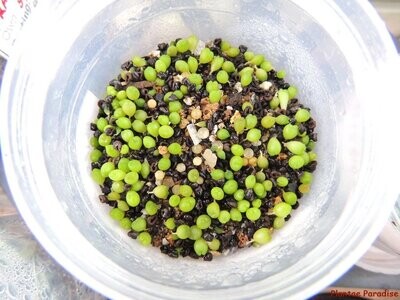
Cactus Seed Planting Mix
Cactus Seed Planting Mix
Sterile, Fine-Grain Media for Cactus & Succulent Seeds
SKU MNS005
₹74.85
New

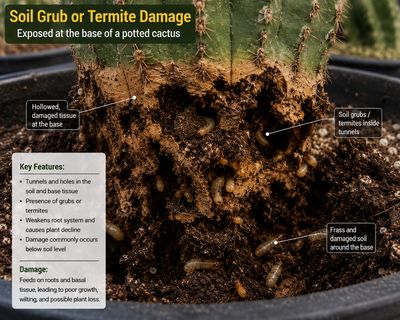
Monsoon Guardian Kit (5 in 1)
Monsoon Guardian Kit (5 in 1)
Complete 5-in-1 biological protection kit for cacti & succulents
SKU MNS024
₹850.00

Cactus & Succulent Planting Mix COARSE (aka Cactus Soil Mix or Succulent Soil Mix)
Cactus & Succulent Planting Mix COARSE (aka Cactus Soil Mix or Succulent Soil Mix)
Washed, Free-Draining Mineral Mix for Cactus & Succulents
SKU MNS003
5.0
(1)
₹44.85
Display prices in:INR
