
Categories
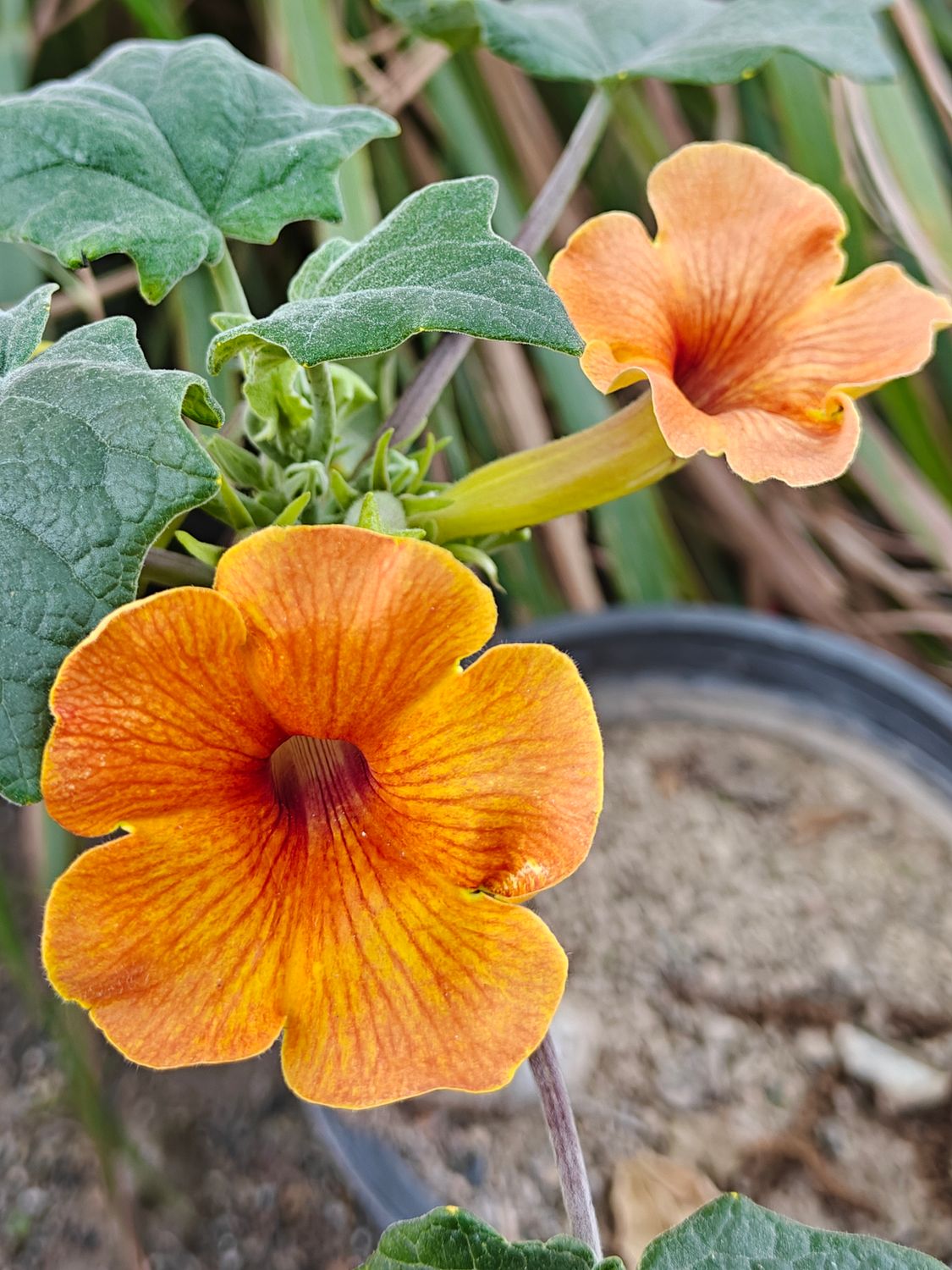
Uncarina Hybrid 'Copper Tiger'
SKU UN017
₹2 250.00
In stock: 1 available
1
Save this product for later
Customer reviews
Reviews only from verified customers
No reviews yet. You can buy this product and be the first to leave a review.
Uncarina Hybrid 'Copper Tiger'
Product Details
Uncarina Hybrid 'Copper Tiger'
A big, ruffled, saucer-shaped bloom in molten copper-orange, its petals striped almost edge to edge with dark blood-red veining that pours out of a deep maroon throat like something scorched — set against soft, silvery, felt-textured leaves that look dusted with frost.
Origin of Name
The genus Uncarina takes its name from the Latin uncus, "hook" — a reference to its strange, barbed seed capsules, which so closely resemble those of the unrelated Asian genus Uncaria that the Austrian botanist Otto Stapf coined the name Uncarina in 1895 specifically to flag the resemblance while keeping the two genera taxonomically distinct. All fourteen accepted Uncarina species are endemic to Madagascar, sitting within the sesame family, Pedaliaceae.
Like its siblings from the same hybridizing line, this seedling is an unregistered nursery hybrid rather than a described species, most likely drawn from crosses among strongly flowering parents such as Uncarina grandidieri and U. roeoesliana. Where other selections from this batch have settled into softer pinks, peaches, or creams, this one goes the other direction entirely — a saturated, coppery orange laid over almost edge-to-edge with dark red venation, so dense and striped it reads almost like tiger markings radiating out from the throat. We've named it 'Copper Tiger' for exactly that: the metallic warmth of the base colour and the bold, striped intensity of its veining.
Origin of Plant
Every Uncarina is native exclusively to Madagascar, restricted to the island's hot, dry deciduous forests and scrubland across its west and south — the same arid, fire-adapted terrain that also produces Madagascar's famous baobabs. Species such as Uncarina grandidieri, among the likely parents behind this hybrid, were first collected and formally described in the late 19th century, during the era of explorer-naturalists like Alfred Grandidier, who spent much of the 1860s crossing Madagascar on foot to catalogue its highly endemic flora in unprecedented detail.
This particular hybrid, however, is purely a product of cultivation — bred and raised from parent Uncarinas grown together in nursery collections, selected specifically for a flower colour and pattern intensity that no single wild species reliably produces on its own.
Description
'Copper Tiger' is a semi-succulent, deciduous shrublet built around a swollen, water-storing caudex at its base. Its leaves are broad, softly lobed, and distinctly felted in texture — a fine, silvery-grey pubescence covers the whole leaf surface, giving the foliage a frosted, almost velvet-grey cast quite different from the glossier greens seen elsewhere in the genus.
The flower is the real event: a large, wide-flaring, saucer-shaped bloom with gently ruffled, waved petal margins, opening in a deep, glowing copper-orange. Unlike the more restrained veining of paler Uncarina hybrids, colour here saturates almost the entire petal surface in dark, blood-red streaks that radiate outward from the base in dense, parallel lines, fading only slightly toward the ruffled yellow-orange rim — a striped, tiger-like pattern that gives the flower real visual weight even at a distance. At the centre, that veining converges into a compact, deep maroon-red throat before opening into the flower's narrow nectar tube. Later in the season, spent blooms give way to the genus's distinctive seed capsules — tough, woody pods armed with small hooked barbs adapted to snag on passing fur, the trait behind Uncarina's common nickname, the "mousetrap plant."
Conservation Status
As a cultivated hybrid, 'Copper Tiger' carries no conservation status of its own — it exists only in nurseries and private collections, propagated without any pressure on wild populations. Its wild Malagasy relatives are a different matter: Madagascar's dry deciduous forests, the genus's entire native habitat, are protected across only a small fraction of their original extent and continue to shrink under slash-and-burn agriculture, grazing, and logging. A nursery-bred hybrid like this one lets a collector enjoy the genus's boldest colours without adding to that pressure.
Care
Light: Full sun to bright, lightly filtered light brings out the richest copper and red tones in the bloom and keeps the felted, silvery leaves compact and well-coloured; too little light softens both the flower's intensity and the leaf texture.
Watering: Water generously through the warm growing season, letting the soil dry out between waterings, then cut back sharply as the plant drops its leaves for winter dormancy. Keep it nearly dry while the caudex rests, resuming regular watering only once new growth appears.
Soil: A rich but very free-draining succulent or cactus mix, so the swollen caudex base is never left sitting in damp soil.
Temperature: A genuinely warm-climate plant with essentially no frost tolerance — protect it below about 2°C (35°F), and prioritise dry roots over any attempt at winter humidity.
General tips: Feed sparingly with a diluted, low-nitrogen fertiliser during active growth to favour flowering over soft leaf growth. Uncarinas are notoriously slow and difficult to propagate from seed or cuttings, so a vigorous, well-coloured hybrid like this one is worth the patience — and handle any seed pods that do form with care, since their hooked barbs are genuinely sharp.
An Interesting Note
The dense, radiating red veining that gives 'Copper Tiger' its name isn't just for show — in trumpet-shaped flowers generally, these converging lines function as nectar guides, a visual runway steering pollinators from the wide, sunlit petal surface straight down toward the throat where the actual reward sits. Most Uncarina hybrids carry a soft version of this pattern; 'Copper Tiger' simply turns the volume all the way up, striping nearly the whole petal in a way that looks less like a guide and more like a warning flare — appropriate for a flower this saturated.
You May Also Like
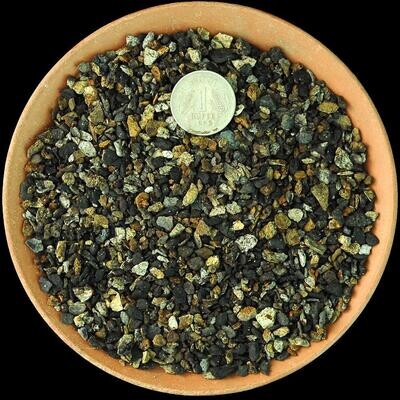
Cactus & Succulent Planting Mix COARSE (aka Cactus Soil Mix or Succulent Soil Mix)
Cactus & Succulent Planting Mix COARSE (aka Cactus Soil Mix or Succulent Soil Mix)
Washed, Free-Draining Mineral Mix for Cactus & Succulents
SKU MNS003
5.0
(1)
₹44.85
Cactus Seed Planting Mix
Cactus Seed Planting Mix
Sterile, Fine-Grain Media for Cactus & Succulent Seeds
SKU MNS005
₹74.85
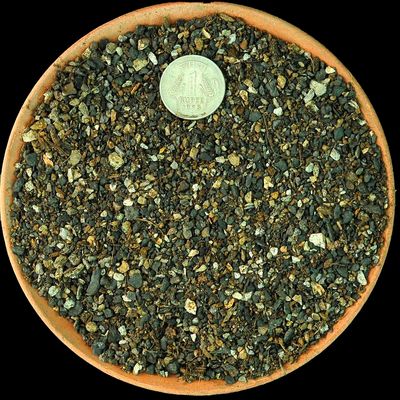
FORTIFIED Cactus & Succulent SOIL (FINE)
FORTIFIED Cactus & Succulent SOIL (FINE)
SKU MNS002
5.0
(4)
₹49.85
New

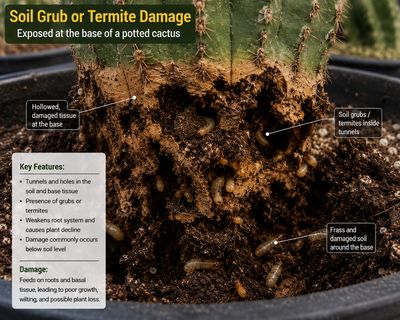
Monsoon Guardian Kit (5 in 1)
Monsoon Guardian Kit (5 in 1)
Complete 5-in-1 biological protection kit for cacti & succulents
SKU MNS024
₹850.00
Display prices in:INR
