
Categories
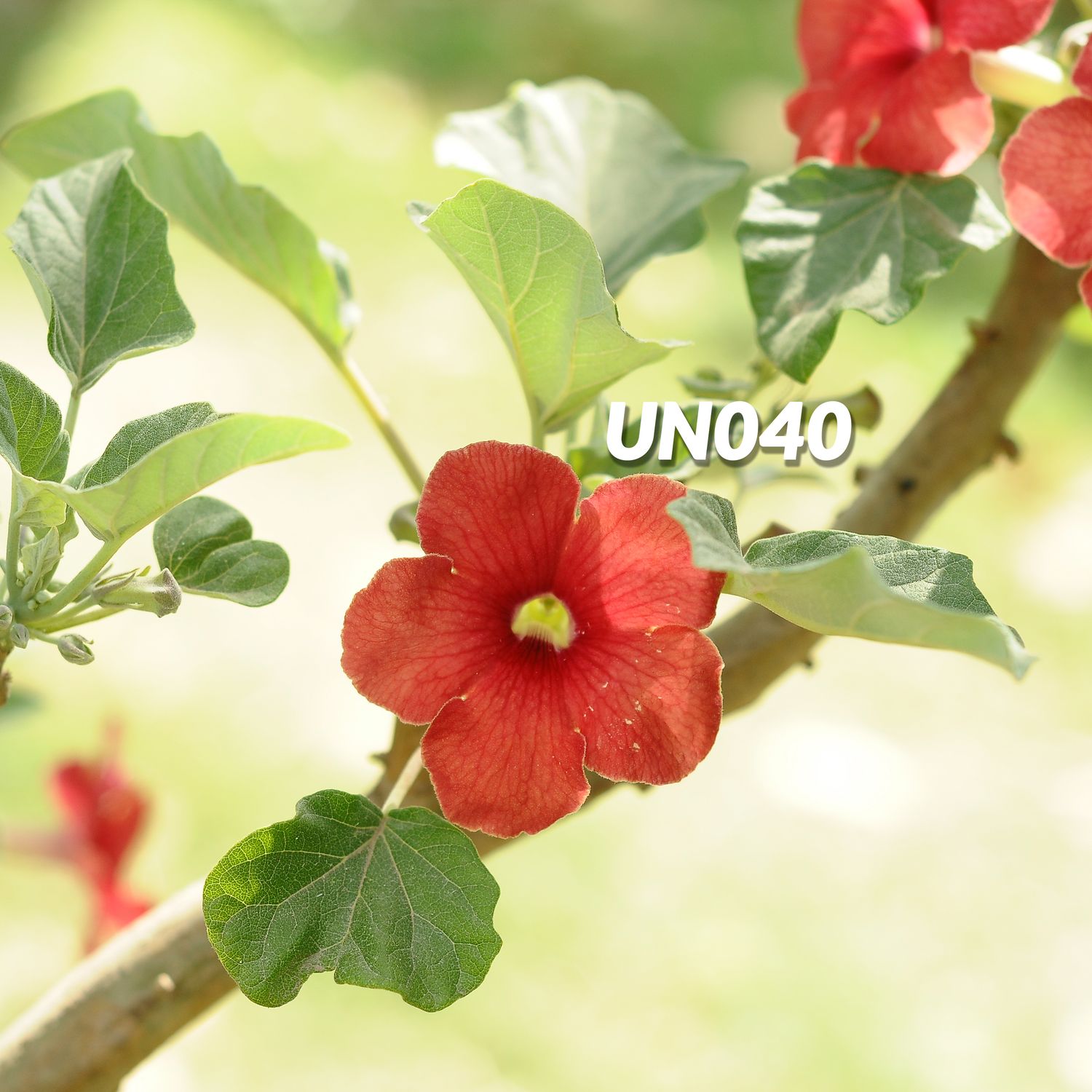
Uncarina Hybrid 'Scarlet Veil'
SKU UN040
₹1 500.00
In stock: 1 available
1
Save this product for later
Customer reviews
Reviews only from verified customers
No reviews yet. You can buy this product and be the first to leave a review.
Uncarina Hybrid 'Scarlet Veil'
Product Details
Uncarina 'Scarlet Veil' is a hybrid. It bears velvety, petunia-like blooms of rich scarlet red, each with a glowing cream throat ringed in deep maroon, above soft, sage-green foliage on a slowly thickening woody stem. For caudex collectors, it is a rare red among a genus best known for yellow.
Origin of Name
Uncarina comes from the Latin uncus, meaning "hook". The name refers to the genus's famous fruit, which is armed with ferocious barbed hooks. The ending -ina marks it as a diminutive, or "look-alike", of Uncaria, a hook-bearing genus of the coffee family.
The naming history is tangled:
- 1887: The French botanist Henri Ernest Baillon first described Madagascar's hook-fruited species under Harpagophytum, the African Devil's Claw genus. Harpagophytum is Greek for "grappling-hook plant".
- 1891: Otto Kuntze briefly transferred them to Uncaria.
- 1895: The Austrian-born Kew botanist Otto Stapf recognised them as a separate Madagascan lineage and coined the genus name Uncarina.
The cultivar name 'Scarlet Veil' is our own. It was chosen for the soft, veil-like translucency of the scarlet petals, whose fine red veining shows clearly when sunlight passes through them.
Origin of Plant
The genus Uncarina belongs to Pedaliaceae, the sesame family, and is endemic to Madagascar. Its species grow in the island's dry deciduous forests and spiny thickets, mostly in the south and west. There they survive long rainless months by storing water in a swollen stem and caudex.
'Scarlet Veil' is a nursery-raised hybrid selected at Plantae Paradise for its flower colour. Its exact parentage is not documented, so we do not guess at the parent species. It is offered simply as a distinctive garden hybrid.
Description
- Flowers: The flowers are five-lobed, rounded and petunia-like, in a warm scarlet to brick red. Delicate darker veining runs across the petals. Each throat is creamy yellow, set off by a dark maroon ring.
- Buds: Buds emerge deep maroon-purple, adding colour before the flowers open.
- Blooming: Flowers open in succession through the warm season. Several may be open at once, and bloom numbers vary from plant to plant and season to season.
- Foliage: The leaves are broad, softly lobed and sage-green, with a faintly velvety, hairy texture. The plant is deciduous and sheds its leaves during winter dormancy.
- Form: The plant is a woody, semi-succulent shrublet. With age it develops a thickened, water-storing stem and caudex, and it can be trained into an attractive bonsai-like specimen.
- Fruit: If the plant sets seed, it produces the typical Uncarina capsule, covered in sharp barbed hooks. Handle any fruit with care.
Conservation Status
- CITES: Not listed. Uncarina is not covered by the CITES appendices.
- IUCN Red List: Not applicable to a cultivated hybrid. Several wild Uncarina species have been assessed, and their dry-forest habitats in Madagascar face pressure from clearance and burning.
- Our plants: They are nursery-propagated. Cultivated hybrids like 'Scarlet Veil' let collectors enjoy the genus without any demand on wild populations.
Care
- Light: Give full sun to very bright light for compact growth and the best flowering.
- Watering: Water generously in the warm growing season while the plant is in leaf, letting the soil dry out between waterings. Reduce watering as the leaves yellow in autumn, and keep the plant almost dry through winter dormancy.
- Soil: Use a fast-draining, gritty mix, such as pumice, coarse sand and grit, with a modest amount of organic matter.
- Pot: Terracotta pots with good drainage suit it best. Raising the caudex slightly above the soil line shows it off and reduces the risk of rot.
- Temperature: The plant loves warmth and is frost-tender. Keep it above about 10°C in winter, and keep it dry when it is cold.
- Feeding: Apply a balanced or bloom-boosting fertiliser at half strength every 3–4 weeks during active growth.
- Tip: Leaf drop in the cool season is natural. New leaves and buds return with warmth and the first waterings of spring.
A Story Worth Telling
In Madagascar, Uncarina is known as the Mousetrap Tree. Its fruits carry some of the most fearsome hooks in the plant world. Each barb is designed to latch onto passing fur or feathers, so that animals carry the seeds far from the parent plant. The hooks grip so tenaciously that they are said to snare small animals caught in them, which is how the plant earned its nickname.
This makes for a striking contrast in one plant: the most delicate, petunia-soft flowers followed by fruit that works like a grappling hook. It is a close cousin of the sesame used in cooking, yet shaped by Madagascar's harsh dry forests into something far more extraordinary.
You May Also Like
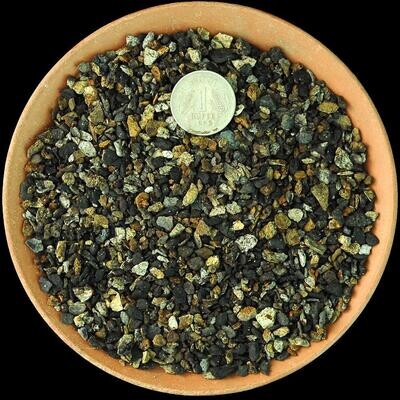
Cactus & Succulent Planting Mix COARSE (aka Cactus Soil Mix or Succulent Soil Mix)
Cactus & Succulent Planting Mix COARSE (aka Cactus Soil Mix or Succulent Soil Mix)
Washed, Free-Draining Mineral Mix for Cactus & Succulents
SKU MNS003
5.0
(1)
₹44.85

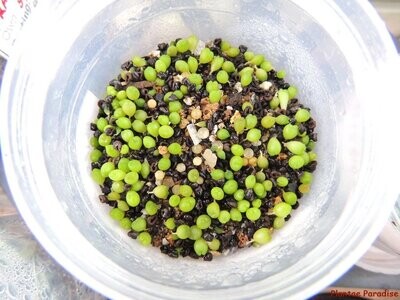
Cactus Seed Planting Mix
Cactus Seed Planting Mix
Sterile, Fine-Grain Media for Cactus & Succulent Seeds
SKU MNS005
₹74.85
New


Monsoon Guardian Kit (5 in 1)
Monsoon Guardian Kit (5 in 1)
Complete 5-in-1 biological protection kit for cacti & succulents
SKU MNS024
₹850.00


Cactus & Succulent Planting Mix FINE (aka Cactus Soil Mix or Succulent Soil Mix)
Cactus & Succulent Planting Mix FINE (aka Cactus Soil Mix or Succulent Soil Mix)
Fine-Grain Potting Mix for Cactus & Succulent Roots
SKU MNS001
5.0
(3)
₹39.85
Display prices in:INR
