
Categories
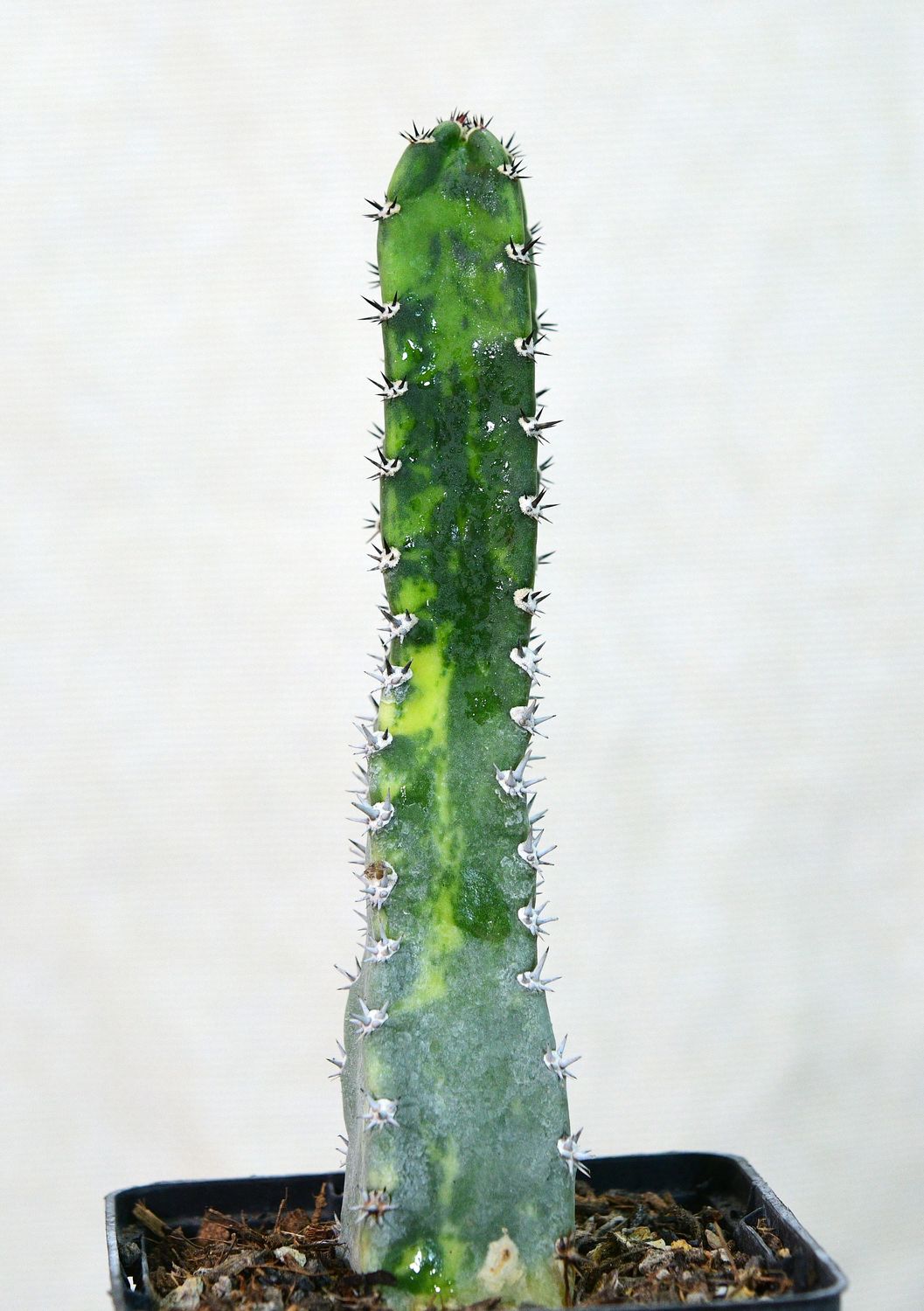
Variegated harrisia jusbertii
SKU HS001
₹1 850.00
In stock: 1 available
1
Save this product for later
Customer reviews
Reviews only from verified customers
No reviews yet. You can buy this product and be the first to leave a review.
Variegated harrisia jusbertii
Product Details
A rare variegated sport of horticulture's favourite "nurse" cactus — pale cream-and-green marbled stems on the very species collectors normally use to prop up other people's chlorophyll-deficient plants.
Origin of Name
The genus Harrisia honours James William Harris (1860–1920), an Irish botanist who served as Superintendent of Public Gardens and Plantations in Jamaica. The species epithet jusbertii commemorates a Mr. Jusbert, a French cactus enthusiast credited by the collector Pierre Rebut, who first distributed the plant in 1891 as Cereus jusbertii. It passed through several generic homes over the following decades — as Eriocereus jusbertii, ×Harrisinopsis jusbertii, and finally Harrisia jusbertii — reflecting ongoing debate over where exactly it belongs. That debate has never fully settled, because Harrisia jusbertii is widely suspected to be a naturally occurring intergeneric hybrid, likely between a Harrisia species (possibly H. pomanensis) and Echinopsis eyriesii, rather than a straightforward wild species. This variegated form is a chimeral sport — a spontaneous mutation in cultivated stock that produces patches of chlorophyll-deficient, cream-to-yellow tissue alongside normal green — rather than a separately named or formally described taxon.
Origin of Plant
No confirmed wild population of Harrisia jusbertii has ever been documented; candidate origins point to Argentina or Paraguay, but the plant is known almost entirely from cultivation, propagated clonally since its introduction in the 1890s. Its hybrid origin would explain the absence of wild material altogether. The variegated form did not arise in habitat at all — like most cactus variegates, it is a nursery-born chimera, first noticed as an aberrant shoot on ordinary green stock and propagated onward by cuttings or grafts from that single mutant point of origin.
Description
A columnar, sparingly branched cactus with slender, four- to six-ribbed stems reaching around 6 cm in diameter; the species normally grows an unbroken deep green, but this variegated form breaks that up into irregular streaks and patches of cream, pale yellow, and pink-tinged tissue running alongside the green. Because the pale sectors carry little or no chlorophyll, growth is slower and more delicate than the vigorous, fast-climbing habit typical of standard green jusbertii, and variegated stems often need the support of a stake — or a graft onto sturdier green stock — to stand upright. When mature and well-grown, it can still produce the species' characteristic enormous, funnel-shaped, strongly scented white flowers that open only at night.
Conservation Status
The genus Harrisia, along with the great majority of Cactaceae, falls under CITES Appendix II, meaning international trade requires appropriate permitting regardless of cultivated origin. As Harrisia jusbertii has no confirmed wild population, it has not been separately assessed on the IUCN Red List; this specimen, like virtually all material of the species in cultivation, is nursery-propagated from long-established clonal stock, and the variegation itself is a horticultural trait rather than a conservation concern.
Care
- Light: Bright light with some protection from the harshest midday sun — the pale, chlorophyll-poor sectors scorch more easily than green tissue and need gentler exposure than standard-form jusbertii.
- Watering: Water moderately in the growing season, allowing the soil to dry between waterings; go easy in winter dormancy, as reduced chlorophyll means reduced capacity to process excess moisture.
- Soil: A gritty, fast-draining cactus mix is essential; good root aeration supports the slower growth rate of variegated tissue.
- Temperature: Prefers warmth and is more frost-sensitive than the vigorous green form; protect below around 5–10°C (41–50°F).
- Support & grafting: Weaker variegated growth benefits from staking while young, or can be grafted onto ordinary green Harrisia jusbertii or Trichocereus stock for stronger, faster growth — a small irony, given that green jusbertii is itself the cactus world's classic rootstock for supporting other chlorophyll-deficient plants.
A Story Worth Telling
Harrisia jusbertii built its reputation as cactus grafting's quiet workhorse — the go-to understock for keeping delicate, slow, or chlorophyll-lacking cultivars (like variegated or "moon cactus" Gymnocalycium) alive and growing true to form, prized precisely because it doesn't force grafted scions into weak, stretched growth the way faster stocks do. A variegated jusbertii turns that whole relationship on its head: the plant famous for hosting other cacti's pigment-deficient mutants has developed one of its own, and in many cases needs the very support role it usually provides — grafted onto plain green stock of its own species just to grow at full strength. It's a neat, slightly self-referential twist in a genus whose entire commercial identity is built on propping up other plants' rarities.
You May Also Like
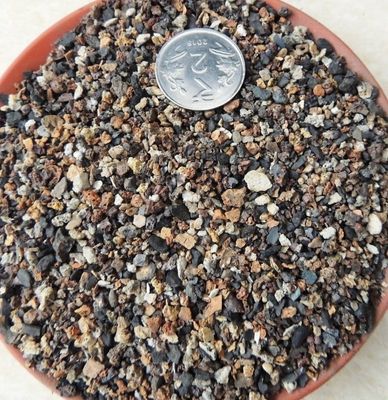
Cactus & Succulent Planting Mix FINE (aka Cactus Soil Mix or Succulent Soil Mix)
Cactus & Succulent Planting Mix FINE (aka Cactus Soil Mix or Succulent Soil Mix)
Fine-Grain Potting Mix for Cactus & Succulent Roots
SKU MNS001
5.0
(3)
₹39.85

FORTIFIED Cactus & Succulent SOIL (FINE)
FORTIFIED Cactus & Succulent SOIL (FINE)
SKU MNS002
5.0
(4)
₹49.85
New
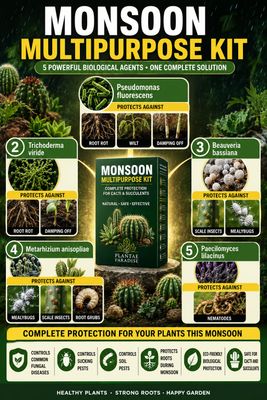
Monsoon Guardian Kit (5 in 1)
Monsoon Guardian Kit (5 in 1)
Complete 5-in-1 biological protection kit for cacti & succulents
SKU MNS024
₹850.00

FORTIFIED Cactus & Succulent SOIL (COARSE)
FORTIFIED Cactus & Succulent SOIL (COARSE)
SKU MNS004
5.0
(11)
₹54.85
Display prices in:INR
